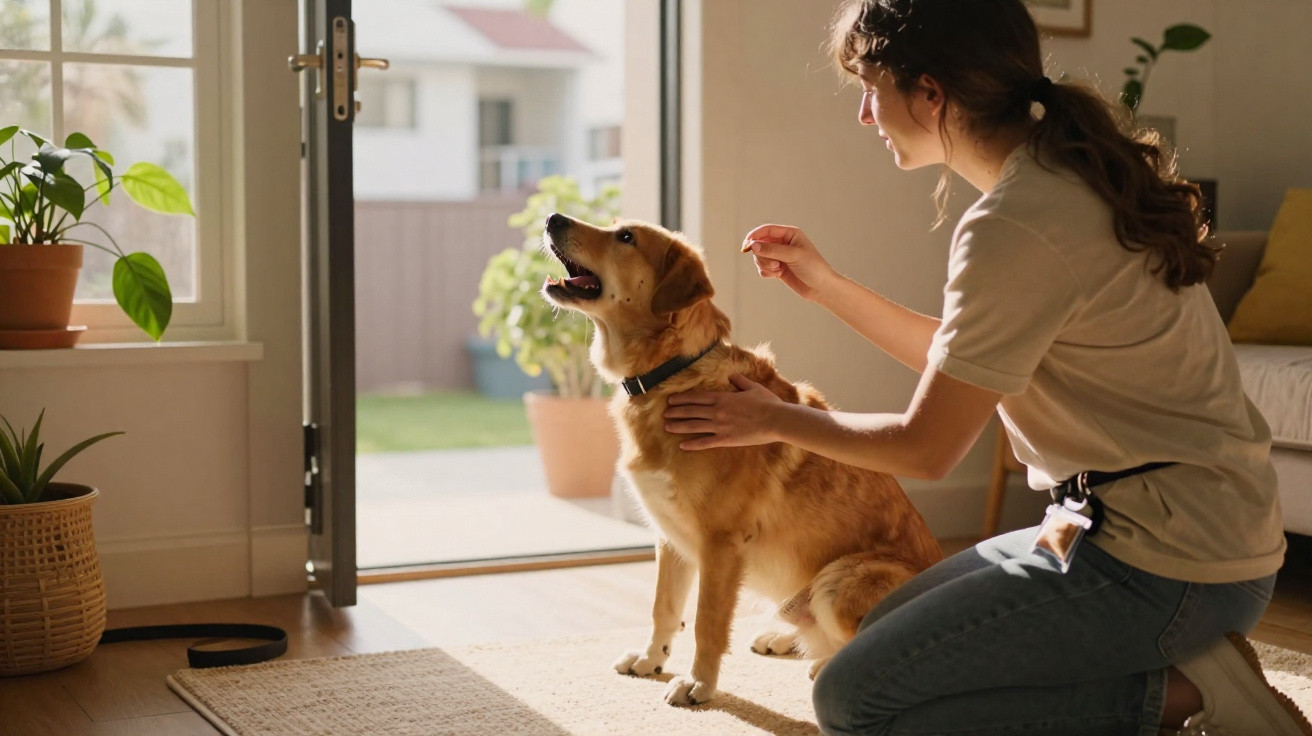
Owners can often be left wondering why it happens.
The difference may seem personal, as though the dog “just knows” something about a particular individual. More realistically, barking at certain people while passing others without notice is shaped by a combination of previous experiences, body language, genetics and training.
Why your dog targets specific people
Dogs do not usually bark without reason. Although the pattern can appear unpredictable, they are responding to signals that humans frequently fail to notice. A scent, posture, gaze, outfit or even a shift in weight can move a dog from “ok” to “alarm”.
Dogs constantly scan people for signs of safety or threat: posture, speed, smell and eye contact all feed into that decision.
When a dog erupts at one neighbour yet pays no attention to another, it is generally because of the way it interprets that person at the time, through the lens of its past learning.
Negative experiences and subtle “lookalikes”
Behaviourists commonly encounter the same issue: after one unpleasant event, a dog may generalise from it. For instance, being grabbed roughly by a tall man wearing a cap can influence a dog's response to every tall man in a cap for years afterwards.
Dogs can generalise very widely. They may react not only to that particular kind of person, but also to people with:
- a comparable height or body shape
- a recognisable walking style, such as heavy footsteps
- a particular item of clothing, including hoodies or large coats
- similar hair or facial hair
- a certain vocal pitch or a loud laugh
Even where the dog has never encountered the person before, its brain may effectively say, “You look and move like that scary human from before,” causing the barking to begin.
Body language that feels threatening to a dog
People often do not realise how intimidating they can appear to an anxious animal. Many humans, particularly dog enthusiasts, approach immediately with direct eye contact and an extended hand. A self-assured dog may accept this easily, but a more sensitive dog can experience it as a challenge.
People are more likely to be barked at if they:
- look straight into the dog’s eyes
- approach directly rather than moving in an arc
- bend over the dog’s head or reach down from above
- make abrupt, jerky or particularly quick movements
- carry strong smells of perfume, alcohol, smoke or other dogs
Direct eye contact, looming over a dog or fast, straight-line approaches often read as “threat” in canine body language.
To the dog, barking can be a sensible way to communicate, “Too close, back off, I don’t feel safe.” As people often retreat at that point, the dog learns that barking has achieved the desired result.
How human fear quietly fuels barking
Dogs notice minute changes in human breathing, stance and sweat. A person who is frightened of dogs may tense up, stop breathing normally, lift their shoulders or stare in an attempt to “keep an eye” on the dog. To the animal, these behaviours can seem unusual or concerning.
Someone who is nervous may freeze rather than continue moving naturally. That stiff stillness can unsettle a dog, particularly one already worried by strangers. It detects stress hormones, observes the physical tension and responds noisily.
For those who dislike dogs or feel afraid of them, trainers generally advise a neutral response: avoid staring, reaching and anxious talking. Standing at an angle, relaxing the arms and allowing the dog to investigate from a distance can often ease the situation. Many dogs quickly conclude that this “boring” individual poses no danger.
When owners accidentally train the barking
In some cases, the cause is at the other end of the lead. Dogs tend to repeat behaviour that brings any kind of reward, and even negative attention can serve as one.
Owner responses that can maintain barking include:
- calling the dog’s name or shouting “stop” whenever it barks at somebody
- stroking, cuddling or lifting the dog when it reacts
- allowing it to spend all day watching people go by through a window
- holding the lead tightly and pulling the dog back, which reinforces the idea that the person is “dangerous”
From the dog’s view, loud reactions, pulling on the lead or picking them up often prove that barking was justified and effective.
A familiar example is a dog barking at a delivery driver, followed by the owner hurrying over, speaking loudly and closing the door. The van then leaves, as it would have done anyway. The dog interprets this as, “I barked, my human joined in, and the intruder left.” That is powerful reinforcement.
Shifting the pattern: what actually helps
Behaviour specialists commonly focus first on two foundations: limiting the dog’s contact with triggers and rewarding calmness rather than noise.
Practical measures that many owners can use include:
- controlling the surroundings, such as preventing access to windows facing the street
- creating more space by crossing the road or asking visitors to keep their distance initially
- responding calmly and without emotion rather than reacting to barking
- identifying and rewarding every quiet moment when a trigger is present
- training an alternative response, for example going to a mat when the doorbell sounds
Receiving treats, praise or play for remaining calm creates a different association: “People appear, good things happen when I stay quiet.” In time, many dogs move from raising the alarm to looking towards their owner for direction.
Why socialisation in puppyhood matters so much
Puppies go through a period in which their brains establish what “normal life” looks like. Dogs introduced positively to many different people during this stage are often better able to cope with variety as adults.
Helpful early encounters may involve calm, controlled meetings with:
- men and women, both with and without hats or glasses
- children who are supervised and taught to behave gently and calmly
- people using wheelchairs, crutches or walking sticks
- delivery workers carrying parcels, cyclists and joggers
- people of varying ages, skin tones and clothing styles
Puppies that meet many kinds of humans in a calm, positive way often grow into adults who take new people in stride.
Without that early socialisation, unfamiliar people can feel confusing or frightening to an adult dog. Barking may then become its standard method of keeping uncertainty at a safe distance.
Breed tendencies: why some dogs bark more
A dog’s genetics influence how readily it begins barking. Numerous herding, guarding and small companion breeds were purposefully bred to alert, control livestock or warn about intruders. Those instincts do not disappear simply because the dog now lives in a flat.
| General type | Common tendency | Typical challenge |
|---|---|---|
| Guard and watchdog breeds | Fast to alert and highly aware of strangers | Barking at visitors, noise at windows and doors |
| Herding breeds | Energetic and vocal when excited | Barking at joggers, cyclists and fast-moving people |
| Companion toy breeds | Frequently sensitive and closely attached to owners | Barking at anyone who comes near their person |
| Laid-back scent hounds / some retrievers | Often more at ease with strangers | Can still react when startled or inadequately socialised |
Breed tendencies do not determine the final outcome. A well-socialised guard breed given considered training may remain relaxed around visitors, whereas a poorly socialised “easy” breed may become a persistent barker. Genes load the dice; life experience and handling decide how they roll.
When barking points to deeper issues
A dog that begins barking at particular people suddenly after years of calm behaviour needs attention. Pain, reduced hearing or eyesight, and even mild cognitive decline in older dogs can make them feel more vulnerable. As a result, they may bark more readily at unfamiliar shapes or unexpected movements.
Further warning signs include barking alongside lunging, snapping, hiding behind the owner or declining treats. Such dogs often feel truly unsafe. Broad training advice may be insufficient, and a qualified behaviourist or veterinary behaviour vet can evaluate the risks and develop an individual plan.
A dog that both barks and shows signs of fear or aggression does not “act stubborn”; it signals distress that usually needs professional help.
Practical ways strangers can reduce the chance of being barked at
People who visit homes with dogs regularly, including tradespeople, carers and friends, can make the encounter less tense through several straightforward habits.
- Enter the room side-on rather than facing the dog directly.
- Do not stare at the dog; direct your attention towards the owner instead.
- Move smoothly and steadily, avoiding sudden lunges or large gestures.
- Allow the dog to approach first; do not bend over it or reach out immediately.
- Speak calmly at a normal volume and avoid high-pitched squeals.
These small changes can help a dog see a visitor as predictable and low risk. For an anxious dog, this may mark the difference between a burst of barking and a wary sniff.
Thinking ahead: building a calmer relationship with people
Owners living in busy towns and cities, or sharing lifts, corridors and parks with many others, can make “stranger training” part of the dog’s everyday routine. This could involve taking treats on every walk and rewarding eye contact and calm behaviour whenever a person goes past.
Brief training exercises can also redirect anxious energy. Teaching a reliable “watch me” cue, for example, or practising turning away from triggers can provide both owner and dog with a clear routine for difficult situations. The more that routine is practised, the less opportunity there is for panic barking.
Families thinking about getting a puppy can avoid years of frustration by considering their lifestyle, breed tendencies and socialisation plan realistically. A dog bred to guard isolated farms will not necessarily adapt well to a crowded block of flats without considerable extra work. Aligning genetic tendencies with the human environment, and supporting that match with kind, consistent training, often determines whether barking at certain people remains an occasional warning or becomes a daily problem.













Comments
No comments yet. Be the first to comment!
Leave a Comment