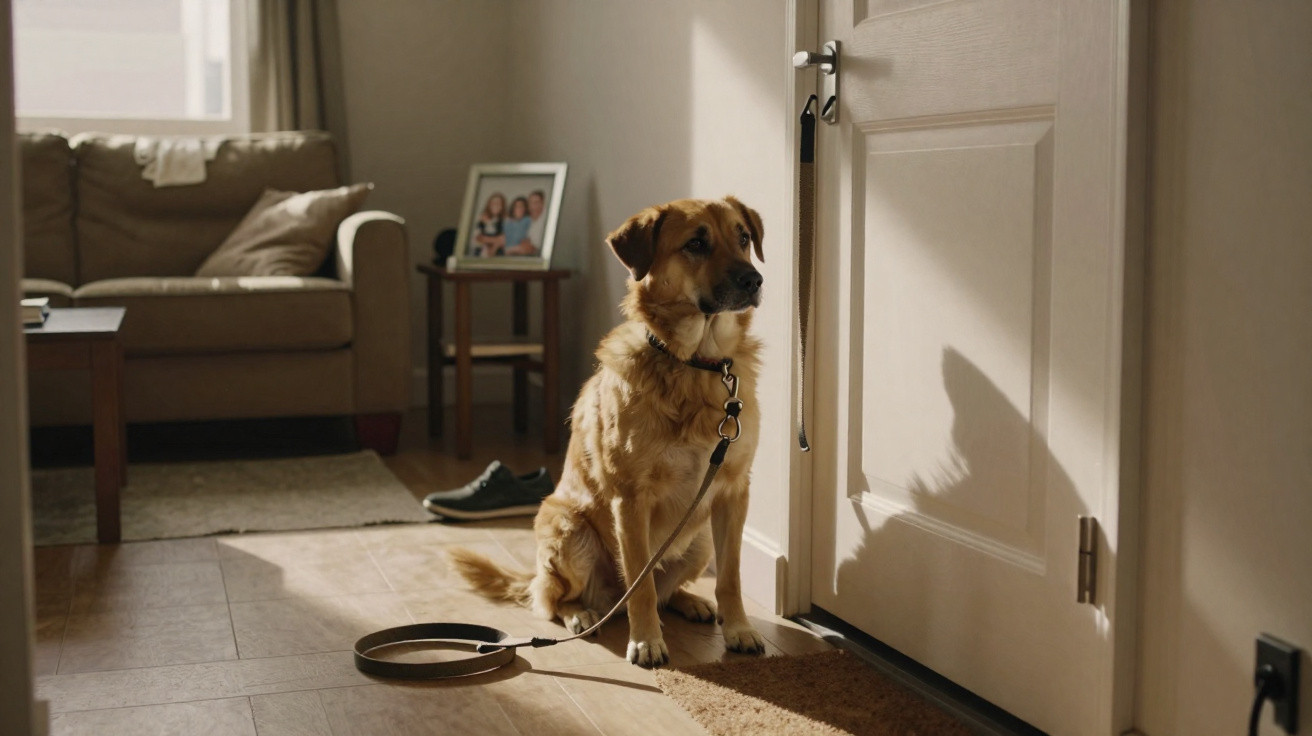
The dog detected the car before anybody else did.
He made his way to the front door, his tail moving in that slow, optimistic wag that says “I know that sound.”
But this time, nobody arrived. There were no keys turning in the lock and no recognisable footsteps. Only the fading noise of traffic and a silence that seemed unusually weighty for a Tuesday afternoon.
He sat down. He waited. He fixed his gaze on a door that stayed still.
Across the room, his owner flicked through divorce emails, red-eyed and exhausted, acting as though they could not see those brown eyes by the doorway.
The person who had once thrown the ball in the garden had left three days earlier. The bed was only half occupied. Even the hallway had a slightly unfamiliar smell.
The dog understood none of it.
He knew only that somebody had disappeared, and that doors exist for people to come back through.
The loyal dog who cannot understand “divorce”
Anyone who has shared a home with a dog knows that they make hallways into emotional checkpoints.
They know who normally returns at 6:17 pm. They can identify the squeak of one particular shoe, the turn of a key and the small cough that comes before the door opens.
When a separation or divorce happens, that familiar routine falls apart.
Yet the dog is still following the old dance.
He waits by the entrance when a car pulls up outside.
A text alert makes him jump, because it once meant “they’re on the way.”
The home has changed, but nobody has told his routine.
Consider Luna, a golden retriever living in a small flat on the edge of Madrid.
Her family separated after ten years of marriage. One parent left carrying two suitcases, with a hurried “We’ll figure it out, okay?”
During the first few weeks, Luna stationed herself at the front door each evening. Her nose pressed against the gap beneath it as she searched the corridor for scents like a detective with a cold case.
Neighbours said they heard her quietly whimper whenever the lift doors opened on their floor.
One evening, when a delivery driver rang at 8 pm, Luna sprang up, turned in circles and cried with happiness.
Then the door opened to reveal a stranger carrying a pizza.
She went completely still, ears pinned back, with confusion visible throughout her body.
What may seem like determined waiting is really a storm of disrupted patterns inside a dog’s mind.
Dogs base their sense of safety on repetition: familiar scents, familiar voices and doors opening at expected times.
When somebody disappears after a divorce, a dog cannot grasp betrayal or legal arrangements.
He simply feels a gap in the weave of his everyday life.
This is why dogs sit beside the door or pace from the bedroom to the hallway.
They are replaying yesterday: “At this time, the door opened. Why isn’t it opening?”
From their point of view, the world suddenly became unreliable.
Helping a dog who still waits for the person who left
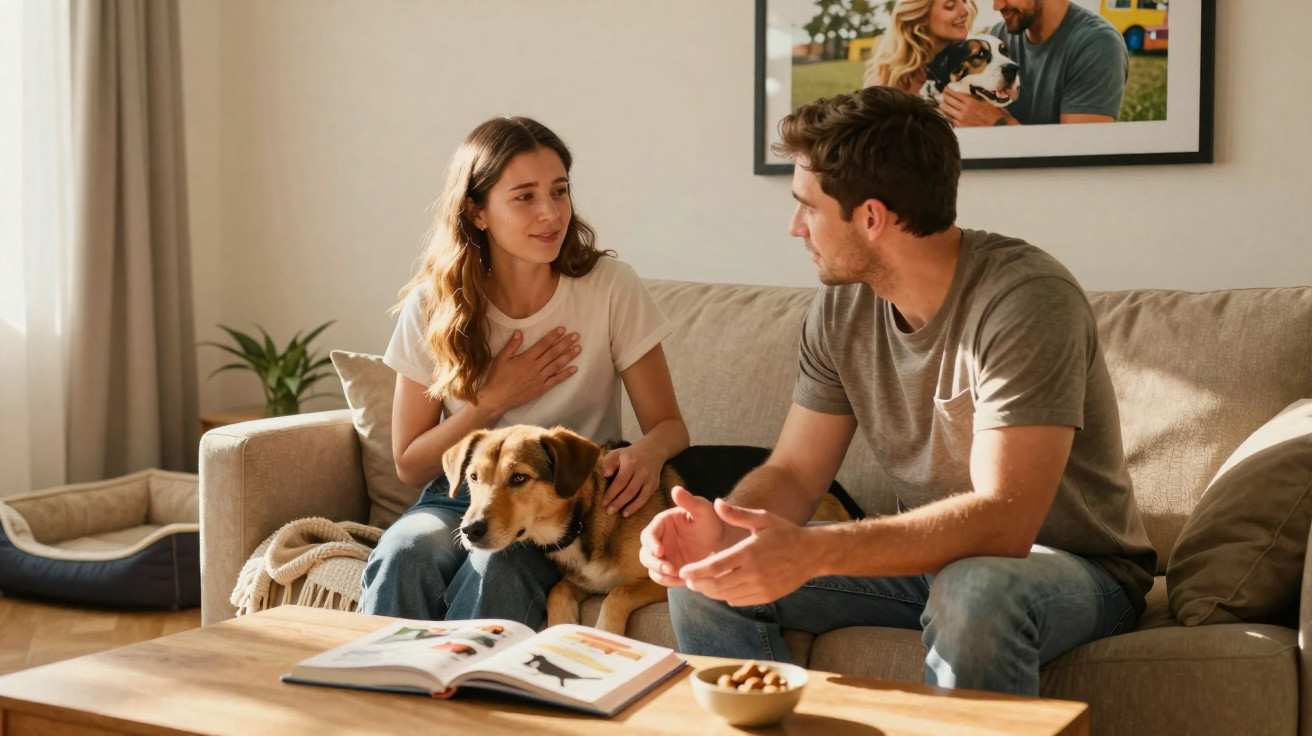
The first thing that can make a real difference is remarkably simple: sit beside your dog at that door.
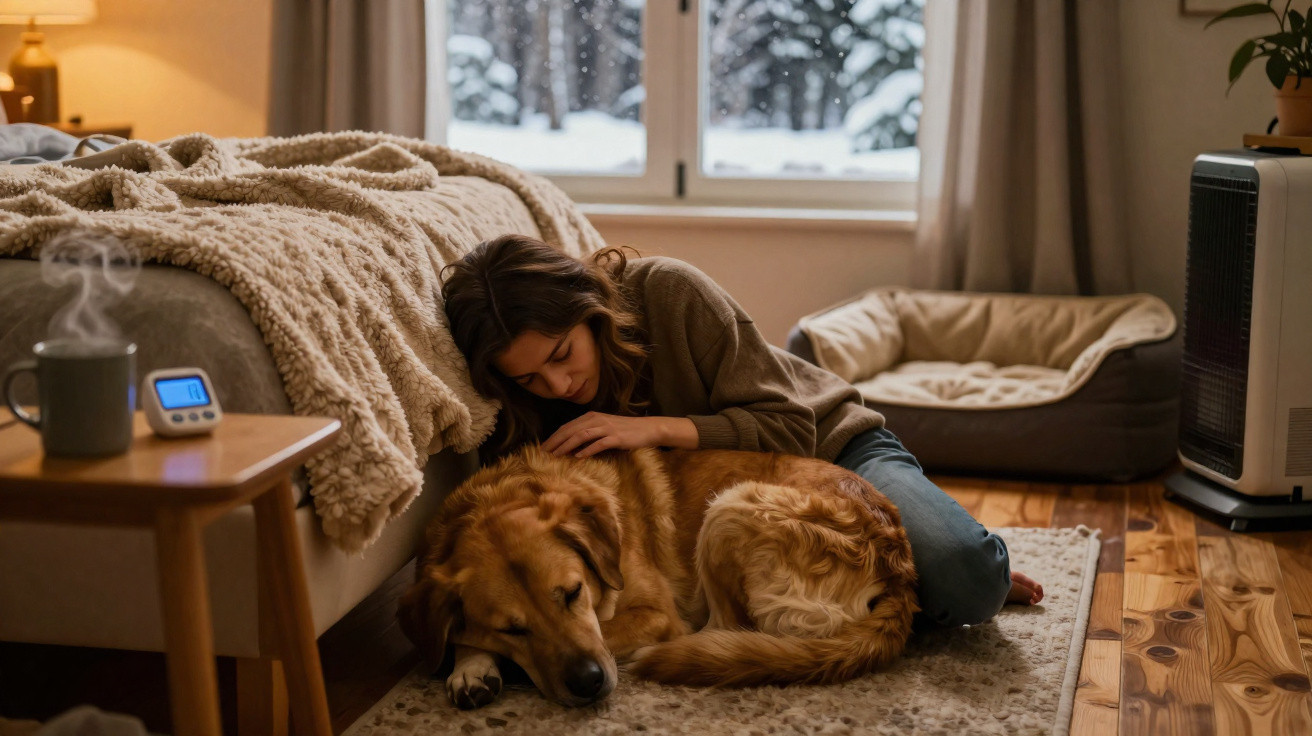
Do not drag him away or tell him off. Simply be with him in the place where his heart is caught.
Rest a hand softly on his chest or neck.
Allow him to watch, sniff and listen to that familiar quiet.
Speak gently, even if you feel foolish saying, “They’re not coming today, buddy.”
You are not offering information he can process as a person would.
Instead, you are connecting that difficult place - the doorway - with the one thing he continues to trust entirely: you.
Many people try to “solve” this by distracting their dog whenever he settles by the door.
They shake treats, toss toys or lead him into a different room. The intention is caring, but the outcome can often be the opposite.
The dog comes to see the door as an intensely emotional place filled with uncertainty, while also sensing that his person becomes anxious around it.
The waiting does not disappear; it simply turns inward.
In truth, no one manages this every day with flawless patience.
On some evenings, you will be worn out, looking at your own heartbreak on a screen, and say sharply, “Come on, enough, he’s not coming back.”
It is all right not to get it right every time.
What counts is the overall approach: less panic, more calm repetition and more dependable comfort.
“After my ex moved out, our beagle Milo scratched the door frame so much I thought he’d dig through,” says Carla, 39.
“One day, instead of pulling him away again, I just sat on the floor with him.
We stayed there fifteen minutes. I cried into his fur. From that day, the door stopped being a battlefield and became our little bench of truth.”
Keep one anchor object
A worn T-shirt, blanket or cushion that still carries the scent of the person who left may help a dog adjust to the change.
Put it in a resting area rather than beside the door, so the memory feels more peaceful instead of more frantic.Create a new “coming home” ritual
Adjust walk times, introduce a brief game when you get home or sit on the other side of the sofa.
Small adjustments can teach your dog again that safety can take a different shape and still be genuine.Look out for quiet distress
Constant licking, unexpected accidents indoors or sleeping far more than usual can be the emotional after-effect of separation.
These signs matter just as much as howling at the door.Share custody if you can
Alternate weeks or arrange regular visits with an ex-partner, where this is safe and healthy for the people involved, may ease the loss for the pet.
The dog does not need to know the history; he only needs their presence.Seek professional support
Some dogs develop severe anxiety after a family separation.
A behaviourist or vet can put together a practical plan that respects both your grief and your dog’s own pace of adjustment.
When a dog’s waiting reveals the cracks in our own hearts
There is something fiercely truthful about a dog sitting in front of a shut door.
He does not act as though everything is fine. He does not dull the feeling with work, wine or endless scrolling. He waits, because it is the only way he knows how to love.
Watching this day after day can feel unbearable.
You may feel guilty for keeping the dog, guilty for allowing the other person to leave and guilty because you cannot explain what happened.
And beneath those feelings, you may see yourself.
You, too, are checking your phone for a message that will not arrive. You, too, are listening for a key in a lock that now belongs to somebody else.
| Key point | Detail | Value for the reader |
|---|---|---|
| Dogs grieve routine, not legal status | They respond more to missing habits, scents and sounds than to the concept of “divorce” | Helps you react with patience rather than frustration when they continue waiting |
| Staying present beats constant distraction | Sitting at the door with your dog makes a painful place into a shared, safer space | Provides a specific, gentle step for emotionally difficult moments |
| New rituals can rewire hope | Minor changes to everyday life slowly show the dog that love remains, even in another form | Gives you a route to restore stability for both you and your pet |
FAQ:
- Question 1 How long will my dog keep waiting by the door after my partner moves out?
- Question 2 Is my dog depressed, or is this normal grieving behavior?
- Question 3 Should my ex and I share custody of the dog after the divorce?
- Question 4 What can I do if my dog starts destroying the door or furniture when left alone?
- Question 5 Does getting another dog help my pet cope with the person who left?




Comments
No comments yet. Be the first to comment!
Leave a Comment