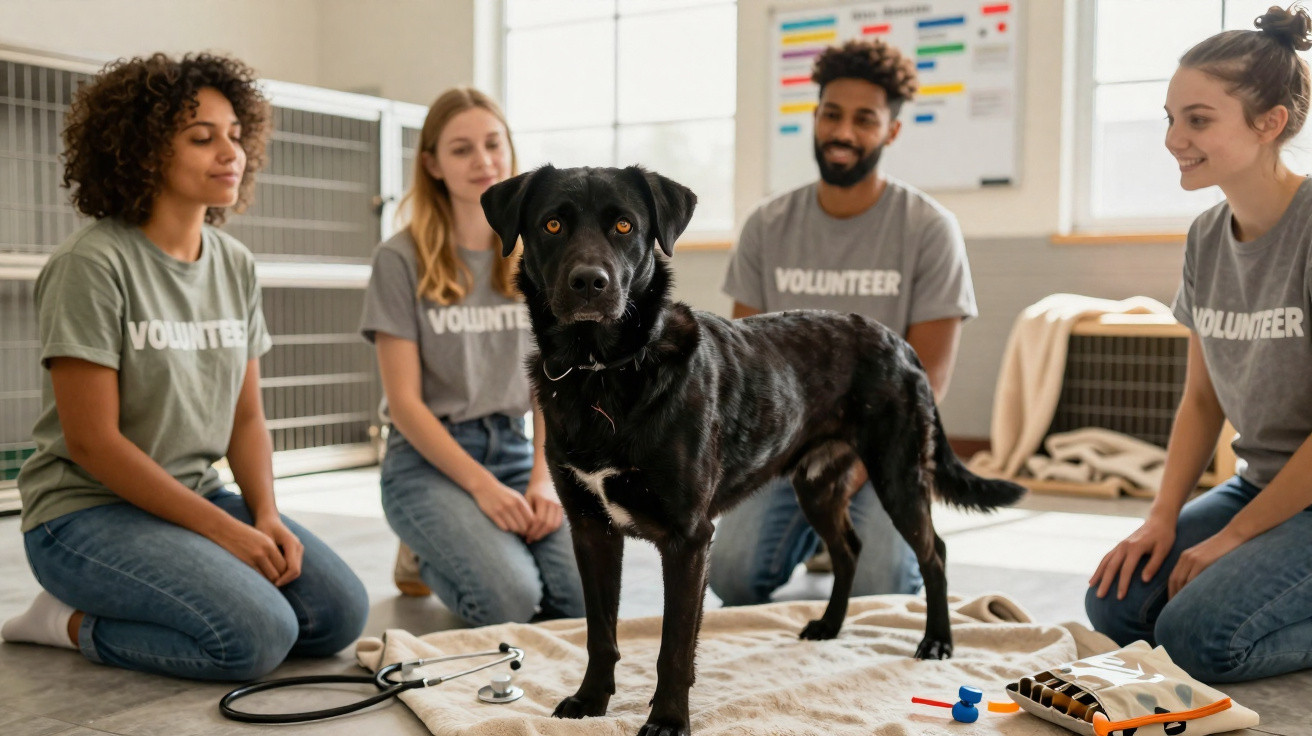
At a crowded Florida shelter, employees saw a familiar dog return through the entrance. Draco was thinner and more subdued than they remembered.
For Draco, once a lively young dog, the months ahead would be a difficult and delicate process of recovery from illness, anxiety and abandonment. His progress was made possible by sustained care and a committed group of volunteers who would not give up on him.
A painful return after a promising start
Like many rescue stories that initially appear destined for a happy ending, Draco’s began when he was found roaming near Miami at roughly one year old. He was brought to Miami-Dade Animal Services (MDAS), one of Florida’s biggest public shelters.
The team saw an energetic, inquisitive dog who was keen to engage with people. He spent little time in a kennel: before long, a local person was drawn to his dark fur and bright eyes, and completed the adoption paperwork.
For the next two years, Draco seemed to be living an ordinary life as a pet. Then he was unexpectedly brought back to the shelter.
After two years in a home, Draco was returned to the shelter in a worrying physical state, fragile and withdrawn.
Draco’s previous owner told MDAS that he could no longer provide for the dog’s medical requirements. When Draco arrived at intake, the contrast was impossible to miss. He was thin, lethargic and visibly ill. Volunteers looking into his kennel found him curled up and too exhausted to take much notice of anyone nearby.
The veterinary team acted without delay, examining Draco, starting treatment and creating an individual medical plan. However, people experienced in caring for neglected animals recognised that medical treatment alone would not be enough for his recovery.
Beyond medicine: rebuilding a broken dog
His immediate needs were physical: fluids, suitable meals, medication and frequent monitoring. Still, the staff understood that his physical condition was only part of the problem. Draco’s behaviour showed that he felt profoundly uncertain in his new surroundings.
He turned away from eye contact and startled at unexpected noises. His walks were brief and unhurried. For long periods, he simply lay motionless, seeming to have lost any expectation that life could be enjoyable.
The shelter created a broader programme that paired ongoing veterinary care with planned enrichment and calm behavioural support.
For Draco, recovery meant more than surviving illness. It meant learning to trust again in an environment that felt safe.
A foster home as a turning point
MDAS reached a crucial point when it located an experienced foster carer who could welcome Draco into their home. The noise of barking and the constantly changing people in a shelter can be too much for sensitive dogs. In a peaceful home, Draco gained something absent from his life for months: consistency.
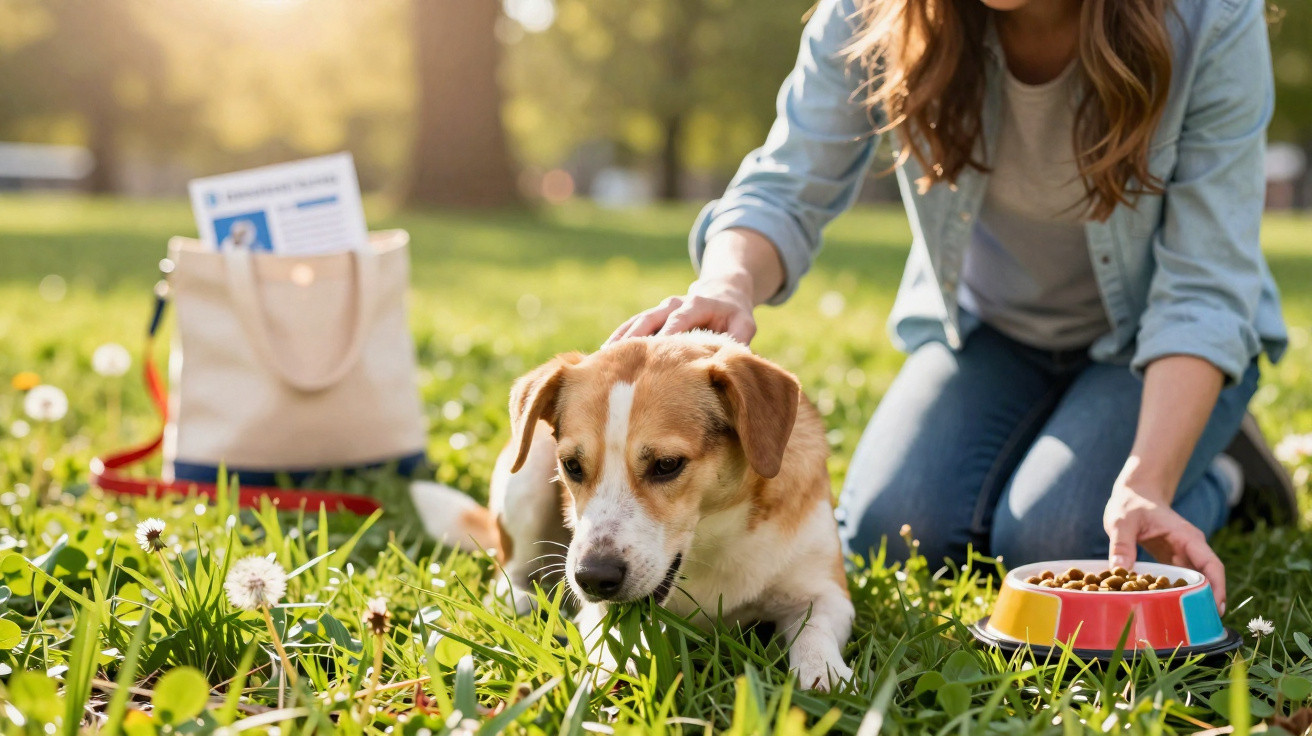
- Frequent, small meals to support safe weight gain
- Brief, quiet walks to restore both physical strength and self-assurance
- Comfortable bedding and a permanent place to sleep, giving him security
- Kind human contact on his own terms, without any demand to interact
In this environment, his carers began to glimpse the dog he had once been. He gradually started meeting people at the door with a tentative wag of his tail. Toys that had initially held no appeal began to interest him. Rather than merely picking at meals, he began eating eagerly.
Draco’s training, confidence and gradual transformation
After Draco’s health had become stable, MDAS placed him on a training programme for foster animals and dogs facing long shelter stays. Basic commands can appear modest, but for a dog healing from trauma, they may offer an essential foundation.
Training concentrated on manageable achievements: sitting to receive a treat, walking calmly on a lead and touching a hand when prompted. Every successful step made the next event more predictable for Draco, while increasing his confidence around people.
Structured training gave Draco a sense of control, turning daily interactions into clear, positive routines.
The change became increasingly clear over time. Volunteers described a dog who came to the front of his kennel as visitors passed by. He held eye contact, pushed his nose against hands for further fuss and became interested in toys and food puzzles.
Despite this progress, however, one issue remained unresolved: Draco still had not secured a permanent home.
The invisible barrier of the “black dog” syndrome
Three years after returning to MDAS, Draco was fitter and more self-assured, yet adopters continued to overlook him. Employees identified a recognised pattern in United States shelters, often called “black dog syndrome”.
Large, mostly black dogs like Draco often wait significantly longer for adoption, even when they are friendly and well-trained.
There is no universally accepted explanation. Some researchers believe that dark-coated dogs are more difficult to photograph well through kennel bars, so they stand out less in online adoption adverts. Others point to unconscious prejudice, as black fur may be linked with aggression through films, folklore or previous personal experiences.
There are practical considerations as well. Larger dogs may seem more difficult to handle in compact flats, costlier to feed, and less appropriate for households with small children or elderly family members.
| Dog type | Typical shelter stay (relative) |
|---|---|
| Small, light-coloured dog | Shorter than average |
| Medium mixed-breed, varied colours | Around average |
| Large, mostly black dog | Longer than average |
Draco met several factors associated with a “slow adoption” at the same time: he was large, dark-coated and had a medical background. Although his behaviour reports were favourable and social-media videos showed him in a positive light, prospective families often passed his kennel in favour of dogs that were smaller or younger.
What Draco’s story shows about modern shelter work
Stories such as Draco’s demonstrate the growing complexity of contemporary shelter work. Employees do much more than fill food bowls and clean kennels: they balance healthcare, behavioural help, public awareness and emotionally demanding work.
Rehabilitation can place significant pressure on available resources. Dogs who remain in shelters for lengthy periods require extra training, behavioural evaluations and promotional work. Volunteers frequently take on much of that commitment, devoting weekly hours to walking, socialising and championing dogs such as Draco.
That support network changed Draco’s life. The veterinary team stabilised him, while the foster carer gave him a home environment; together, these steps steadily helped him rebuild. Although he was still awaiting a permanent adopter, his everyday life had become unrecognisable compared with the day he returned thin and trembling.
Practical lessons for potential adopters
Draco’s experience also offers practical guidance to anyone considering adopting a rescue dog with a difficult history.
- Ask detailed questions: Shelter employees can outline the dog’s health background, behaviour and everyday habits.
- Plan for a settling-in period: It can take many dogs several weeks to become comfortable in a new household.
- Budget for vet care: Long-term conditions, including allergies and joint difficulties, may involve continuing expense.
- Consider fostering first: A trial arrangement can reveal whether the dog and family are suited to one another.
Rehabilitation is often pictured as a series of dramatic before-and-after images. More commonly, recovery is marked by understated milestones: a first peaceful sleep on a new bed, a first walk without pulling on the lead, or the first occasion when a previously frightened dog chooses to settle beside a person on the sofa.
Understanding key terms and common scenarios
“Black dog syndrome” is not a clinical or scientific diagnosis. It is a term used by shelter workers to describe recurring observations rather than an official classification. Awareness of the pattern may encourage adopters to look beyond appearance and consider a dog’s temperament and requirements.
Another term central to Draco’s experience is “enrichment”. It describes activities intended to make a dog’s daily life more stimulating and less stressful, including food puzzles, scent-based games, safe chew toys and short training sessions. For an animal in recovery, these activities keep the brain engaged and may lessen anxiety-related actions such as pacing and barking.
If Draco’s circumstances happened again in a different city, the same central stages would probably be present. A dog is returned in poor health. Shelter workers evaluate physical health and then behaviour. A foster home provides stability. Training develops confidence. Adoption can take time, particularly for a dog that is large, dark-coated or older.
When these elements come together, the result can be quietly meaningful: not an online miracle, but a dog learning that human hands provide comfort, meals arrive each day, and open doors lead to walks rather than abandonment.








Comments
No comments yet. Be the first to comment!
Leave a Comment