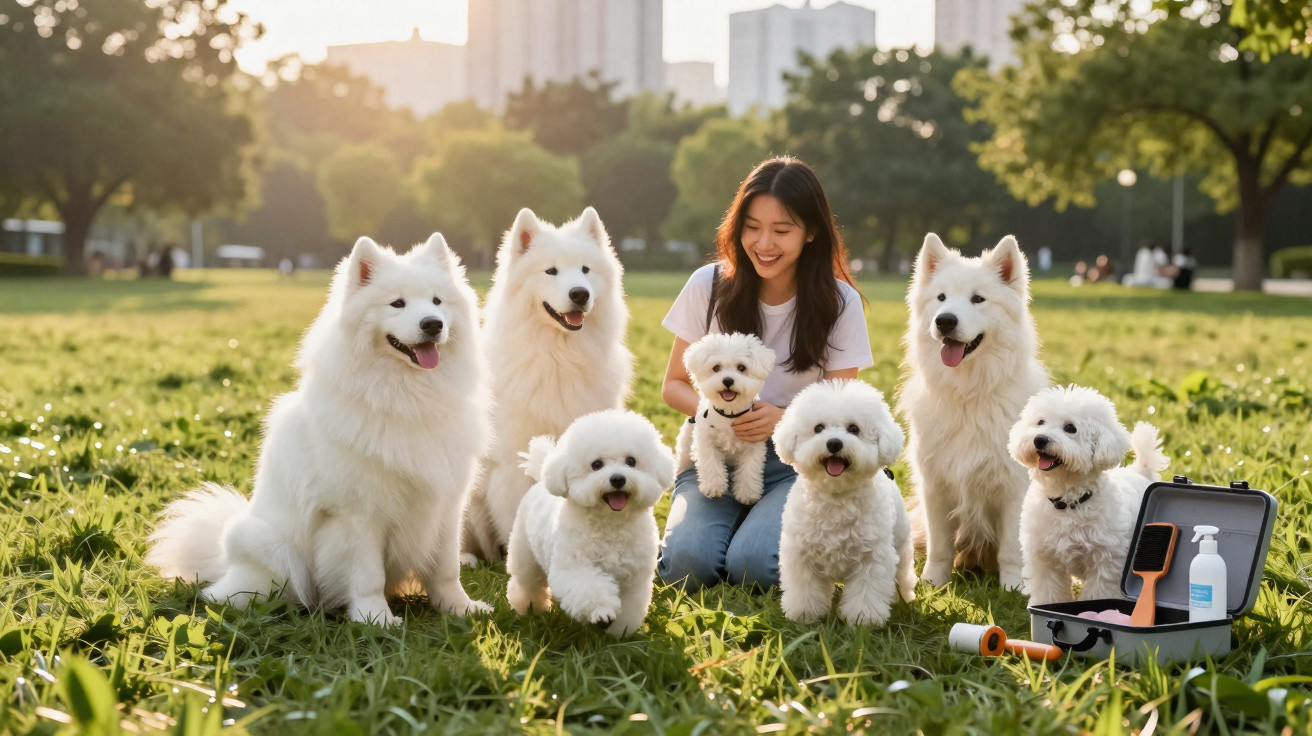
Not every breed is suited to every lifestyle.
People who fall for a dog with snow-white fur often think first of Instagram photos, rather than grooming, temperament and space requirements. Yet these are precisely where the differences lie: some white breeds are fluffy companions for the sofa, while others are true sporting dogs with a stubborn streak. This guide can help you choose the right breed and avoid common mistakes.
Why white dogs make such a distinctive impression
Many people describe white dogs as “angelic” or “especially gentle”. This is not just down to their colour: dirt, facial expressions and body language also tend to be more noticeable. A white dog can quickly look unkempt when its coat becomes matted or discoloured, so it often requires extra time for bathing and brushing.
Choosing a white dog means bringing home not only a coat colour, but also a grooming project.
At the same time, many of these breeds convey calmness and friendliness. That makes them appealing to families, city dwellers and people looking for a gentle, affectionate companion.
The Samoyed: a smiling snow dog with a mind of its own
The Samoyed originally comes from northern Russia and Siberia, where it was used as a sled and working dog. This medium-sized breed has a dense white double coat and is well known for its characteristic “Samoyed smile”.
- Size: medium
- Temperament: friendly, playful, sometimes stubborn
- Requirements: plenty of exercise, daily brushing
Samoyeds are highly people-orientated, but they are also fairly independent. They like testing boundaries and need clear, affectionate guidance. Anyone who enjoys hiking, jogging or being active outdoors in winter will find the Samoyed a hardy partner; it is far less keen on lazy days on the sofa.
Maltese: a small white sofa dog with salon-level grooming needs
The Maltese is a classic among small white companion dogs. It is happy living in a flat, provided it receives companionship, activities and regular walks. Its coat grows long and silky, demanding considerable care.
With a Maltese, size is not the issue; the real commitment is the time needed for coat care and attention.
These dogs are intelligent, affectionate and sensitive when left alone for too long. The breed can suit families with children, as long as children learn not to treat the small dog like a toy. Many owners choose a shorter clip to reduce the grooming workload, which makes everyday life noticeably easier.
White Swiss Shepherd Dog: an athlete with a big heart
The White Swiss Shepherd Dog is closely related to the German Shepherd, although it often appears slightly gentler and more sensitive. It is an impressive, highly active dog that needs plenty of physical and mental stimulation.
This breed forms strong bonds with its people and can react sensitively to prolonged periods alone. It can be very loving with children when well socialised and trained consistently but fairly. A house with a garden is ideal, along with people who enjoy dog sports, mantrailing or long walks.
Coton de Tuléar: a little clown with a cotton-like coat
The Coton de Tuléar originally comes from Madagascar and takes its name from the cotton-like texture of its coat. This small dog is cheerful, playful and a genuine source of good humour for many owners.
With its family, it is affectionate and cuddly. It can be somewhat reserved around strangers, although good socialisation can manage this well. Its coat is prone to matting without regular brushing; however, it sheds comparatively little compared with some other breeds, which may be of interest to allergy sufferers (with no guarantee, as every allergy is individual).
West Highland White Terrier: a compact dog with plenty of character
The “Westie” is small, but it is not a lap dog in the traditional sense. As a terrier, it comes with prey drive, energy and a healthy dose of independence.
- Nature: alert, curious, brave
- Suitable for: active people who enjoy training
- Grooming: regular hand-stripping or clipping required
Westies are considered robust little companions that enjoy being at the centre of activity. They need clear rules and mental stimulation; otherwise, they will find their own “projects”, perhaps in the garden. Their white, wiry coat requires skilled hand-stripping or a good dog groomer.
German Spitz (white): a fluffy alarm system with close family bonds
The German Spitz comes in several sizes, from the Pomeranian to the Giant Spitz. In white, it looks particularly plush and reminds many people of a small polar bear.
Alertness is typical of the breed. Spitz dogs readily announce anything that moves. Training can significantly reduce barking, though it will rarely disappear altogether. They are playful, quick learners and generally easy to train when their owner remains consistent.
Anyone who keeps a white Spitz gets plenty of affection, joy for life – and will certainly never miss a parcel delivery again.
Pyrenean Mountain Dog: a gentle giant with a protective instinct
The Pyrenean Mountain Dog, often also called the Great Pyrenees, is a very large, striking dog with a dense, usually white protective coat. It spent many years working in the mountains as a livestock guardian, making independent decisions far from people.
That heritage is still evident today: it is loyal and deeply devoted to its family, but not submissive. It thinks for itself and questions commands. Training calls for patience, calmness and experience. This breed is scarcely suitable for a city flat; it needs plenty of room, a securely enclosed garden and a role that does justice to its protective instinct.
Four considerations before choosing a white dog
Before visiting a breeder or rescue centre, it is worth taking an honest look at your own daily life. Coat colour should play only a minor part in the decision.
- Grooming requirements: Long or especially dense coats hold dirt, are prone to matting and require brushing, bathing and possibly professional grooming.
- Activity level: These breeds range from relaxed companion dogs to working dogs. Anyone with little time should not choose a high-performance athlete.
- Living situation: Large breeds with a strong need for exercise rarely suit cramped flats without a lift.
- Experience: Stubborn or highly sensitive breeds are best placed with people who have owned and trained dogs before.
Common grooming questions for white dogs
Discolouration is a practical concern, particularly around the face and paws. Tear staining, saliva and dirt can turn the coat pinkish-brown. Helpful measures include:
- regularly cleaning the eye and mouth areas with suitable wipes
- high-quality food to support healthy skin and coat
- gentle shampoos designed specifically for light-coloured or white dogs
It remains important not to bathe too frequently, so that the skin barrier is not compromised. In most cases, it is enough to wash specifically soiled areas and brush the rest of the coat thoroughly.
Which breed really suits me?
People who enjoy jogging, hiking or an active lifestyle will generally be happier with a Samoyed or White Swiss Shepherd Dog than with a Maltese. Those who work from home a great deal and want a cheerful, smaller companion often get along very well with a Coton de Tuléar or Maltese.
For households with a garden and somewhat more experience, a Westie, Spitz or Pyrenean Mountain Dog can be an exciting partner – provided you like independent characters and have time for training and activities.
The most beautiful coat colour is of no use if the dog’s character does not suit its people’s lives.
Anyone still unsure should visit breeders or animal rescue organisations, meet several dogs in person and take their time. Photos of fluffy white puppies are highly tempting, but life with the adult dog ideally lasts 10 to 15 years. That is the perspective worth keeping in mind when making the decision.











Comments
No comments yet. Be the first to comment!
Leave a Comment