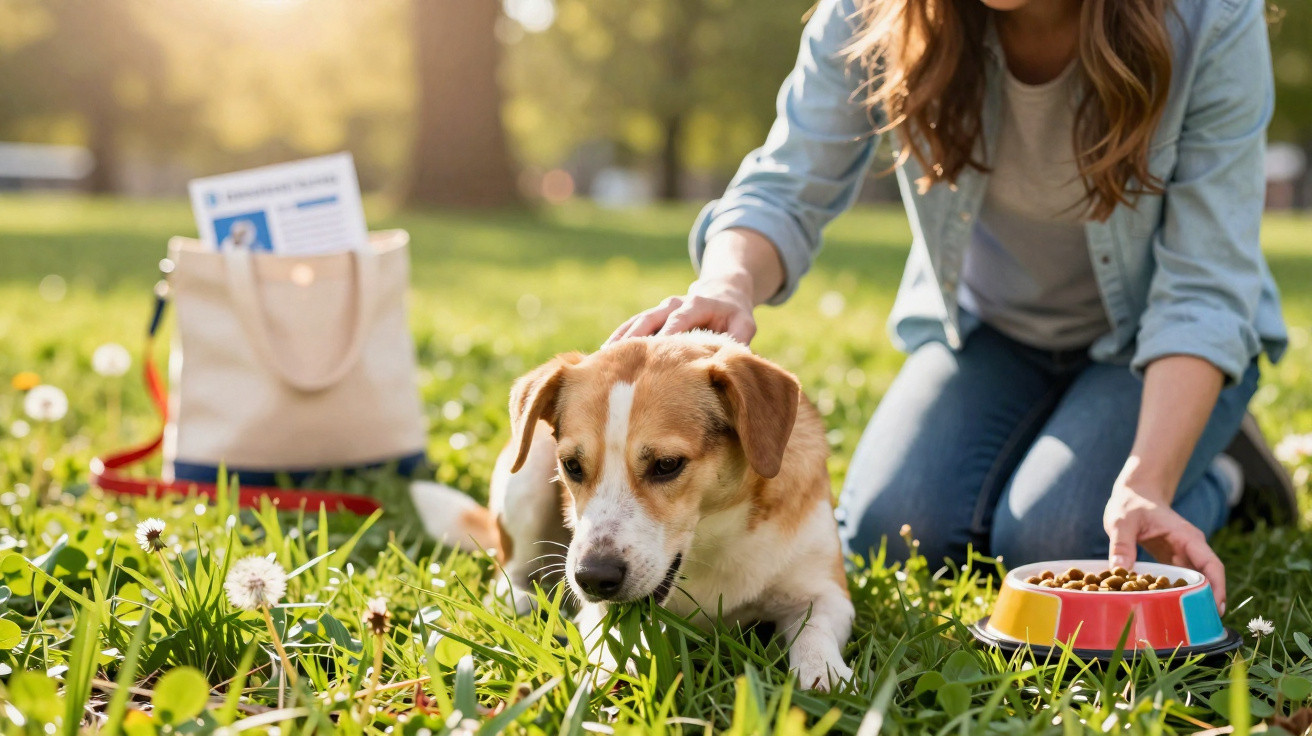
Some dogs practically throw themselves at grass when outdoors – and many owners initially find this worrying.
Anyone watching their four-legged companion enthusiastically chew clumps of grass soon wonders whether it is normal or a sign of illness. Vets offer reassurance, but only to a point. The behaviour may be linked to instinct, diet, boredom or genuine health issues.
What really lies behind dogs eating grass
Eating grass is one of those familiar canine quirks that prompts plenty of speculation among dog owners. “He wants to cleanse himself,” some say; “He has stomach problems,” say others. In reality, the explanation is far more complex and depends greatly on the individual dog and the circumstances.
Eating grass is often harmless, but it becomes a concern if it suddenly happens more frequently or is accompanied by other symptoms.
An instinct from wolf ancestry: a little nature in the bowl
Dogs descend from predators that never ate meat alone. Alongside meat, wolves consume berries, plant material and partly digested vegetation from the stomachs of their prey. This is one way they obtain fibre and secondary plant compounds.
Experts believe that this combination of animal- and plant-based food is deeply embedded in the genetics of domestic dogs. Nibbling grass therefore reflects an ancient feeding behaviour, even if a dog's bowl now contains tinned or dry food.
Grass as a “stomach helper”: when a dog wants relief
Many owners notice a familiar pattern: their dog eats grass and vomits shortly afterwards, often bringing up mucus and blades of grass. This may genuinely be a form of self-help. The stiff blades irritate the stomach lining, helping its contents move upwards more quickly.
This can enable a dog to get rid of things that are upsetting its stomach, such as:
- overly fatty treats
- food leftovers that were poorly tolerated
- foreign objects such as small wood splinters or grass awns
Grass can also stimulate the bowel. It may speed up movement through the digestive tract and, in turn, ease mild discomfort.
Grass is not a replacement for medicine – it may relieve symptoms in the short term, but it cannot cure a real illness.
The deworming myth: why grass does not fight worms
The belief that grass can “deworm” the gut is widespread, but incorrect. Parasites such as roundworms and hookworms cannot be expelled simply by eating a few blades of grass. On the contrary, grassed areas may contain worm eggs and larvae.
Relying on grass as a supposed “natural worming treatment” carries the following risks:
- chronic intestinal strain caused by parasites
- uneven nutrient absorption because worms “eat along” with the dog
- gradual damage in young or weakened dogs
Regular worming treatments agreed with a vet therefore remain essential, regardless of whether a dog eats a lot of grass or very little.
Is fibre missing? When the diet is not quite right
In some cases, frequent grass eating indicates that the diet is not properly balanced. The fibre content can be too low, particularly with very meat-heavy rations or home-prepared meals.
Fibre helps to ensure that:
- stools retain a good shape
- the bowel functions regularly and consistently
- the feeling of fullness lasts longer
When it is lacking, some dogs turn more frequently to grass as a “natural supplement”. Owners who notice this should have the diet assessed. Vets or canine nutritionists can determine whether changing food or adding vegetables, psyllium husks or specific fibre sources would be useful.
Simply because it tastes good: grass as a snack
Some dogs enjoy fresh, juicy blades and show a preference for particular varieties with a stronger smell and plenty of fibre. A well-known example is couch grass, often referred to colloquially as “dog grass”.
The picture is then typically clear: the dog sniffs intently beside the path, appears to select carefully, and deliberately pulls out one particular grass species. In these cases, there is usually no serious underlying cause; it is simply a matter of taste.
Grass because of boredom: especially in young dogs
Puppies and adolescent dogs in particular are full of curiosity. If nothing exciting is happening outside, a grassy area becomes their playground. Grass gets pulled, shaken and chewed, often ending up in the stomach in the process.
However, grass should not become their main occupation in the long term. If a young dog is constantly nibbling plants out of boredom, owners can address this with:
- more frequent but shorter walks
- scent games using pieces of food or toys
- short training sessions while out walking, such as sit, down and recall
This keeps the dog's mind occupied and shifts its attention away from the grass.
When eating grass becomes a warning sign: pica and illness
If a dog eats not only grass but repeatedly consumes soil, stones, wood, plastic or fabric, experts refer to this as pica. It is no longer a harmless quirk, but a serious behaviour that may carry health risks.
With pica, every case identified early matters – foreign objects can, in the worst case, cause an intestinal blockage or require surgery.
Possible medical causes
Anyone observing this behaviour should arrange a thorough veterinary examination. Potential causes include:
| Possible cause | Typical signs |
|---|---|
| Pancreatic disorders | Weight loss despite appetite, soft stools |
| Liver or kidney disease | Tiredness, altered drinking behaviour, nausea |
| Heavy parasite infestation | Varying stool consistency, flatulence, lethargy |
| Chronic gastrointestinal irritation | Frequent grass eating, recurring vomiting |
Psychological factors: stress, insufficient stimulation and compulsive behaviour
If the physical examination reveals nothing, an emotional cause may need to be considered. Some dogs respond to stress, being left alone or insufficient stimulation by compulsively eating inedible items. An experienced dog trainer or behaviour therapist can help in this situation.
They assess the dog's everyday routine, living conditions and level of activity, then create a plan to improve its mental stability and reduce dangerous substitute behaviours.
When owners should definitely see a vet
An occasional “grass snack” is usually not a problem. However, owners should be concerned if one or more of the following signs also occur:
- frequent vomiting, including when the dog has not eaten
- blood in the stool or very dark, tar-like stool
- persistent or recurring diarrhoea
- yellowish mucous membranes or yellowish stool
- severe tiredness, listlessness or refusal to eat
- a sudden, marked increase in thirst
In these circumstances, the cause should be investigated by a vet. The sooner this happens, the better the prospects of bringing stomach irritation, intestinal inflammation or other illnesses under control.
How owners can limit grass eating
It is difficult to ban grass eating completely, and in most circumstances there is no need to do so. It is sensible to limit it, however, particularly in areas treated with plant protection products or heavily contaminated with dog faeces.
Practical everyday measures include:
- Variety on walks: new routes, different surfaces and scent games
- Training a stop cue: a clear word such as “No” or “Leave it”, reliably associated with a reward
- Suitable chewing items: tough treats or chew roots satisfy the urge to chew more safely
- Checking the food: a high-quality, balanced diet containing sufficient fibre
What many owners underestimate: hidden risks in grassy areas
Among harmless grasses, plants can grow that are toxic to dogs even in small quantities, including autumn crocus and certain ornamental plants beside paths. There may also be pesticides, fertiliser or residual road salt in urban green spaces.
Anyone whose dog eats grass very intensely should choose grassy areas carefully, favouring more natural locations, and should not delay seeking veterinary advice if unusual symptoms appear after a walk.
Eating grass therefore remains a behaviour that contains plenty of normality and a trace of primal instinct – but it can also be an important signal that a dog's stomach, mind or diet needs more attention.











Comments
No comments yet. Be the first to comment!
Leave a Comment