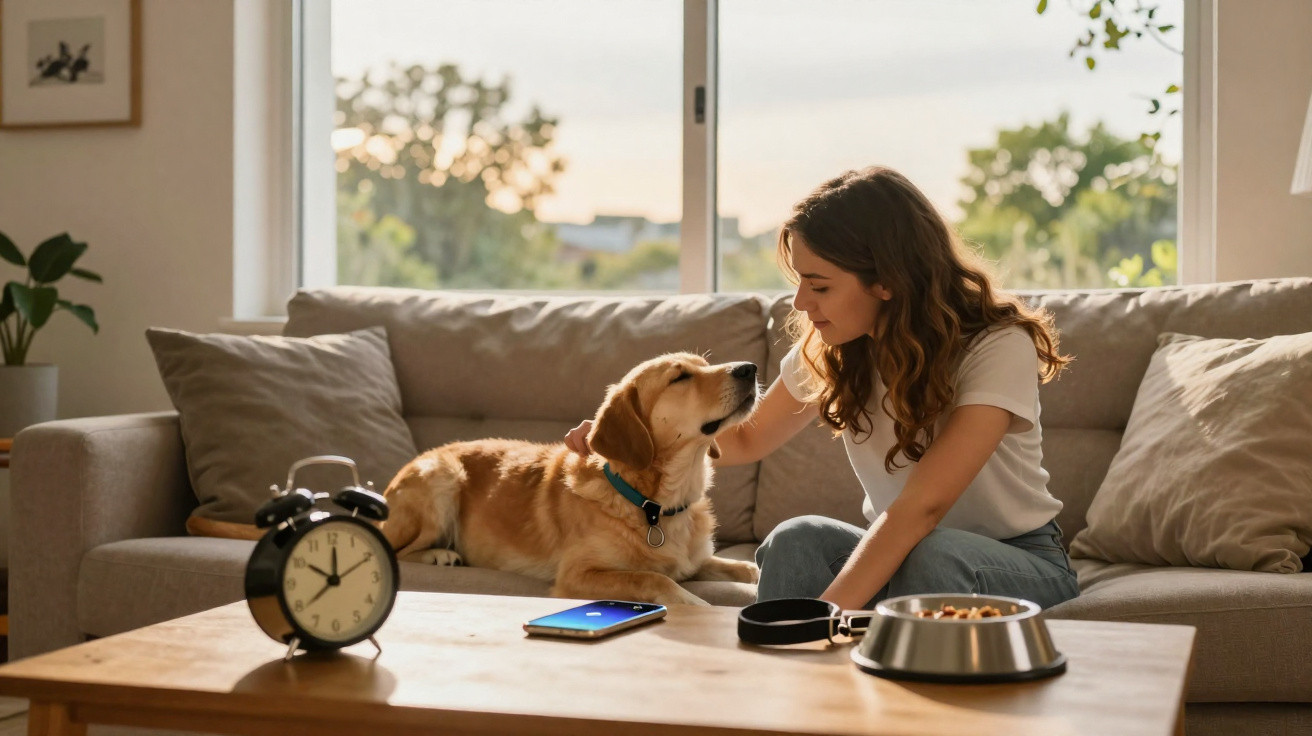
People complain about losing an hour of sleep, while dogs have to cope with altered feeding, walking and sleeping schedules. For most four-legged companions, daylight saving time causes only brief disruption, but a few straightforward adjustments can significantly limit stress, restlessness and whining at night.
Why daylight saving time disrupts dogs’ routines
Dogs cannot read the clock; they follow their internal rhythm instead. That rhythm is shaped by daylight, routine and, above all, you: when you get up, feed them, take them for walks and go to bed. When the clocks suddenly switch to “summer mode” on a Sunday, your dog’s usual pattern no longer fits together.
From your dog’s perspective, this is what happens: food arrives “too late”, the evening walk is delayed and the night seems shorter. Sensitive animals in particular may respond with agitation, barking, whining or unusual behaviour. Although the disruption normally settles by itself after a few days, you can make the transition far easier for your dog.
The key is a gradual, gentle transition – not a sudden complete change from one day to the next.
The 15-minute trick: easing your dog into daylight saving time
Dog trainers advise breaking the clock change into manageable stages. Rather than moving everything at once on Sunday, begin adjusting the daily routine gradually during the previous three or four days.
How to use the plan day to day
Assume that the clocks go forward overnight between Saturday and Sunday. You can then start on Wednesday:
- Day 1 (Wednesday): Move feeding, walks and bedtime back by around 10–15 minutes.
- Day 2 (Thursday): Shift them another 10–15 minutes later.
- Day 3 (Friday): Delay them by a further 10–15 minutes.
- Day 4 (Saturday): Make one final adjustment of 10–15 minutes.
This adds up to roughly 40–60 minutes. By the time the clock changes on Sunday morning, your dog will already have completed most of the adjustment – without a sudden shock.
Dogs cope much more easily with short 10- to 15-minute changes than with an abrupt jump of a full hour.
Typical signs that your dog is struggling with the change
Your dog may seem “odd” after daylight saving time begins. Several signs occur repeatedly:
- Restlessness: Your dog paces about, lies down and immediately gets back up.
- Poor sleep: Falling asleep is difficult, or your dog wakes during the night.
- Waking earlier: Your four-legged companion is at your bedside an hour “too early”, ready to start the day.
- More vocalising: Whining, barking or yelping, especially at their usual feeding or walking times.
- Changed eating habits: A reduced appetite, or your dog appears “out of sync” at mealtimes.
- Signs of stress: Panting when it is not hot, excessive drooling, trembling or nervous pacing.
Some of these reactions are normal and usually pass within a few days. However, if they continue for longer or become very pronounced, it is worth consulting a vet or a qualified dog trainer.
Which dogs are especially sensitive to daylight saving time
Not every four-legged companion notices the switch to daylight saving time to the same extent. Some groups are considerably more susceptible:
| Group | Typical challenge during the clock change |
|---|---|
| Puppies | Their routine is not yet established, they need plenty of sleep and can become overexcited more quickly. |
| Senior dogs | A fixed daily rhythm, sensitive sleep and, in some cases, age-related orientation difficulties. |
| Anxious dogs | A strong attachment to recurring routines, with any deviation potentially causing stress. |
| Unwell dogs | Medicines or diets often follow a precise schedule, and changes can create additional confusion. |
For these animals especially, a particularly gentle transition with many small steps and plenty of closeness is worthwhile.
Routine matters more than the clock for your dog
For dogs, dependable patterns matter more than an exact time. Maintaining clear rituals before and after the change gives your pet reassurance.
Practical routines that support your dog
- The same sequence every time: For example: arrive home – brief cuddle – food – walk.
- Recurring rituals: A particular phrase before bedtime or a set place for evening treats.
- A permanent resting place: Keep the bed or blanket in the same spot; this is not the time to move it.
- Consistent duration: Keep walks or play sessions as close as possible to the same length, even if their timing varies.
The more reliably you behave in everyday life, the more easily your dog will get through the clock change.
Creating a calm atmosphere around the clock change
Alongside moving the schedule gradually, a peaceful setting is enormously helpful. If your dog’s body clock is already unsettled, their surroundings should remain as predictable as possible.
Practical measures include:
- Do not plan major changes over the weekend of the clock change, such as moving house, long outings or family celebrations.
- Choose calmer games towards the evening rather than boisterous play, so your dog can settle more easily.
- Provide a dark, comfortable sleeping area: close the curtains and reduce loud noises.
- Use familiar scents by placing a favourite blanket or one of your old T-shirts in the bed.
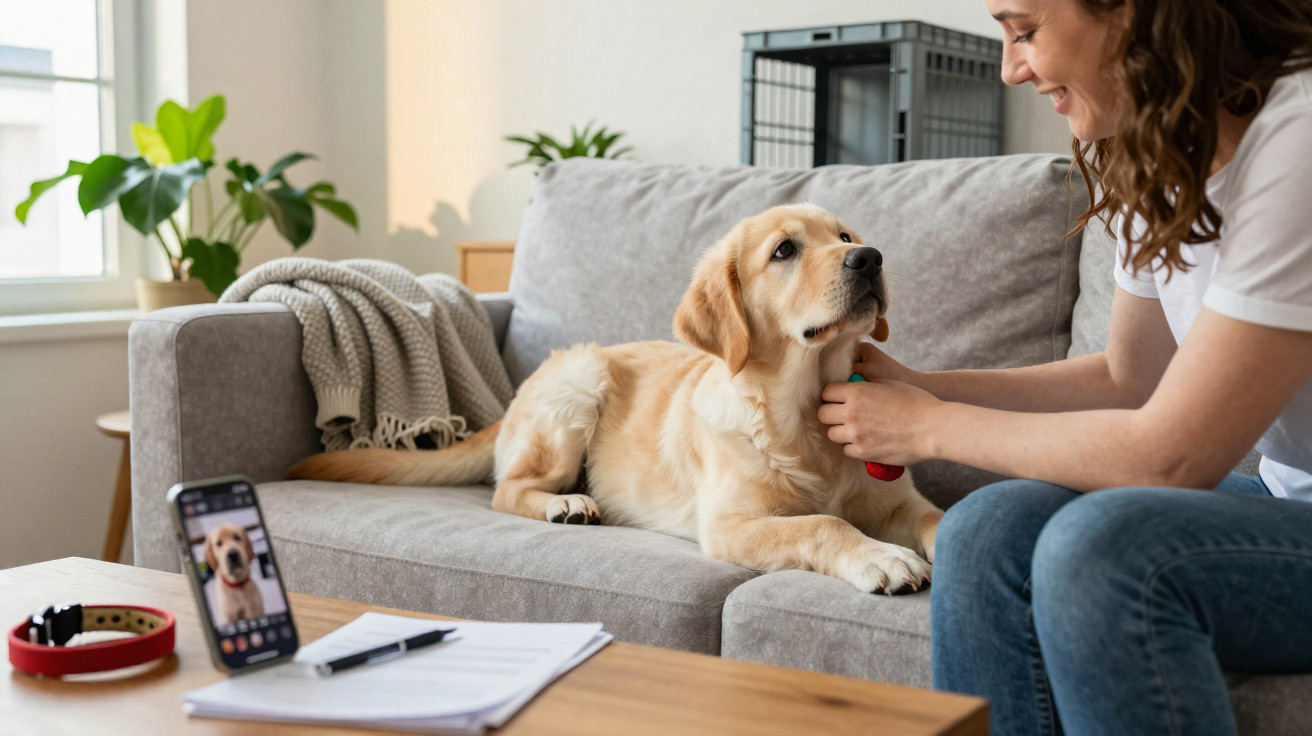
Many dogs relax noticeably faster when their person stays close during this period. A few extra minutes of cuddling or quiet reassurance may be enough.
Feeding, medication and walks during daylight saving time
Around the clock change, many owners wonder whether they should follow the new time strictly or stay closer to the old rhythm.
Adjusting feeding times sensibly
The 15-minute trick works particularly well for food. It lets your dog’s digestive system become accustomed to the new timing gradually. Sensitive animals that quickly develop diarrhoea or vomiting benefit especially from a gentle transition.
Do not move medication times abruptly
If your dog receives long-term medication, for example for epilepsy, heart problems or pain, do not independently shift the timing by a full hour. A gradual adjustment of 10–15 minutes each day is sensible here too. If in doubt, speak briefly to your veterinary practice first, particularly for medicines with very narrow dosing windows.
Keep walks flexible but predictable
The precise time of a walk is less important than overall reliability. If you normally walk your dog before work in the morning, keep to that “part of the day”. Small adjustments in the days before the clock change help here too, so your dog is not causing havoc at dawn on Sunday.
If your dog still reacts strongly
Despite every preparation, some four-legged companions can become genuinely unsettled: they howl, barely sleep or eat poorly. It is worth looking closely at the situation: is it really only daylight saving time, or could something else be involved – pain, illness or changes in the household?
Keeping a diary can be useful. For one week, note when your dog is fed, walked and asleep, as well as how they behave. If you identify a pattern, a vet or trainer can offer more targeted support. Sometimes a small additional period of rest in the afternoon is enough to make the whole evening calmer.
Why a few minutes of planning are worthwhile
The clocks change only twice a year, yet for sensitive dogs it can feel like a small bout of jet lag. Simply shrugging it off and hoping that “everything will settle down” can lead to stressed pets, irritated neighbours and sleepless nights.
A considered 15-minute plan takes little time but gives your dog noticeably greater calm. Many owners also find that they cope better with the change themselves when they approach it consciously and in small stages. In the end, everyone benefits: your dog, your sleep and your everyday routine after the switch to daylight saving time.













Comments
No comments yet. Be the first to comment!
Leave a Comment