
New data from France suggests that gym memberships and expensive gadgets are not what make the biggest difference; instead, it is an unassuming four-legged companion. People living with a dog are more active, feel mentally more settled and find it easier to step away from their smartphones. The measurable findings from France can also be applied to German-speaking countries.
How a dog turns walks into a health routine
Research by the pet-sitting platform Rover indicates that daily life has changed dramatically for many French people since they began heading out with their dog. Around 70 per cent say they have become noticeably more active. This is not the result of punishing workouts, but of regular, unremarkable movement.
Before owning a dog, only a small proportion of people walked for more than an hour a day. According to the study, about 13 per cent reached that level. Now, with a four-legged friend on the lead, roughly one in three manages it every day. Morning walks, a brief outing during the lunch break and an evening stroll add up to a kind of “basic training” that does not feel like exercise.
“A dog turns necessary movement into a fixed, almost automatic routine – and it is precisely this regularity that has a long-term effect on the heart, circulation and weight.”
The benefit is particularly clear at the start of the year, when good intentions often fade quickly. Three out of four respondents who had set themselves a fitness goal say their dog motivates them more effectively than a conventional coach. A dog does not wait for its owner to overcome a lack of motivation – it is already standing at the door.
When a dog’s look becomes a training plan
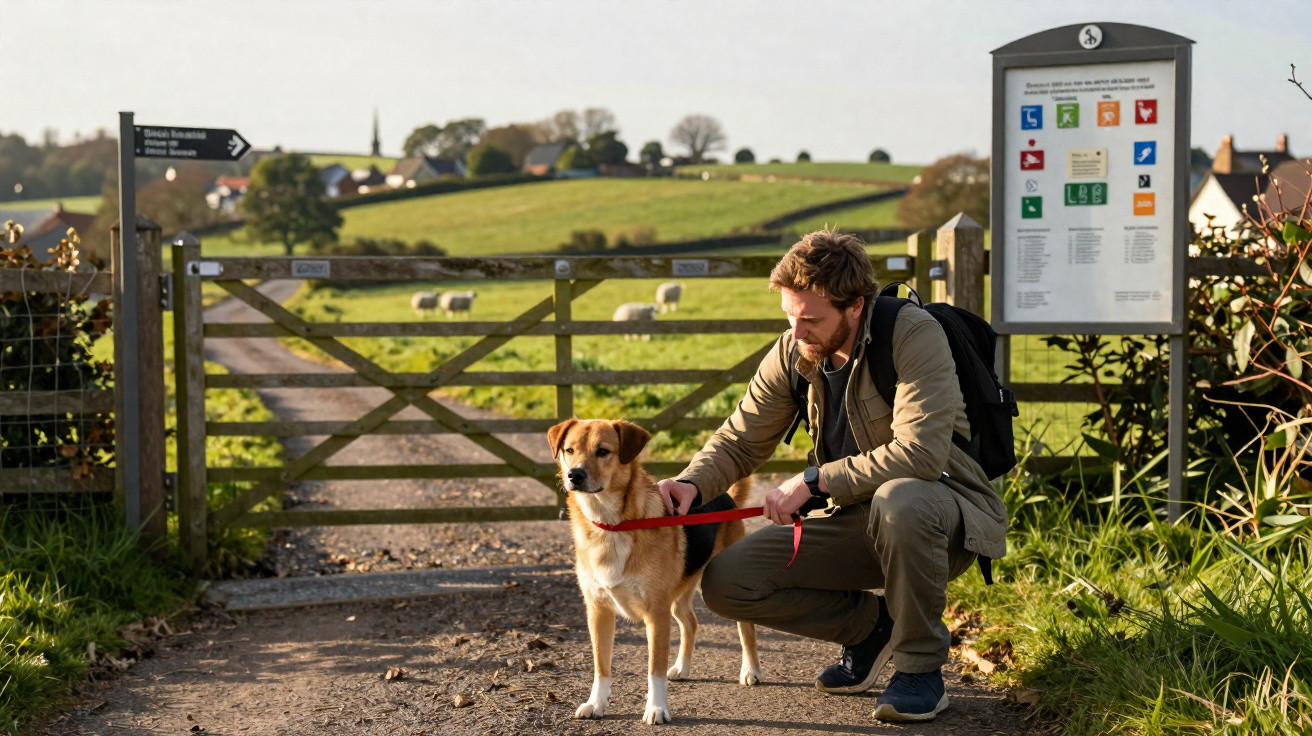
Almost half of those taking part readily admit that, on many sluggish days, they would simply stay on the sofa without their dog. Instead, they put on their shoes because the dog needs to go outside. The study found that 88 per cent of owners take at least one walk each day, while almost half regularly turn weekends into longer trips or hikes.
This creates a fresh rhythm for the day:
- Morning: a short burst of activity before work or school
- During the day: a small movement break that gets people away from their desk chair
- Evening: a longer walk for gentle winding down and mental switch-off
The pattern can readily be transferred to other countries. Anyone living with a dog in Munich, Vienna or Zurich will recognise it: the day is automatically arranged around the animal’s needs, making everyday life considerably more active.
Four paws as a mood booster and stress reliever
The physical effects are easy to measure, but the psychological impact carries almost as much weight. No fewer than 96 per cent of surveyed dog owners report a clear improvement in their emotional wellbeing. Many describe a better general mood, while others mention feeling less tense and spending less time overthinking.
Part of the explanation is straightforward. Outdoor exercise reduces stress hormones, supports sleep and exposes the eyes to daylight. There is also an emotional element: closeness, touch and a sense of responsibility. A dog snuggles up beside its owner, visibly shows its happiness and responds to moods. This bond acts as an emotional buffer.
“For one in four owners, their dog directly improves their mood, while almost one in five feels significantly less stressed in everyday life.”
Less doomscrolling, more genuine breaks
There is another notable side effect: around a quarter of respondents say their dog helps them pick up their smartphone less often. On a walk, their attention is no longer fixed on a screen but shifts to the surroundings – trees, people and other dogs. This interrupts the constant flow of news, emails and social media.
When the dog is absent for several days, the change in mood is often noticeable. In the study, almost half of owners felt less well during such periods, and nearly a fifth felt substantially more stressed. The four-legged companion therefore serves as an emotional anchor in daily life, offering support, structure and reliable positive attention.
From pet to a genuine health factor
The traditional view of a dog as merely a “pet” appears to fall short. Almost half of respondents now describe their four-legged companion as a true wellbeing partner. For more than one in five, the dog is fully part of the family, with its own rituals, regular places and a responsibility extending far beyond food and water.
This brings dogs closer to what experts call a “health resource”: a factor that actively helps maintain physical and emotional stability. While politicians and health insurers discuss schemes to improve mental health, everyday life with a dog produces quiet yet tangible effects.
| Aspect | Benefit provided by a dog |
|---|---|
| Exercise | More steps each day, regular exertion and gentle endurance training |
| Mood | A better mood, a feeling of closeness and less loneliness |
| Stress | Shorter periods of overthinking and small breaks from work and daily life |
| Digital balance | Deliberate offline moments during walks and less scrolling |
| Daily structure | Fixed morning, midday and evening routines, with a dependable rhythm |
What people without dogs can learn from this routine
Not everyone can or wants to keep a dog, whether because of time constraints, work or an allergy. Nevertheless, parts of this successful formula can be adopted. Its core is a simple, non-negotiable habit that structures the day while combining movement with brief mental breaks.
Here are a few ideas that can work without a four-legged companion:
- Schedule a 20–30-minute walk at the same time every day, treating it as a fixed diary appointment.
- Deliberately leave the smartphone at home for these walks, or keep it in a bag.
- Choose a regular route associated with positive feelings, perhaps because it has pleasant views.
- Involve friends or neighbours to create a sense of commitment.
- Take short “micro-breaks” during the day by simply walking around the house or block.
Those who commit to such a ritual over the long term often experience effects similar to those reported by dog owners: more everyday movement, fewer overly analytical spells of overthinking and a routine that is not entirely dictated by a screen.
Who a dog is really suited to
For all the advantages, one point remains crucial: a dog is not a piece of fitness equipment that can be put in a corner when it is not being used. It needs time, attention and money over many years. Anyone considering getting a four-legged companion should first assess honestly whether their circumstances are suitable.
A dog is best suited to people who:
- can set aside several time slots each day for walks
- are prepared to go outside even in rain and cold weather
- have financial reserves for veterinary care, food and equipment
- enjoy being outdoors and do not avoid contact with other people
Anyone who can tick these boxes gains more than a pet in return: an exercise coach, a kind of mood anchor and a dependable reason to simply close the laptop in the evening.
Why simplicity is so effective
The French data highlights something that is often lost in the fitness hype: the greatest change does not come from a complicated training programme, but from a simple habit repeated every day. A dog does not demand peak performance; it demands consistency, and that is where its strength lies.
Anyone who understands this principle can apply it to many areas of life. Whether with a dog, running shoes or simply a scheduled walk, a small routine maintained consistently can make the difference between repeatedly intending to change and actually changing everyday life.













Comments
No comments yet. Be the first to comment!
Leave a Comment