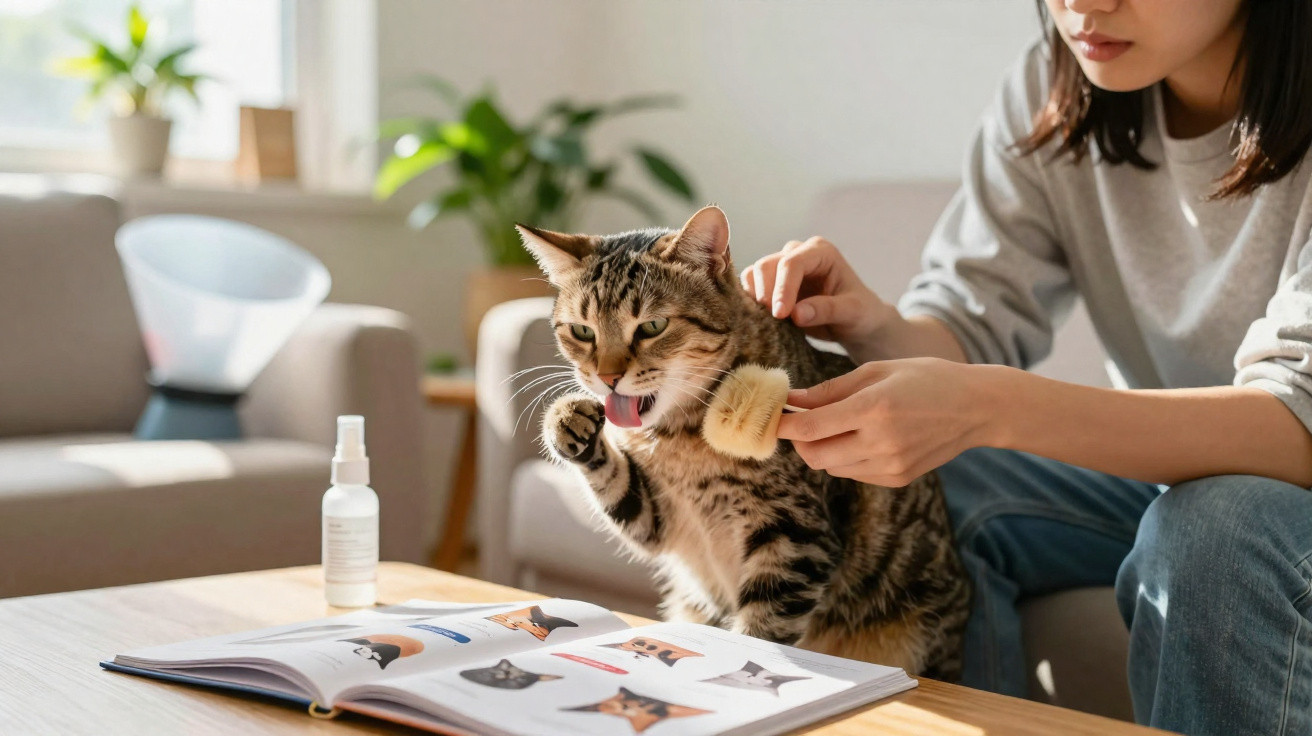
Cats lick themselves many times throughout the day, and this behaviour is a natural part of feline life. As well as keeping their coat clean, this habit supports body-temperature regulation, eases stress and promotes wellbeing. If licking becomes excessive, however, it may point to health issues or emotional changes. Knowing what is usual and when to seek help can make a real difference to your cat’s health.
Why do cats lick themselves?
Licking is rooted in feline instinct from the earliest days of life. A cat’s rough tongue clears away dirt and loose fur while spreading the skin’s natural oils, helping to keep the coat protected and in good condition.
Grooming also offers reassurance and comfort. During periods of rest, many cats lick themselves to unwind, relieve minor tension and retain a feeling of security in their surroundings.
When can cats licking themselves indicate a problem?
In most cases, this habit is entirely normal. However, if licking becomes much more frequent or is focused on one particular body area, it is worth watching for further signs that could suggest something is wrong.
Some symptoms require attention and may warrant a veterinary assessment:
- Significant fur loss in specific areas.
- Sores or redness caused by persistent licking.
- Frequent itching, which may be linked to allergies or parasites.
- Changes in behaviour, such as anxiety or withdrawal.
What can cause a cat to lick itself excessively?
A range of factors can lead to increased licking. Skin conditions, fleas, allergies, localised pain and even stressful situations may cause a cat to repeat this behaviour more intensely.
To help you interpret these signs, it is worth watching the video from the @PeritoAnimal channel. In the content below, they explain that the area on which a cat concentrates its licking - whether the belly, paws or tail - provides a vital clue to whether the cause is physical, such as pain and allergies, or psychological. Watch it in full:
How can you tell whether licking is normal?
The key is to monitor both the frequency and the effects of this behaviour. A healthy cat will usually lick itself several times a day without creating bald patches or injuries. Grooming sessions commonly take place after meals, on waking or before sleeping.
If hairless areas, sores, irritation or any notable change in routine appears, it is important to seek veterinary advice. The sooner the cause is identified, the greater the chance of resolving the issue quickly while safeguarding the feline’s health, comfort and quality of life.















Comments
No comments yet. Be the first to comment!
Leave a Comment