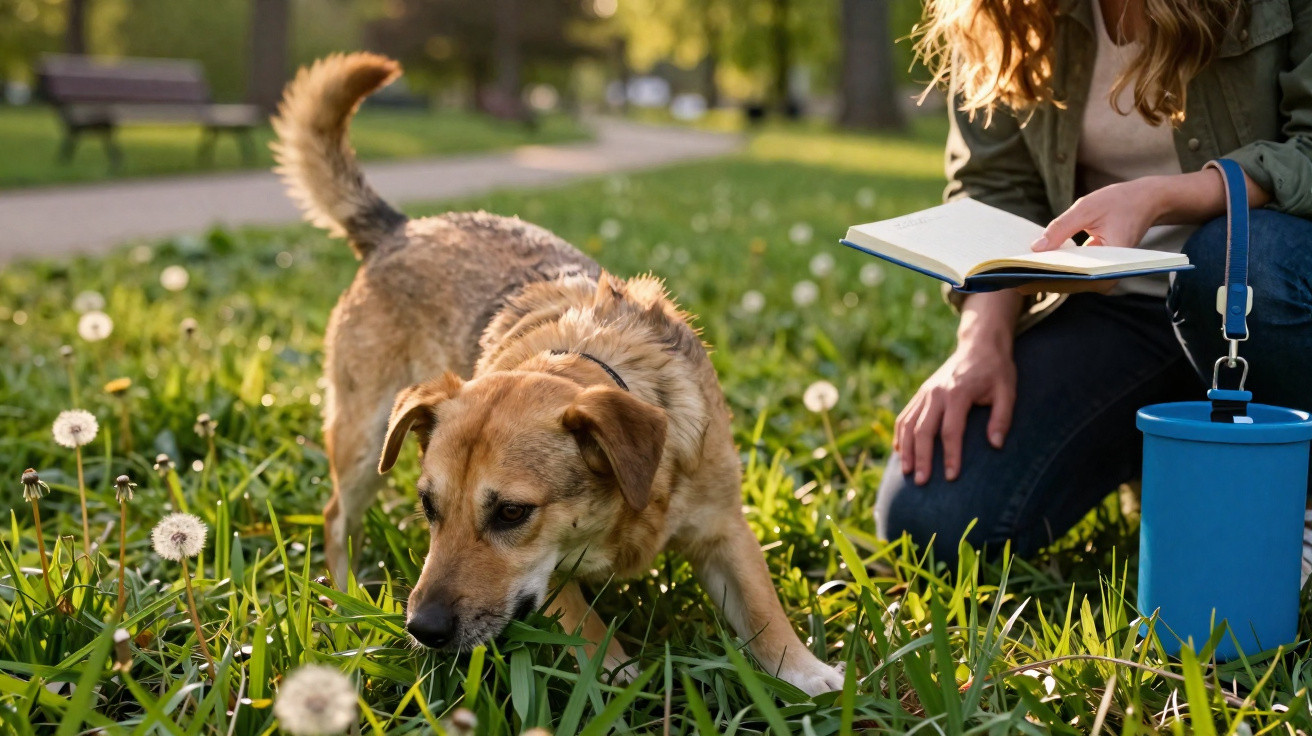
Many owners are alarmed when their dog suddenly turns into a “mini cow” on a walk, diligently nibbling at grass. Their worry is usually that something may be wrong with the stomach or intestines. The reassuring news is that, in most cases, this is a perfectly normal part of a dog’s life. Even so, there are situations in which grass eating should be taken very seriously and prompt action is needed.
Why so many dogs eat grass
Veterinary surgeons report that roughly 70 to 80 percent of all dogs eat grass regularly. Although this can seem peculiar to us, it makes perfect sense from a dog’s perspective. Several influences may be at work, ranging from ancient instincts to straightforward boredom.
An old instinct to “clear out” the stomach
Although today’s family dog may sleep on the sofa, it still carries the legacy of its wild ancestors. Their diet did not consist solely of meat: they also ate the entire stomach contents of their prey, including plant matter.
“Grass can act rather like a ‘brush’ in the stomach and helps some dogs relieve themselves.”
Coarser blades can mildly irritate the stomach lining. Some dogs deliberately trigger the urge to vomit in this way, to get rid of something that is, quite literally, “sitting heavily in the stomach” – such as too much food or something they do not tolerate well. For other dogs, the extra plant material simply stimulates digestion.
Grass also provides fibre. If a diet contains a great deal of meat or very little plant material, a dog may try to obtain the missing fibre by eating grass. This can help get the bowel moving more effectively again.
Grass as a source of fibre for the gut
Some dogs eat grass when their stools are particularly hard or when passing faeces seems difficult. The cellulose found in grass can then support bowel movement.
- stools are regularly very dry
- the dog strains noticeably for a long time when toileting
- you mainly feed wet food or very finely ground dry food with no identifiable plant content
When several of these points occur together, it is worth reviewing the feeding plan. Often, adding a moderate amount of fibre to the diet is enough to make the grass buffet less appealing.
Variety, boredom and simply liking the taste
Alongside all these instincts, there is also a very ordinary explanation: many dogs enjoy the taste of fresh grass. The young, tender shoots that appear in spring can be like a crisp salad. They are juicy, cool and strongly scented.
Activity levels matter too. A dog that spends hours lying around in the garden or is not sufficiently occupied on walks may find its own “hobbies”:
- plucking and chewing grass
- collecting sticks
- digging up roots
- constantly sniffing the ground
Grass eating can therefore simply indicate that a dog is under-stimulated. More scent work, search games or short training sessions during walks provide a distraction – and are more enjoyable for both of you than yet another blade of grass in the stomach.
When grass eating becomes a warning sign
If your dog occasionally nibbles a few blades, appears relaxed and then carries on as normal, there is usually no reason to worry. It becomes more concerning when the pattern or intensity changes suddenly.
A sudden grass-eating frenzy
An abrupt change should raise concern: a dog that previously sampled grass only now and then but, from one day to the next, throws itself greedily and almost frantically at every patch of greenery. Typical signs include:
- it deliberately looks for grass and eats it feverishly
- it tears out whole clumps along with soil
- it is difficult to call away or distract while eating
This behaviour often looks like a desperate attempt to ease abdominal discomfort. Many dogs also pant more heavily, lick their mouth and lips repeatedly, or swallow unusually often.
“Sudden, compulsive grass eating is regarded as a clear stress or pain signal from the gastrointestinal tract.”
Warning combination: grass eating and vomiting
The situation becomes genuinely serious when grass eating is accompanied by repeated vomiting. This often indicates irritation or inflammation of the stomach lining. Some animals retch several times in a short period – frequently bringing up only foam, mucus or grass remnants.
Possible causes include:
- gastritis (inflammation of the stomach lining)
- food intolerance or a change of food
- viral or bacterial infections
- a foreign body in the gastrointestinal tract (for example, a piece of bone, part of a toy or a scrap of fabric)
If vomiting continues for several hours, your dog seems lethargic, has abdominal pain, or refuses food and water, a veterinary surgeon is essential. A swallowed foreign body in particular can quickly become life-threatening and may sometimes require surgical removal.
Keeping an eye on your dog’s grass eating
Rather than counting every blade, take a clear view of the overall situation. The key factors are intensity, accompanying symptoms and any changes from your dog’s usual behaviour.
Checklist for owners
| Situation | Assessment |
|---|---|
| a few blades now and then, dog seems bright | usually normal; observation is sufficient |
| eats grass regularly but does not vomit and has normal digestion | review the diet and, if necessary, offer more fibre |
| sudden, frantic grass eating | monitor closely; contacting a veterinary surgeon promptly is sensible |
| grass eating plus repeated vomiting | urgent veterinary examination |
What you can do in everyday life
A few simple adjustments can prevent much of the stress surrounding this issue. The aim is for your dog to eat healthily, digest normally and have meaningful activity while out and about.
Improve diet and digestion
A dog that eats grass constantly may not be receiving the ideal nutrition from its current food. Checking the ingredients can help:
- sufficient fibre content, for example from vegetable flakes or specialist fibre mixes
- a high-quality protein source without major variations in composition
- no continual switching between varieties and brands
Many owners find that, after changing to food with a moderate fibre content, their dog eats grass considerably less often. This is particularly true for animals with sensitive stomachs.
Make walks more engaging
Keeping your dog mentally occupied makes it less likely to snack its way through the meadow out of boredom. Suitable options include:
- short search games using treats in leaves or on tree stumps
- brief training sessions (sit, down, stay with distractions)
- relaxed heelwork over changing surfaces
- sniffing walks where the dog is deliberately given time to explore
Young, energetic dogs in particular benefit greatly from clear tasks instead of finding their own entertainment on the grass.
Do not underestimate risks in grass
While grass itself is harmless for most dogs, it can contain several hazards. Heavily used paths and public green spaces may contain, among other things:
- pesticides and fertilisers
- other animals’ faeces carrying worms or germs
- broken glass, plastic debris and other foreign objects
If you are happy to let your dog have an occasional nibble, choose quiet, clean areas wherever possible and strictly avoid places recently treated with fertiliser or sprays. In your own garden, it is advisable to avoid chemical products altogether, or to keep dogs away from treated areas during the exclusion period.
What this behaviour reveals about your dog
Grass eating can also serve as your dog’s “mouthpiece”. Owners who watch their animal carefully will often notice early on when something changes. If a normally relaxed dog suddenly eats grass obsessively, becomes restless, frequently licks its mouth or repeatedly wants to go outside at night, there is often more behind it than a brief appetite for greenery.
Conversely, a dog that happily races around a meadow, plucks a few blades now and again, then returns to playing is mainly showing one thing: it is using instincts that have been part of it for centuries. Learning to read these signals removes much of the pressure from the issue while also sharpening your awareness of your own four-legged friend’s health.










Comments
No comments yet. Be the first to comment!
Leave a Comment