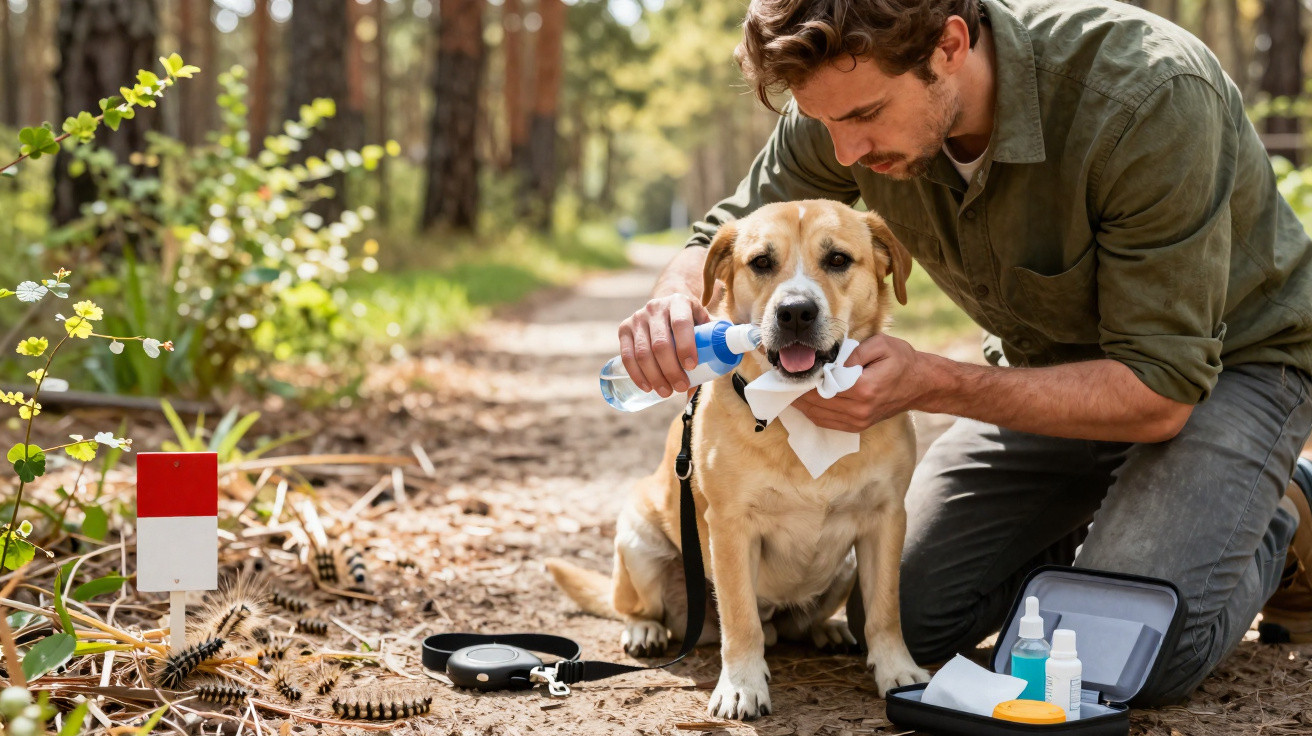
Spring walks with your dog are among the best moments of the year for many owners. The air becomes milder, paths are finally dry again and fresh green shoots emerge everywhere. Yet this seemingly harmless period brings a heightened risk in many areas of severe, potentially life-threatening poisoning: contact with processionary caterpillars, whose dangerous season is being noticeably extended by climate change.
How climate change is extending the danger into spring
In the past, owners who had safely navigated the critical weeks between February and March could feel relatively reassured. By then, the caterpillars of the pine processionary moth had generally returned to the treetops or completed their migration period.
This has changed markedly. Milder winters, the near disappearance of prolonged frosty spells and generally higher average temperatures are disrupting the life cycles of many insects. As a result, processionary caterpillars develop over a longer period, and their most hazardous phase now extends into late April in some areas – sometimes even beyond.
The period during which dogs can come into contact with processionary caterpillars on woodland walks now stretches well into spring.
The caterpillars leave their nests in trees in long lines – the “processions” that give them their name – and travel across woodland floors, paths, verges and embankments. These are precisely the places dogs most like to investigate. Anyone relying on old assumptions and becoming less cautious from March onwards is substantially underestimating today’s risk.
Why processionary caterpillars are so dangerous for dogs
The hazard does not come from a bite by the animal, but from a highly aggressive substance found in the caterpillars’ tiny urticating hairs. These hairs contain a toxic protein that causes serious inflammation and tissue damage on contact.
Every caterpillar has tens of thousands of these microscopic hairs on its body. They detach easily, drift through the air, settle on grass, leaves and soil, and can quickly end up in the nose or mouth of an inquisitive dog. Even sniffing or licking just once can be enough.
If the hairs reach the lining of the mouth or the tongue, they embed themselves in the tissue like minute barbs and release their toxin. This happens within fractions of a second. Dogs usually react extremely quickly:
- severe pain in and around the mouth
- heavy drooling, often with foam
- rubbing the muzzle with their paws
- swelling of the lips, tongue and sometimes the entire head area
- breathing difficulties, restlessness, whining or yelping
- later, darkened areas of the tongue where tissue is dying
Within a few hours, parts of the tongue can die and fall away – with lasting consequences for the animal’s eating, drinking and quality of life.
The toxic reaction destroys cells in the affected mucous membranes. Without prompt treatment, necrosis can occur, meaning the tissue dies. In the worst cases, massive swelling in the throat can cause the dog to suffocate.
Typical places where owners need to be especially vigilant
Processionary caterpillars are found mainly in and around coniferous woodland, particularly where pine trees and other conifers grow densely. However, urban green spaces, parks and school grounds may also be affected if suitable trees are present.
| Location | What owners should keep in mind |
|---|---|
| Pine woods | Avoid paths with caterpillar lines or white silken nests on trunks. |
| Woodland edges and clearings | Keep your dog on a lead where there are conspicuously large numbers of conifers. |
| Forestry tracks and sandy paths | Watch for “marching” caterpillar columns, especially in sunny spots. |
| Parks with conifers | Take local authority warning signs seriously and avoid affected areas. |
Typical nests resemble woolly white silk structures on trunks or larger branches, often at eye level or slightly higher. If you notice such nests on your regular dog-walking route, report them to the local authority or relevant forestry service, and avoid those paths for the time being.
First aid: what to do immediately if your dog has had contact
If your dog suddenly begins drooling heavily, licking its mouth in pain or develops rapid swelling around the head after a woodland walk, every minute matters. Owners are understandably often shocked in this situation, but a clear course of action is essential.
Step-by-step emergency plan
- Protect yourself: Put on thick gloves or use a clean plastic bag if you need to handle your dog’s mouth. The urticating hairs can also trigger severe reactions in people.
- Rinse thoroughly: Flush the mouth, lips and tongue with as much water as possible. A drinking bottle or hose with a gentle stream is ideal. If possible, keep the dog’s head tilted slightly downwards so the water can drain away.
- Do not rub: Do not rub with a cloth, finger or sponge. Any mechanical irritation breaks more hairs and releases additional toxin.
- Go straight to a veterinary surgery or emergency veterinary hospital: Telephone while travelling so the team can prepare for your arrival.
Only prompt rinsing followed by veterinary treatment can prevent the damage in the mouth from worsening dramatically.
At the veterinary practice, the dog will generally receive anti-inflammatory and anti-allergy medication, along with pain relief and fluids where required. Breathing will be monitored if there is substantial swelling, and severe cases may need inpatient care.
How to reduce the risk before your walk
The danger can rarely be avoided altogether in affected areas, but owners can considerably reduce the risk:
- Avoid potential hotspots during the peak season, including pine woods and particular parks.
- Keep your dog on a lead in at-risk locations and do not allow it to run through undergrowth.
- Look out for local authority warning signs, which are often placed at car parks or woodland entrances.
- Always carry a small water bottle for emergencies.
- Gently rinse short-haired dogs after a walk, especially their paws and belly area.
Owners who know their dogs well will notice rapid changes in behaviour, such as restlessness, sudden drooling or persistent pawing at the face. When these signs occur after a woodland walk in an area with conifers, processionary caterpillars should immediately be considered as a possible cause.
What many owners still do not know about processionary caterpillars
It is not only direct contact with caterpillars that poses a risk. Abandoned nests also contain huge quantities of dry urticating hairs, which can be carried a long way by the wind. These hairs may provoke severe reactions in dogs and people even months after the caterpillar stage itself has ended.
Symptoms vary according to where the hairs enter the body:
- Mouth and tongue: extreme pain, drooling, necrosis
- Eyes: conjunctivitis, swelling, sensitivity to light
- Skin: hives, itching, redness, sometimes resembling severe sunburn
- Respiratory system: coughing, sneezing, wheezing and, in severe cases, breathlessness
Anyone whose skin comes into contact with the hairs should rinse the affected area with cold water, change their clothing and seek medical advice if the reaction is severe. The hairs cannot simply be “wiped off”, as they penetrate the upper layer of the skin.
Why this risk is likely to increase in future
Meteorologists expect average temperatures to continue rising. These are ideal conditions for heat-loving insects to spread. Consequently, processionary caterpillars may become established in areas that have so far been barely affected, including higher-altitude locations or regions further north.
Many local authorities are attempting to tackle the issue, for example by vacuuming up nests, closing paths or applying targeted biological plant protection. Such measures reduce the risk, but cannot eliminate it entirely. Ultimately, it remains a shared effort: forestry services, towns and councils on one side, and alert pet owners on the other.
For dog owners, this means rethinking the critical period above all else. It is no longer confined to late winter, but covers the whole of spring until at least the end of April. By choosing walking routes with care, carrying water for emergencies and recognising the first warning signs, you give your four-legged companion the best chance of getting through the season safely despite rising temperatures.













Comments
No comments yet. Be the first to comment!
Leave a Comment