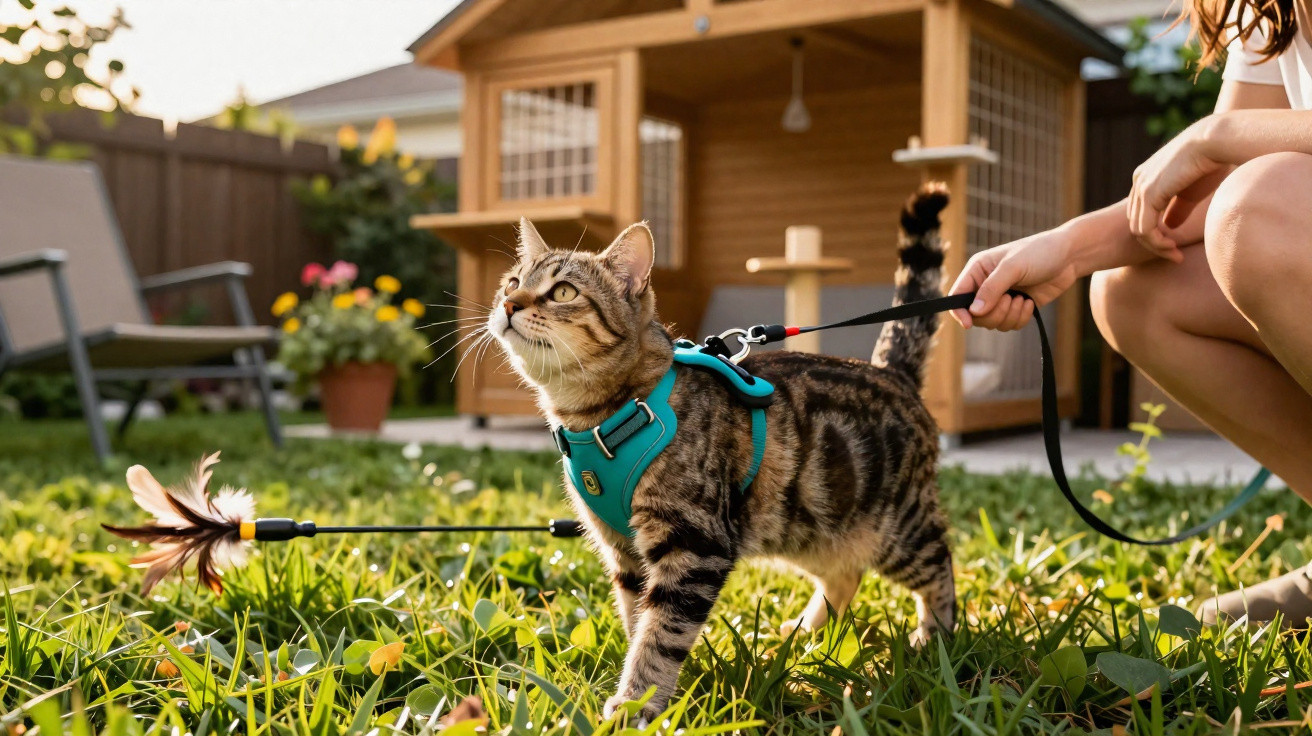
Controlled outdoor access for cats has become increasingly prominent among veterinary professionals and feline behaviour specialists. For many years, the discussion was split between keeping cats entirely indoors and allowing them to roam without restriction. Current studies point to a more balanced option, offering valuable stimulation without exposing animals to the hazards of the streets. With appropriate supervision and secure spaces, cats can develop healthier behaviours, experience less stress and enjoy a better quality of life.
Why do cats need more daily stimulation?
Cats have innate urges to explore, observe and hunt. Even when they live in comfortable indoor settings, they still need challenges that engage their senses and keep their minds active.
To understand how to balance this exploratory nature with a safe routine free from the risks of the street, it is worth watching @DraJulianaDamasceno’s explanation. In the video, she discusses the importance of keeping felines safe indoors and how to support their wellbeing in the home environment:
How does controlled outdoor access for cats improve behaviour?
Recent research indicates that supervised contact with outdoor spaces provides meaningful sensory experiences. The breeze, natural sounds and varied scents stimulate behavioural areas that are often insufficiently explored indoors.
Observed outcomes include more positive emotions and fewer behaviours regarded as problematic. Many owners report fewer instances of restlessness, more affectionate interaction and calmer day-to-day living after introducing these controlled activities.
What are the safest ways to allow supervised outdoor time?
Safety is the most important factor in this process. The aim is not to let a cat wander freely in the streets, but to create opportunities to explore outdoors without the risks associated with accidents, illness or escaping.
Veterinary professionals recommend several options for making this experience safe and enjoyable:
- Catios, which are fully enclosed outdoor spaces for cats.
- Protective mesh in gardens, balconies and patios.
- Harness walks using equipment designed for felines.
- Specialist fencing that prevents escape attempts.
- Continuous supervision throughout the activity.
How can a cat be gradually introduced to the outdoors?
The introduction should be gradual and should respect each animal’s individual pace. Some cats show immediate curiosity, while others need more time to build confidence and feel at ease with unfamiliar experiences.
Specialists advise using positive reinforcement throughout the process. Treats, affection and pleasant experiences help cats form positive associations with the protected outdoor environment. This allows the transition to take place without stress and supports a more enriching, safe routine that benefits the animal’s physical and emotional health.

















Comments
No comments yet. Be the first to comment!
Leave a Comment