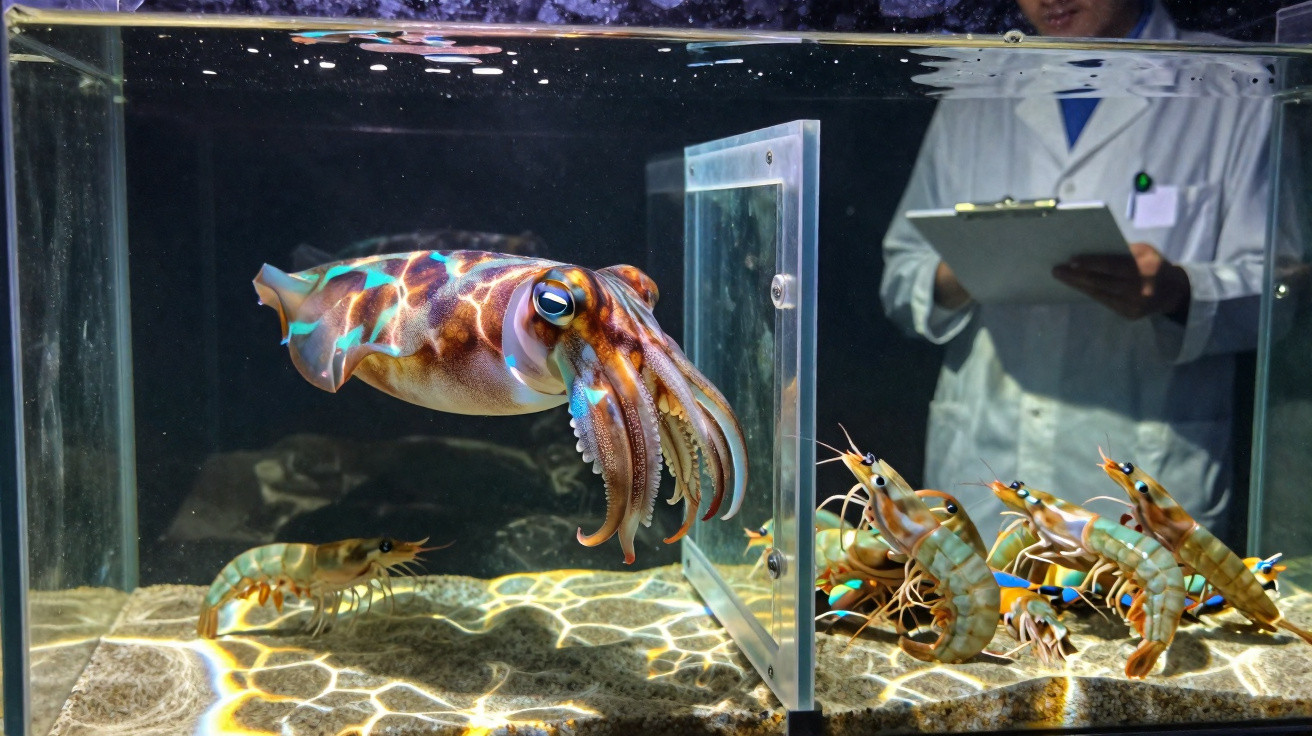
A revealing experiment involving cephalopods underlines why animal intelligence should not be underestimated.
In a study published in 2021, researchers gave cuttlefish a new form of the ‘marshmallow test’. The findings suggested that more happens inside their unusual little brains than anyone had suspected.
The researchers proposed that the cuttlefish’s capacity to learn, anticipate future rewards and adapt their behaviour may have evolved to give them an advantage in their ruthless, eat-or-be-eaten marine environment.
How the marshmallow test measures self-control
The marshmallow test, also known as the Stanford marshmallow experiment, is relatively simple.
A child is left in a room with a marshmallow and told that, if they can resist eating it for 15 minutes, they will receive a second one and can eat both.
Being able to delay gratification demonstrates cognitive skills such as planning for the future. The experiment was originally used to investigate the development of human cognition, specifically the age at which a person becomes capable of waiting for a better outcome.
Its simplicity means the test can be adapted for animals. Although an animal cannot be told that waiting will bring a better reward, it can be trained to understand that better food will arrive if it does not immediately eat what is in front of it.
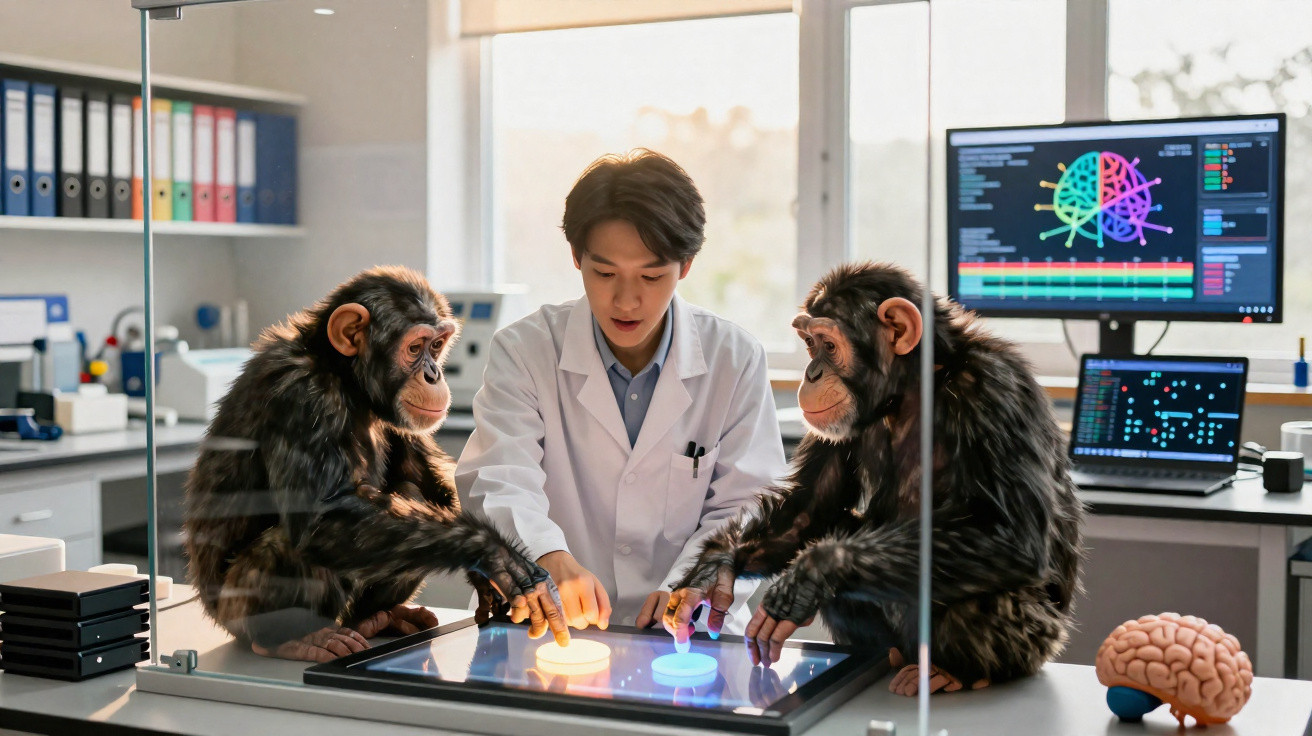
Some primates and dogs can delay gratification, though dogs do so inconsistently. Corvids have also passed the marshmallow test.
In 2020, cuttlefish passed a version of it too. Scientists found that common cuttlefish (Sepia officinalis) could resist a morning meal of crab meat after learning that dinner would be a food they preferred much more: shrimp.
However, a team led by Alexandra Schnell, a behavioural ecologist at the University of Cambridge, noted that it was difficult to establish whether self-control was responsible for this change in foraging behaviour in response to prey availability.
The cuttlefish marshmallow test
The team therefore devised another test involving six common cuttlefish. Each animal was placed in a special tank containing two enclosed chambers with transparent doors, allowing it to see the food inside. One chamber held a less desirable piece of raw king prawn; the other contained a much more tempting live grass shrimp.
The cuttlefish had been trained to recognise symbols on the doors. A circle indicated that a door would open immediately, while a triangle meant it would open after an interval of 10 to 130 seconds. A square, used only in the control condition, indicated that the door would remain shut indefinitely.
In the test condition, the prawn was placed behind the door that opened immediately, while the live shrimp could only be reached after a delay. If a cuttlefish chose the prawn, the researchers removed the shrimp at once.
In the control group, by contrast, the shrimp stayed out of reach behind the square-marked door, which did not open.
Every cuttlefish in the test condition chose to wait for its preferred food, the live shrimp. In the control group, where the shrimp was inaccessible, they did not wait for it.
“Cuttlefish in the present study were all able to wait for the better reward and tolerated delays for up to 50-130 seconds, which is comparable to what we see in large-brained vertebrates such as chimpanzees, crows, and parrots,” Schnell explained in 2021.
The researchers also tested the learning ability of the six cuttlefish. They presented the animals with two different visual cues: a grey square and a white square.
When a cuttlefish approached one square, the other was removed from the tank. A “correct” choice earned it a snack.
After the cuttlefish had learnt to associate one square with a reward, the researchers reversed the cues, making the other square the one that signalled food.
The cuttlefish that adapted most quickly to the switch were also those that could wait longest for the shrimp reward.
Why cuttlefish may delay gratification
The results suggest that cuttlefish can exercise self-control, but the reason remains uncertain.
In parrots, primates and corvids, delayed gratification has been associated with tool use, which requires planning ahead; food caching, for obvious reasons; and social competence, since prosocial behaviour, such as ensuring everyone has food, benefits social species.
As far as scientists know, cuttlefish do not use tools or cache food, and they are not particularly social. Instead, the researchers think their ability to delay gratification may be connected to how they forage.
“Cuttlefish spend most of their time camouflaging, sitting and waiting, punctuated by brief periods of foraging,” Schnell said at the time.
“They break camouflage when they forage, so they are exposed to every predator in the ocean that wants to eat them. We speculate that delayed gratification may have evolved as a by-product of this, so the cuttlefish can optimise foraging by waiting to choose better quality food.”
It is a fascinating illustration of how very different species, living very different lives, can develop similar behaviours and cognitive abilities.
Researchers have also found evidence of “episodic-like memory” in cuttlefish, and in 2024 scientists reported the first observation of the creature forming false memories.
The team noted that future research should investigate whether cuttlefish are indeed capable of planning for the future.
The research was published in Proceedings of the Royal Society B.
A version of this article was first published in March 2021.






Comments
No comments yet. Be the first to comment!
Leave a Comment