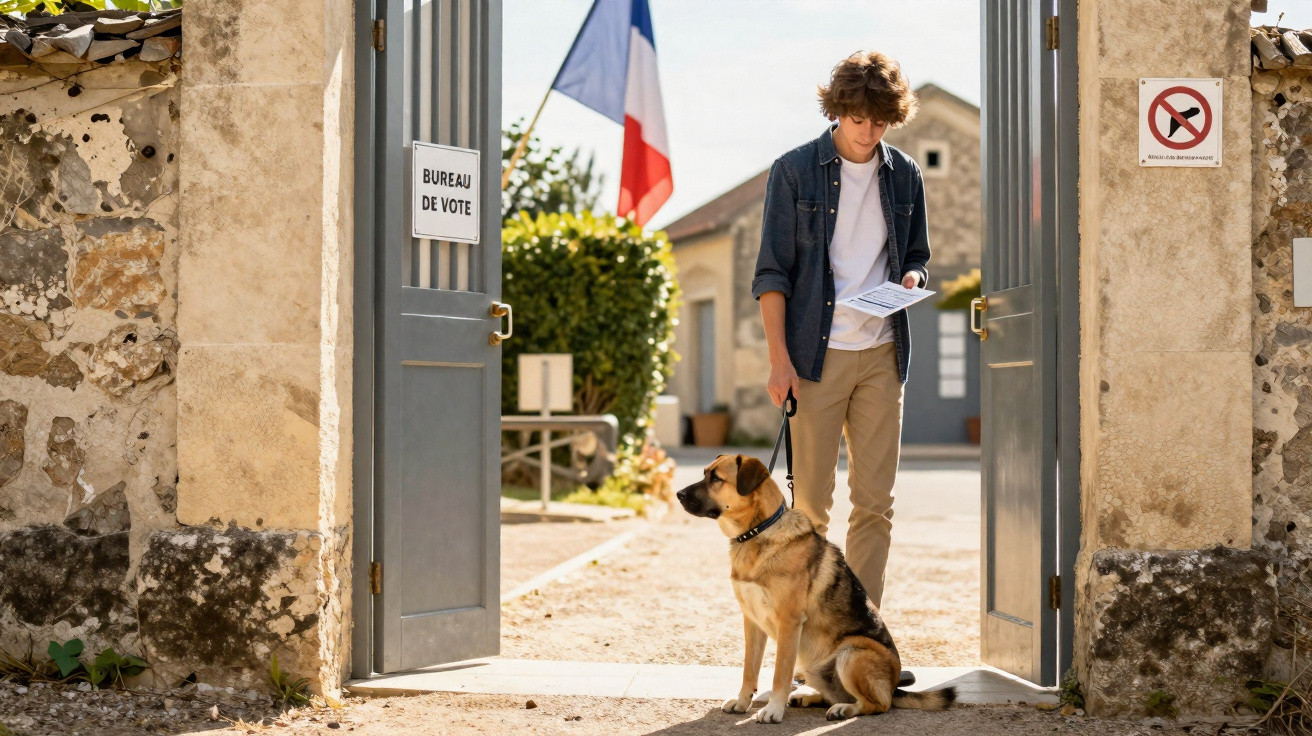
Elections take place regularly in France, bringing millions of people to polling stations. For many dog owners, that raises a practical question: can their four-legged companion come inside, or is it better to leave them outside while the ballot goes into the box?
What French law says about dogs at polling stations
French electoral rules set out in detail how polling stations must be run: they must be neutral, calm, free from undue influence and accessible to all citizens. The law says very little, however, about dogs and other pets. There is no nationwide provision stating clearly whether dogs may enter or must remain outside.
Whether a dog is welcome inside a French polling station often depends on the local municipality and a measure of common sense.
Even so, owners can use a few general guidelines to plan ahead.
A clear exception: assistance dogs
There is no dispute over the status of assistance dogs. These include, for example:
- Guide dogs for people with visual impairments
- Assistance dogs for people with physical disabilities
- Some dogs specially trained to support people with mental health conditions
These animals are regarded as aids rather than “pets”. They can accompany their owners into public spaces, including polling stations, where animals may otherwise be prohibited. Staff there generally cannot refuse them entry, provided they are recognisable as assistance dogs, for example by a harness or other identification.
A difficult case: dogs classed as dangerous
The position is different for dogs classified as particularly dangerous in France. Stricter rules apply to them, including general restrictions in certain public areas. In many places, such dogs cannot be taken into public buildings at all, or can enter only under very strict conditions.
At a polling station, this usually means the dog must stay outside. Owners of a dog with this classification should check local requirements well in advance, such as a muzzle, a specified lead length or even a ban on entering public facilities.
The main grey area: “ordinary” family dogs
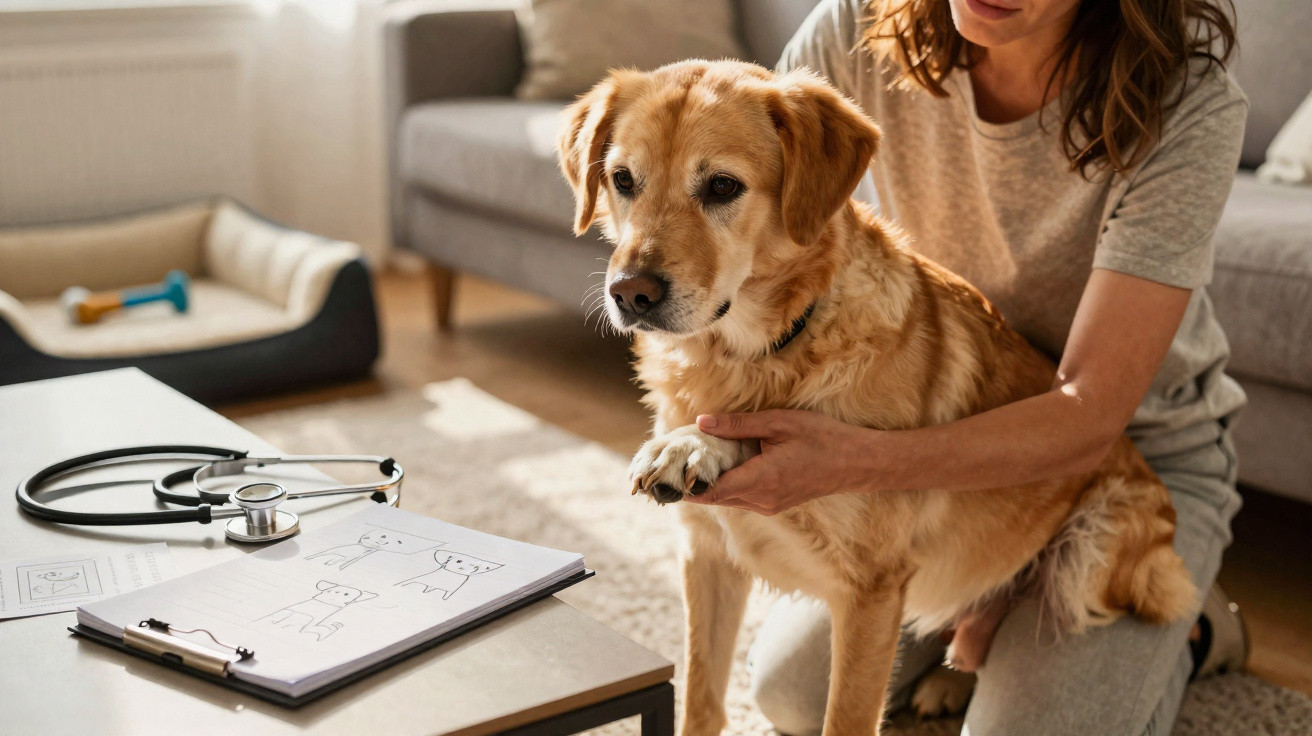
The situation becomes less clear for the dogs most people have in mind: well-behaved family pets, from Chihuahuas to Golden Retrievers. No single nationwide rule covers them. Instead, several factors come into play:
- The decision of the local municipality or town administration
- The rules of the premises housing the polling station, such as a school, town hall or community centre
- The judgement of the person in charge of the polling station on election day
Some municipalities take a relaxed approach: a dog can come into the building if it is on a short lead, does not disturb anyone and does not lie in the middle of an aisle. Elsewhere, the rule is unequivocal: no animals in the polling station.
Relying on instinct could lead to frustration on election day; a quick call beforehand can clear things up.
Why many municipalities are cautious
Polling stations are meant to operate smoothly and quietly. Even one encounter between two dogs that turns into a confrontation, or a frightened child, can cause disruption. Some people also have severe allergies or a pronounced fear of dogs. In a confined space and a long queue, those concerns matter more than they might during a walk in the park.
Many officials therefore take a cautious approach to avoid conflict. In practice, they would rather have one fewer dog in the room than a loud argument in the middle of voting.
How owners can check the rules at their polling station
Someone arriving at a French polling station with their polling card and dog will not want to be turned away at the door. A little advance planning can prevent that.
Three useful steps before election day
- Call or visit: Ask at the town hall or the relevant polling station whether dogs on leads are allowed inside the building.
- Plan alternatives: If animals are not permitted, arrange a solution in good time, perhaps with neighbours or family members.
- Assess your dog's behaviour honestly: Only bring a dog that is used to crowds and reliably walks on a loose lead.
Asking in advance can spare you an argument and save your dog stress on election day.
If the town hall gives a definite no, there are two options: leave the dog at home, or have two adults go to the polling station together so that one can wait outside with the animal.
Across the Channel: how Great Britain handles it
The picture in Great Britain is quite different. In recent years, a real trend has emerged: people pose with their animals outside polling stations, post the pictures on social media and see them picked up by news outlets. Everything from Labradors and pugs to cats makes an appearance.
Taking a pet along when going to vote seems almost normal there. Members of the public are not the only ones photographed with animals; prominent politicians and celebrities do it too. Dogs become quiet supporting characters in democracy, sometimes even turning into an online running joke.
Despite that relaxed attitude, there are limits. Animals must not disrupt voting. If a dog barks, jumps up at people, behaves aggressively or blocks the entrance, polling station staff can refuse entry or ask its owner to leave the building.
Why France appears more hesitant
France places considerable importance on the strict, businesslike organisation of elections. The emphasis is on order, legal certainty and equal treatment. From an administrative perspective, pets do not fit neatly into that framework because they introduce unpredictable factors: noise, smells and potential conflicts.
There is also concern that photographs of dogs inside a polling station could be mistaken for unwanted election campaigning if political symbols appear in the picture. Many officials therefore opt for a more conservative approach.
Practical tips for owners who want to bring their dog
Anyone who still wants their dog to accompany them despite the uncertainty can make the experience more relaxed by following a few simple rules:
- Arrive at the polling station only shortly before you need to enter, avoiding long waits.
- Keep the dog on the side away from the entrance to manage encounters with others.
- Make sure the dog has had enough exercise beforehand and is not overexcited.
- Keep treats handy in case patience is needed.
- If in doubt, wait outside yourself and ask someone else to cast your vote, provided national law allows it.
Dogs that are nervous or easily stressed are often more comfortable at home than in a crowded school corridor full of unfamiliar smells and voices. For them, election day is less an exciting outing than an ordeal.
Why the question is more than a minor detail
The debate about dogs in polling stations touches on several social issues. For one thing, it shows how much relationships with pets have changed: many families see them as an established part of everyday life and want to take them almost everywhere. It also raises the question of how far dog owners can be accommodated while still protecting the rights and needs of other citizens.
Elections are among the central moments of a democracy. Removing barriers, for example for disabled people and their assistance dogs, strengthens political participation. At the same time, setting clear, understandable limits for pet and companion dogs provides reassurance and helps prevent disputes at the ballot box.
For dog owners in France, the practical lesson is simple: election day can be an opportunity for a short walk, but getting through the polling station door requires checking first and having a dog that can cope calmly with the nervous energy of a crowd.











Comments
No comments yet. Be the first to comment!
Leave a Comment