Life is full of trade-offs. Every organism has a limited supply of energy and must decide how to use it. Putting more into reproduction means less is available for something else.
For decades, scientists have debated how pronounced this trade-off is within a species. A carefully designed experiment involving a small bird has now provided clear answers.
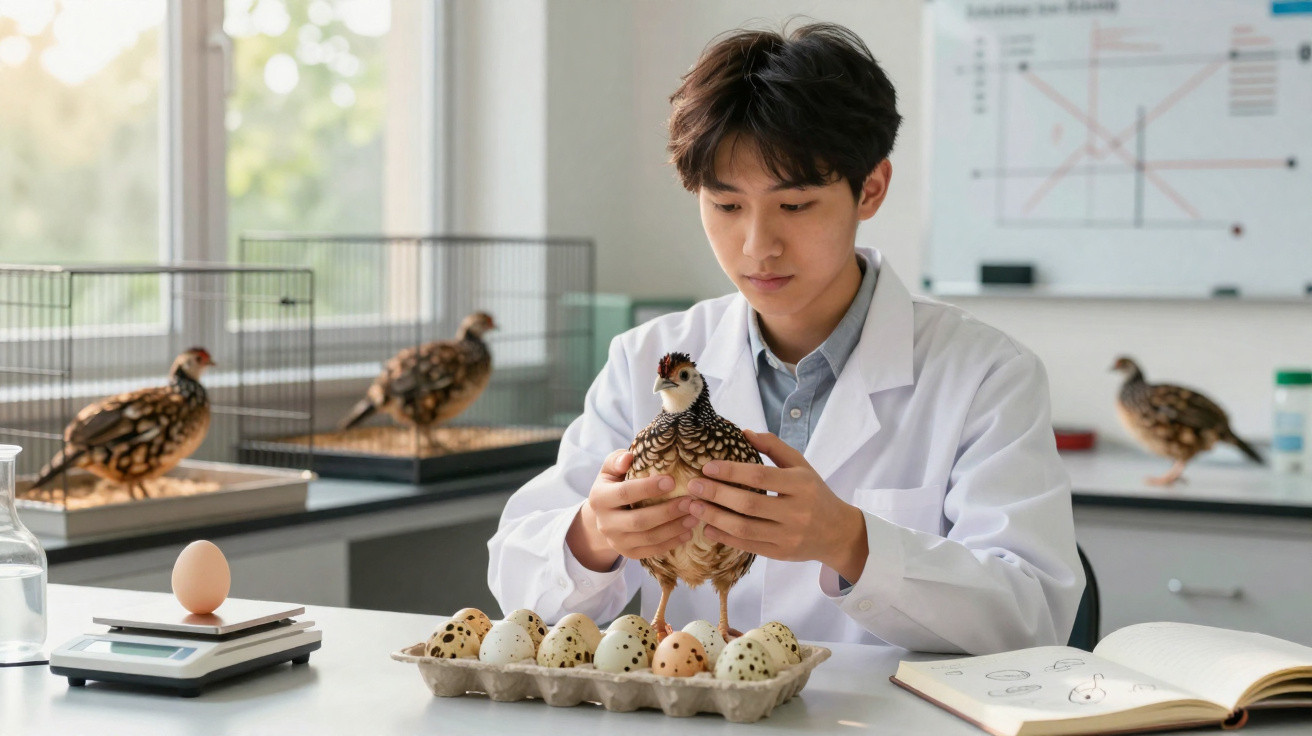
Using Japanese quail, researchers tested a simple but important question: does investing more in reproduction cause animals to age faster and die sooner?
Artificial selection of Japanese quail
Rather than simply observing what happens in nature, the scientists actively altered the birds’ breeding. They used selective breeding to decide which quail could reproduce.
Birds that laid larger eggs, for example, were bred with one another, as were birds that laid smaller eggs.
After several generations, this produced two groups that differed in the amount of energy they put into reproduction. The researchers then monitored how long the birds lived.
Reproduction and bird survival
Life history theory holds that organisms cannot maximise everything at the same time. Energy spent producing offspring is unavailable for repairing the body, creating a trade-off between reproduction and survival.
“All living things have limited energy and resources, and face trade-offs between competing priorities,” said the study’s lead author, Dr Barbara Tschirren, from Exeter’s Penryn Campus in Cornwall.
“Evolutionary theory suggests there’s an intrinsic link between ageing and reproductive effort – but this is quite difficult to test.”
“Our study does just that; it shows there is substantial genetic variation in reproductive effort and ageing, that this genetic variation is linked, and that it can evolve quickly.”
Removing outside factors
Previous studies often found it difficult to demonstrate this link clearly within a species. Differences in the environment and between individuals made cause and effect hard to disentangle.
In this experiment, the researchers removed those confounding factors by keeping all the birds in the same conditions and selecting them solely according to reproductive effort.
This approach let the team isolate the cost of reproduction itself, rather than the effects of food, stress or habitat.
Quail bred for eggs
The scientists selectively bred Japanese quail into two groups: one laying relatively large eggs and the other laying relatively small ones.
Quail invest little in caring for their young after hatching, so a mother’s main contribution is the resources she puts into each egg. Chicks that hatch from larger eggs are more likely to survive.
Breeding the birds over several generations established clear differences in reproductive strategy. The high-effort group laid larger eggs, whereas the low-effort group put fewer resources into each egg.
The study is also notable for using artificial selection in a vertebrate to test ageing theory. This is rarely done because of long lifespans and practical difficulties.
Reproduction ages birds faster
A clear pattern emerged after five to six generations. Females bred to lay larger eggs aged more quickly and died about 20 per cent earlier than those bred to produce smaller eggs.
In the final generations, females laying large eggs lived for an average of around 595 days, compared with about 770 days for females laying smaller eggs.
The findings reflect the survival patterns observed in the study: birds in the high-effort group had shorter lifespans and showed faster age-related decline.
The difference was not the result of sudden death, but of faster ageing. Scientists call this actuarial senescence, meaning that the risk of death increases with age.
The survival curves show the pattern clearly. Survival in the high-effort group falls sooner, particularly later in life, while birds in the low-effort group maintain higher survival for longer.
Individual qualities make a difference
Not every result followed a straightforward pattern. Within each group, birds producing larger eggs actually lived longer.
Although that may appear confusing, it reflects differences in individual quality. Some birds are better than others at obtaining resources.
These individuals can support both greater reproductive investment and longer lives. Looking only at natural variation can therefore conceal the deeper biological trade-off.
By using selection to shape the population, the researchers brought the underlying constraint to light.
High reproduction continues with age
The study also examined how reproduction changes as birds get older. Egg size fell with age, indicating reproductive ageing, but the decline was similar in both the high- and low-effort groups.
This suggests that birds which invest heavily in reproduction keep doing so throughout their lives, even when it comes at the expense of survival.
Dr Tschirren explained that the central trade-off is between reproduction and self-maintenance. Earlier research has shown that birds selected to invest more in their eggs may have weaker immune responses and a reduced ability to repair cells.
Males lived longer overall, and the study did not run for long enough to establish firm conclusions about the effect of selection on male lifespan.
The experiment ultimately provides strong evidence for a central biological idea: greater investment in offspring accelerates ageing and shortens life.
This link is inherent in the way organisms allocate energy, and it can evolve rapidly when conditions change.






Comments
No comments yet. Be the first to comment!
Leave a Comment