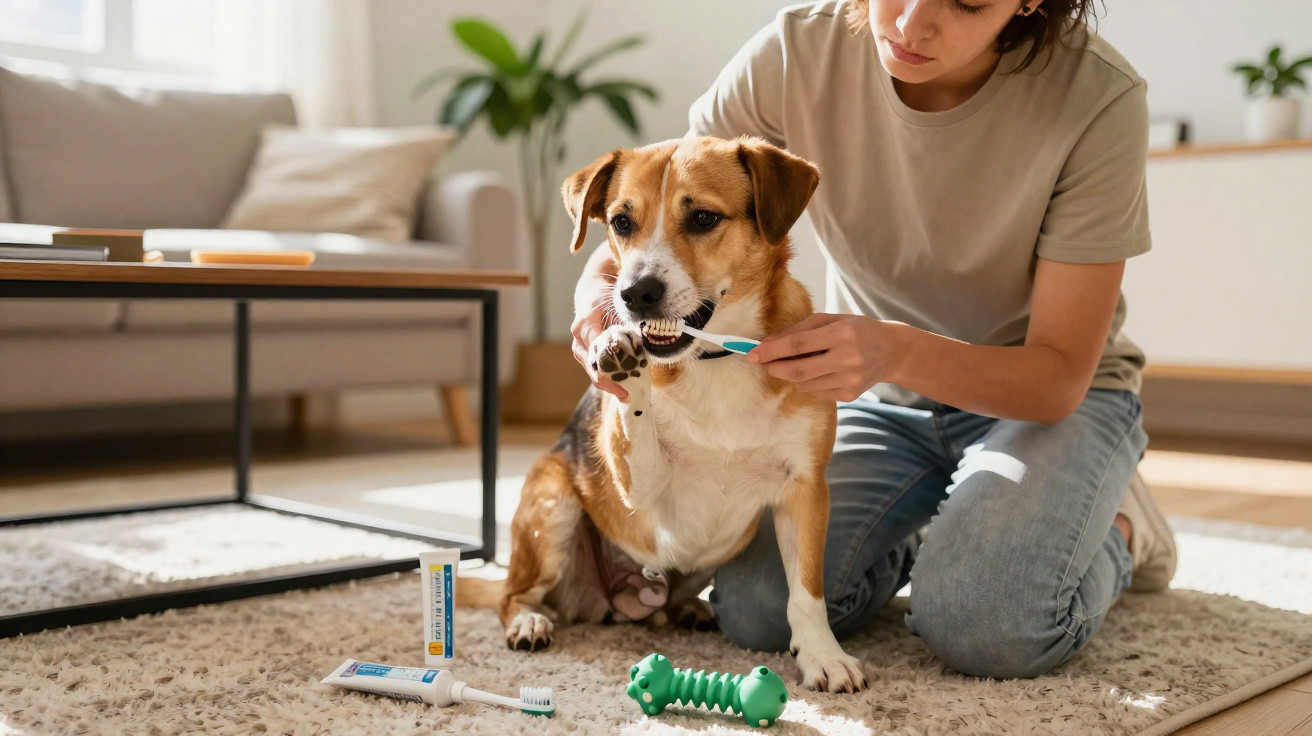
It may look adorable, but the reason behind it can be very serious.
Many owners happily record this moment on their phone, unaware that their pet could be in considerable pain. What appears to be harmless muzzle rubbing is often linked to an overlooked dental disease that is widespread in dogs and, in the worst cases, can damage organs and reduce quality of life.
Why muzzle rubbing can be a silent cry of pain
A dog that repeatedly brushes its front paws across its muzzle or frantically rolls its head in the grass is usually not trying to be “funny”. More often, it is trying to find relief.
The source of the discomfort is frequently inside the mouth – an area the dog cannot properly reach with its paw. Rubbing its muzzle can therefore be a desperate attempt to soothe deep-seated itching or pain.
Persistent muzzle rubbing is often caused by severe irritation or inflammation in the mouth – not harmless “springtime high spirits”.
Ignoring this behaviour risks allowing a condition that was initially treatable to become a long-term problem. Few animals show pain as clearly as people do. Many dogs endure dental pain for years without whimpering loudly.
The hidden common disease in dogs’ mouths
Periodontitis – when bacteria attack teeth and jaw
Veterinary professionals encounter it every day: tartar and periodontitis, an inflammation of the tissues supporting the teeth, are among the most common health conditions in dogs. Studies indicate that around eight in ten dogs over the age of three are affected by some form of periodontal disease.
The process generally follows the same pattern. A soft coating first builds up on the teeth, which then hardens into tartar. Bacteria settle in these deposits and initially “only” irritate the gums. Without treatment, they eventually attack deeper structures as well:
- Inflammation and receding gums
- Damage to the fibres holding teeth in place
- Harm to the jawbone
- Ultimately, tooth loss
Although this progression develops gradually over months or years, dogs do give signals – but many owners miss them. Constant muzzle rubbing is one such warning sign.
When plaque becomes a life-threatening issue
If inflammation persists, bacteria and inflammatory substances can enter the bloodstream through the gums. Over time, this may place strain on the heart, liver or kidneys. Some older dogs with heart problems have suffered from untreated dental disease for years.
Painful teeth in dogs are not “just cosmetic”. They affect the whole body and can damage organs.
This is why seemingly minor issues, such as bad breath or muzzle rubbing, deserve attention: they are often the first indication of a wider health concern.
Five warning signs: how your dog reveals dental pain
1. Muzzle rubbing and paws on the muzzle
This is perhaps the most noticeable sign: your dog repeatedly runs its front paws over its face, scratches at its mouth, or persistently presses its head into grass, carpets or furniture. The behaviour is especially concerning if it is new or has become clearly more frequent.
2. Strong odour from the mouth
A slight “meaty” smell is normal in dogs. However, if you notice a strongly rancid, metallic or rotten smell when your pet yawns, inflammation is usually the cause. The more severe the periodontitis, the more intense this odour tends to become.
3. Difficulty eating
Dental pain changes eating habits. Common signs include:
- Your dog eats more slowly than usual.
- It leaves hard treats untouched or chews on only one side.
- It picks out individual pieces of kibble or spits them back out.
- It swallows food quickly without chewing it properly.
Many owners interpret this as fussiness. In reality, the dog is avoiding pressure on painful teeth.
4. Red, swollen or bleeding gums
Carefully lift your dog’s lips from time to time. If the gum line is bright red rather than pale pink, or if the tissue seems swollen and sensitive, inflammation is often responsible. Blood marks on chew toys or in the water bowl can also fit this picture.
5. Loose or missing teeth
At an advanced stage, teeth may become loose or fall out completely. Sometimes owners only realise when they find a tooth in the bowl or on the floor. By that point, the disease has clearly been developing unnoticed for a long time.
| Sign | What it may indicate |
|---|---|
| Frequent muzzle rubbing | Irritation or pain around the mouth |
| Very bad breath | Bacterial inflammation, tartar, periodontitis |
| Difficulty chewing | Toothache, loose or damaged teeth |
| Red or bleeding gums | Gingivitis, early periodontitis |
| Tooth loss | Advanced destruction of the tooth-supporting tissues |
What a vet can do – and why home remedies are not enough
Professional dental cleaning is only truly effective under anaesthetic
Once periodontitis is present, chew treats or powders bought online are no longer enough on their own. Tartar needs to be removed professionally. The vet uses specialist equipment that can work below the gum line too – precisely where dangerous deposits are found.
To keep the dog still and prevent stress, this treatment is carried out under general anaesthetic. This is the only way for the veterinary surgeon to clean every affected area thoroughly. While that may sound more dramatic than it usually is, it saves teeth and preserves quality of life for many dogs.
Depending on the practice, region and amount of work involved, this kind of dental treatment generally costs around 150 to 300 euros. Tooth extractions can increase the price, but preventing even one episode of pain for your pet makes the cost worthwhile.
Five things to monitor after treatment
After the “major clean-up”, the real care routine begins at home. Knowing the usual warning signs helps you act promptly and prevents tartar from building up again unchecked. Pay particular attention to these points:
- Has the smell from the mouth become worse?
- Do the gums look red again anywhere?
- Has the dog suddenly started eating differently?
- Is a tooth unexpectedly missing, or does one appear loose?
- Has your dog begun rubbing its muzzle more often again?
If one or more of these signs appear, an early veterinary check is worthwhile. It can stop inflammation flaring up again before it becomes truly painful.
How to prevent problems without overwhelming your dog
Brushing your dog’s teeth: unfamiliar, but manageable
Regular toothbrushing remains the most effective preventive measure. Many owners are put off because it seems difficult. Yet, when introduced in small stages, almost every dog can get used to it. Helpful options include:
- Dog toothbrushes or soft-bristled finger brushes
- Special dog toothpaste, without fluoride and safe to swallow
- Very short, playful training sessions at first
Begin with just a few seconds each day, offer plenty of praise, and gradually increase both the coverage and duration. Many dogs accept the routine surprisingly well once they understand that nothing unpleasant is going to happen.
Food, chews and routine checks
Alongside brushing, textured chews can help reduce dental deposits – for example, firm chew rolls, certain dental chews or dried natural products. They do not replace professional dental cleaning, but they can slow down the formation of new tartar.
Regular veterinary checks, at least once a year, are equally important. Shorter intervals are sensible for dogs with crowded teeth, short muzzles or existing dental issues.
Why looking inside your dog’s mouth can save its life
Many serious dental conditions go unnoticed because a dog seems brave and still eats – somehow. Making a habit of briefly checking beneath the lips while stroking or cuddling your dog can reveal abnormalities much earlier.
Muzzle rubbing, unpleasant breath, red gums and chewing problems are not a “quirk”, a habit or a cause for amusement. They are the body’s way of signalling that something is wrong. Taking this call for help seriously can give your dog less pain, more enjoyment of life and, ideally, several additional healthy years.













Comments
No comments yet. Be the first to comment!
Leave a Comment