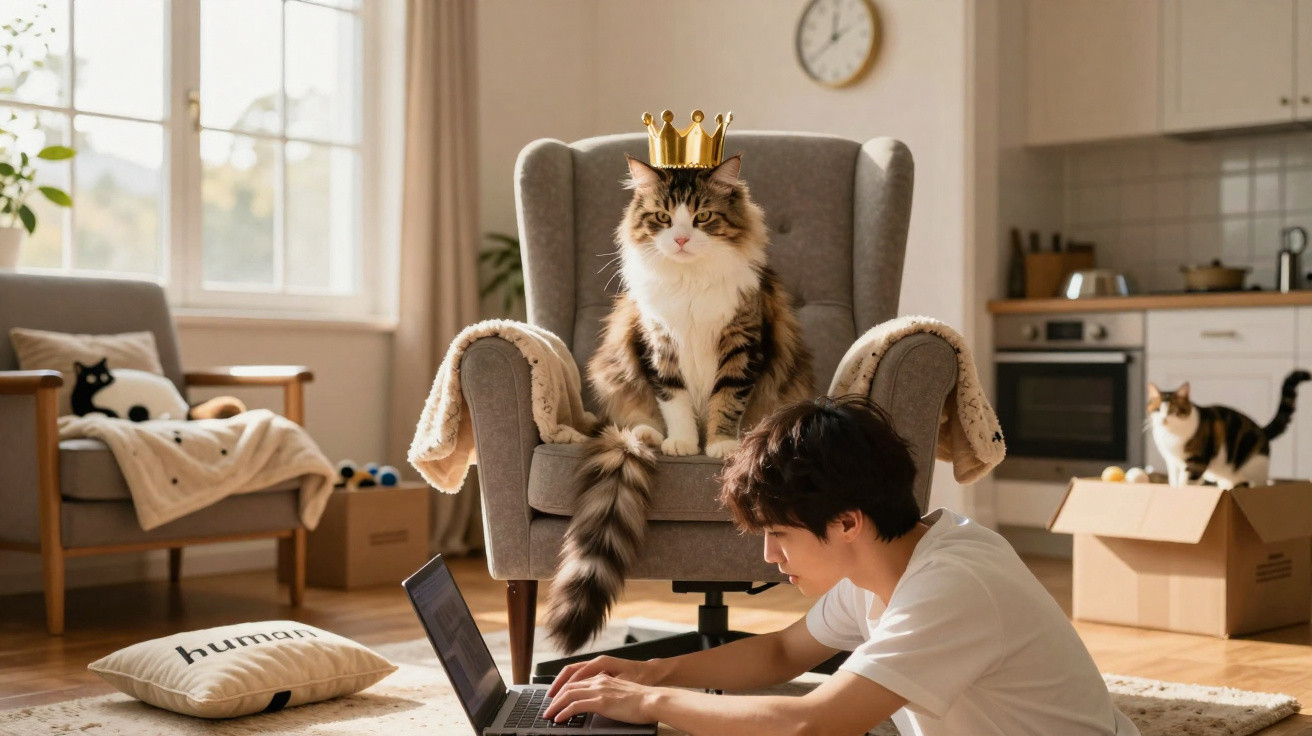
You may have believed you were bringing home a soft, little companion. Yet, on one winter’s evening, it dawned on you that your home is actually a miniature monarchy.
While snow gathers outdoors and the heating starts humming, countless people reach the same conclusion: “our cat” is, in fact, “our landlord”. Beneath the jokes about fluffy housemates is an unvarnished truth. The instant those velvety paws entered your home, the domestic power balance began quietly tipping.
The quiet conquest of every chair, box and keyboard
Begin with the furniture. Do you remember when the armchair belonged to you, the cardboard box was headed for recycling, and the laptop was intended for work rather than sleeping?
To a cat, these are not simply amusing habits. Behaviourists view them as part of an organised territorial approach. A cat that dozes in the best chair, stretches over the keyboard and climbs into every parcel box is identifying the most valuable spots in its territory.
Each surface your cat claims is less about comfort and more about control of the household’s key locations.
When a cat rubs its cheeks against table legs or the side of your computer, it deposits chemical signals known as facial pheromones. These unseen signs announce to every other creature in the house - chiefly you - that the area is occupied.
Warm places form another element of this subtle takeover. Radiators, sunny patches of floor, woollen throws, even your stomach beneath a jumper: all are premium property. When a cat lies at full length on the radiator, it is doing more than keeping warm; it is placing itself right at the heart of household movement.
High ground, high status
Then comes their fondness for elevated places: cupboards, bookcases and the top of the fridge. From these positions, your cat can observe doors, windows and, most importantly, you. In feline terms, being up high means both security and power.
- High shelves: observation posts for tracking movement
- Sofa backs: halfway stations for swift responses
- Doorframes and wardrobes: tactical viewpoints across the entire flat
If you are moving houseplants or books so “His Majesty” can reach the top of the wardrobe, that is not compromise. It is town planning for a miniature predator.
From owner to staff: unpaid porter and personal chef
The most obvious proof that you no longer make the decisions happens at the door. Your cat meows, scratches or stares, and you rise to open it. Then it merely stands there, smelling the air and perhaps walking back into the room.
That apparently pointless back‑and‑forth is not indecision; it is a perimeter inspection with you as the designated security agent.
Whenever you react, you strengthen a routine: the cat communicates a requirement and the human complies. Ethologists refer to this as learned human management. The animal has worked out that one particular sound or action reliably gets a response from you.
The kitchen dictatorship
The situation intensifies by the food bowl. Cats are small natural hunters that eat small amounts frequently. At home, this translates into a timetable where you become the permanently available caterer.
There may still be kibble in the bowl, but its base can be seen. Your cat howls as though it has not eaten in days, so you refill it. Calm is restored. Behaviour researchers term this the “visible bottom” effect: many cats will not eat when they can see the dish underneath the food.
By making you refill a not-quite-empty bowl, your cat keeps you actively involved in controlling its vital resources.
This is a classic example of operant conditioning. The pattern is straightforward:
- The cat vocalises or paws at the bowl.
- The human gets up and provides food.
- The cat’s behaviour receives a reward and becomes more established.
Do this a few dozen times and your life is governed by an unseen tin-opener timetable, rather than your own diary.
The household’s real timekeeper
Check your alarm clock, then consider the furry alarm that lands on your chest at 5:27 a.m. every morning, whether it is a weekday or weekend. Which one gets results?
Cats are naturally at their liveliest around dawn and dusk. Living in a flat does not erase that pattern; it merely makes the human schedule adapt to it.
Early-morning “breakfast raids”, late-night hallway dashes and sudden pleas for attention just as your video call begins are not meaningless mischief. Your cat is aligning your routine with its preferred sequence of hunting (play), eating and sleeping.
When you adjust your bedtime or working hours to avoid feline interruptions, you’re not organising your cat. Your cat is scheduling you.
Remote working under feline supervision
Anyone who works remotely will recognise the scene. You sit at the desk, open the laptop and start typing. A few minutes later, a tail is covering the screen or a warm cat has settled over your forearms.
Scientists believe this physical interruption may serve several purposes: seeking warmth, showing attachment and exerting a type of social control. By positioning itself between you and a rival focus - the computer - your cat draws your attention elsewhere and, in practice, decides what matters most.
| Human task | Typical cat response | Implied rule |
|---|---|---|
| Typing an urgent email | Lies on keyboard | Work pauses when I need contact |
| Online meeting | Tails the webcam, walks past screen | All social interaction includes me |
| Relaxing with a series | Demands play or zooms around room | Evening rhythm follows my activity bursts |
A velvet-pawed coup humans happily accept
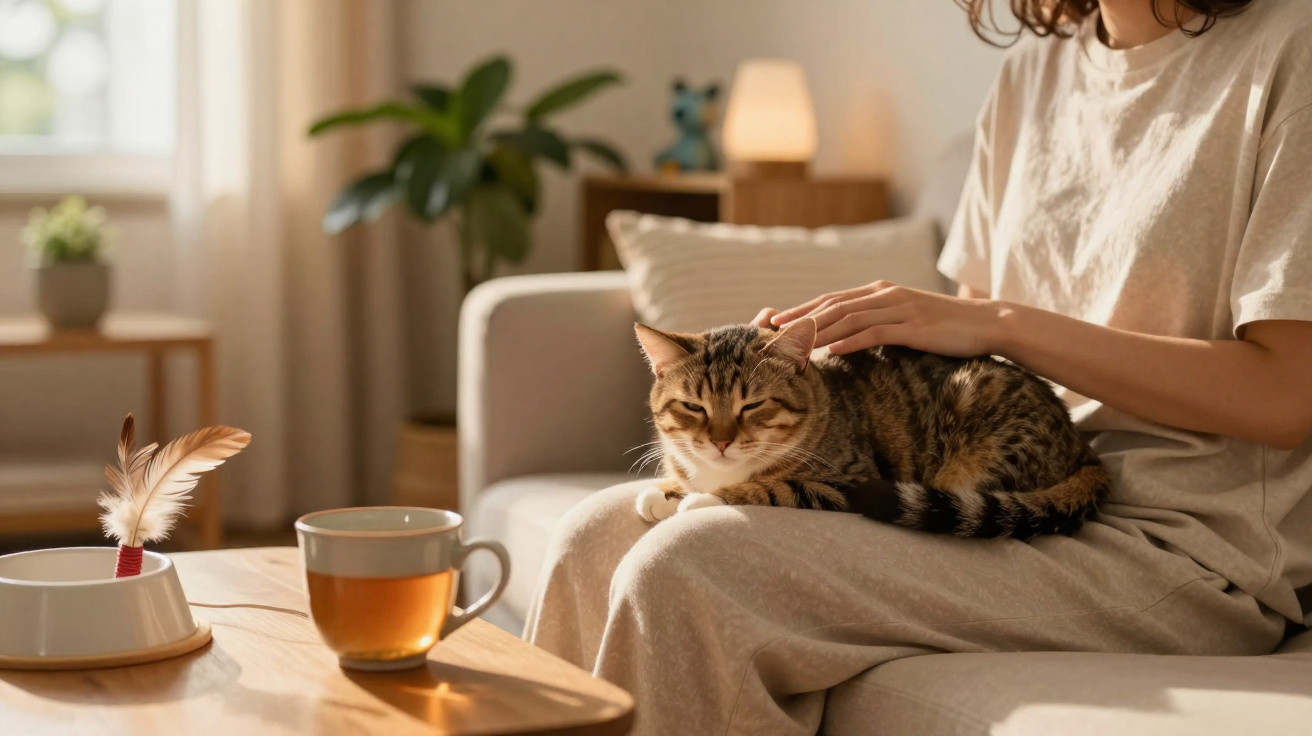
People may call their cat “bossy” as they stroke it, but they also say they feel more relaxed and less alone. Rather than resenting this change in authority, many homes embrace it.
Stroking, napping together and listening to purring all prompt the release of oxytocin in humans, often called the bonding hormone. This hormonal mix lowers stress, slows the heart rate and can make everyday frustrations - scratched doors, early awakenings and fur on the sofa - seem a worthwhile trade-off.
The regime may be strict about door duty and mealtimes, yet it comes with a measurable boost to human wellbeing.
In this way, the feline takeover succeeds emotionally as well as practically. The cat receives warmth, safety and dependable meals. The human gains dependable routines, affection when it is offered and a steadying presence during an anxious, hyperconnected year.
Living with a small monarch without losing your sanity
Recognising that your cat rules the home does not require you to abandon every limit. Vets and behaviourists recommend several mild measures for keeping the household kingdom running smoothly.
- Try puzzle feeders or timed dispensers to lessen 5 a.m. demands for food.
- Create several high perches, allowing the cat to inspect its territory without taking over your keyboard.
- Arrange regular play sessions to direct its energy before you go to bed.
- Keep particular areas off limits, while providing other comfortable places to settle.
Such modest changes honour a cat’s instinctive need to hunt, climb and feel in control, while also safeguarding your sleep and laptop. The purpose is not to remove the monarch, but to agree on a practical constitution.
When ruling the house becomes a problem
At times, a self-assured ruler can become a stressed tyrant. Warning signs include spraying, persistent vocalising, aggression near doors or excessive grooming. These behaviours commonly indicate territorial anxiety, rather than mere dominance.
In these circumstances, adding more hiding spaces, vertical shelving and reliable routines may ease the strain. A veterinary examination can exclude pain or illness, both of which may contribute to irritability. In homes with several cats, additional litter trays and feeding areas can prevent quiet territorial conflicts.
A well-managed kingdom is one where the cat feels safe enough to rule gently, not one where fear drives every decision.
For many households, the key change occurs when people stop thinking of themselves as “owners” and instead acknowledge a slightly uneven partnership with whiskers. You pay the rent and bills; the cat provides the atmosphere, the rhythm and often the emotional heart of the home.
The next time you stand up for the third time in an hour to open a door that has only just been shut, you may briefly feel annoyed. But then the tail swishes by, you hear that small chirp of contentment, and you understand: this is more than living with a pet. You are in service to a tiny, ancient sovereign that has somehow convinced you it was your plan from the beginning.









Comments
No comments yet. Be the first to comment!
Leave a Comment