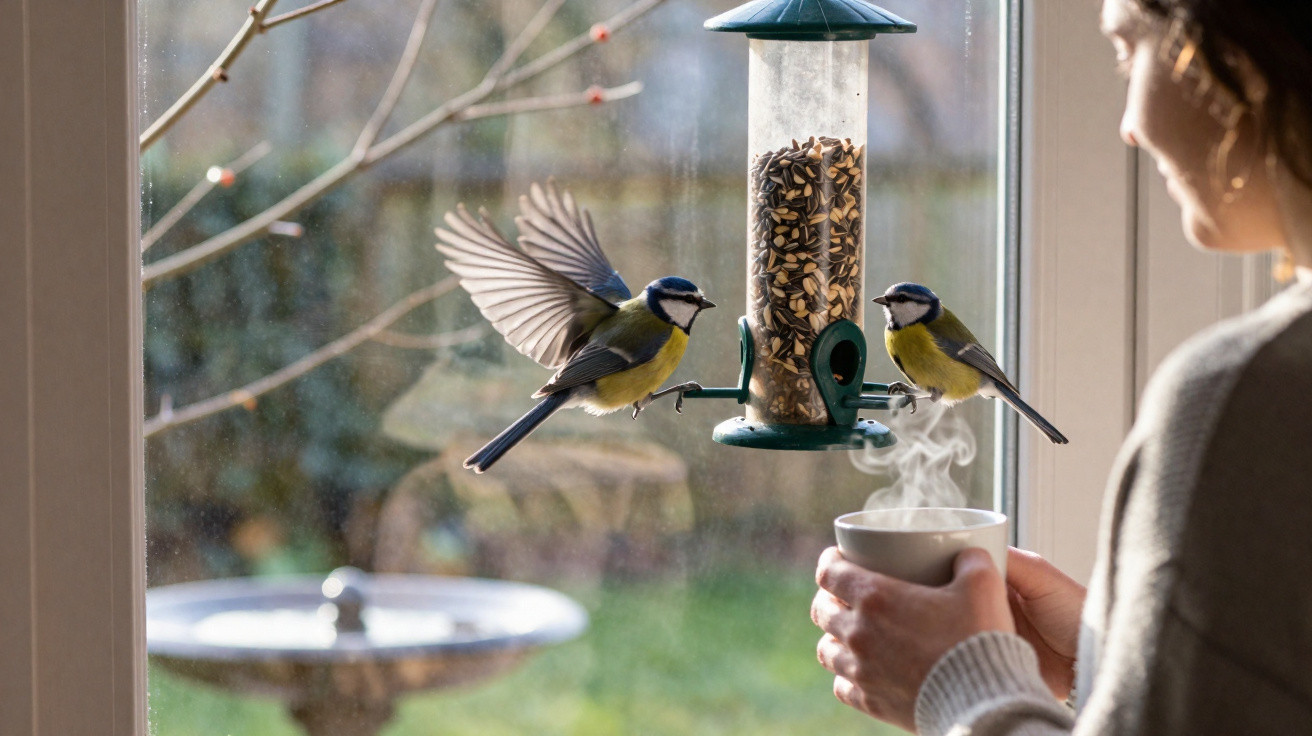
In the depths of winter, when the garden seems lifeless and silent, one simple action can transform it and bring daily activity.
Closed windows, coffee still cooling on the table and the clock showing almost the same time each morning. Outside, the cold bites, the lawn is white with frost and bare trees look abandoned. Even so, some homes receive punctual winged visitors, as though the birds’ clocks were synchronised with the householder’s routine. It is neither luck nor magic: it is a matter of method, consistency and a little observation of nature.
A quiet winter that can come alive overnight
Across much of Britain, winter weather can be harsh, and small birds notice every drop in temperature. For species such as tits, cold mornings are a genuine race against time. Having spent a long night using energy simply to keep warm, they wake with one overriding priority: finding energy-rich food quickly.
In many gardens, that does not happen. There is too little shelter, no suitable food and, above all, no predictability. In the neighbouring garden, however, the situation may be entirely different. A simple feeder hung in a well-chosen position creates a daily meeting place. What makes the difference is not a prettier garden or a larger plot, but a habit repeated every day at almost exactly the same time.
“When food appears at the same time and in the same place every day, a bird begins to include your garden in its daily survival routine.”
The birdwatchers’ secret: almost British punctuality
Ornithologists and experienced birdwatchers tend to repeat the same advice: providing food is not enough; it should be offered on an “official timetable”. Birds learn quickly. Once they realise that a meal is reliably available at a particular spot in the garden during a crucial part of the day, they begin to adapt to that clock.
In winter, this is usually just after dawn. Emerging from the night with their fat reserves close to depleted, every minute without food matters. If the feeder is empty one day, filled only in the afternoon the next, or topped up entirely at random, the site stops being dependable. A bird cannot afford to rely on chance.
When someone chooses to get up every day at, for instance, 6:45 am, put on a coat, go into the garden and faithfully fill the feeder, the result becomes clear within days. Tits gather in nearby trees shortly before that time, wait quietly, watch every movement of the householder and, as soon as they move away, swoop down to the “buffet”.
“Keeping to a feeding time turns a neglected feeder into a kind of trusted restaurant, built into the bird’s daily routine.”
High-performance food: why some seeds attract more birds than others
Consistency is the foundation, but the menu also matters. Cheap seed mixes packed with large, low-nutrient grains are often ignored. Birds pick out the few items they want, scatter the rest and then look elsewhere for better food.
For tits and similar species, the best options on cold days are foods that are high in fat, easy to reach and readily digestible. In European gardens, two foods top the energy ranking:
- Black sunflower seeds: oilier and with thinner husks, they require less effort to open and provide plenty of energy in a small quantity.
- Raw, unsalted peanuts: a genuine high-calorie “fuel”; they should be offered in pieces or in purpose-made feeders to prevent choking.
Salty, sugary or heavily processed items, including white bread, biscuits and leftover human food, can harm birds’ digestive systems and may lead to crop swelling, malnutrition and illness. What appears to be a short-lived abundance can become a trap.
“For a bird, winter is a daily marathon: every seed must deliver as much warmth and energy as possible without placing strain on the body.”
Where to place the bird feeder so the routine works
It is not enough to fill a feeder with seed and hang it from any branch. Tits are naturally wary. They need a clear view of their surroundings, visible escape routes and cover only a few metres away in case of danger. Cats, sparrowhawks and even crows can take advantage of a poorly positioned feeder.
Three straightforward positioning criteria
- Clear visibility: choose a reasonably open area where birds can survey the surroundings before landing.
- Nearby cover: provide a dense shrub, hedge or small tree 2–3 metres away for a quick escape.
- Safe height: keep the feeder beyond easy reach of cats and away from walls and windows to prevent collisions.
When these three factors come together, birds begin to regard the feeder as a “safe place”. They arrive and perch first on an observation branch, assess the risk, then move down to feed, ready to retreat to cover if anything moves unexpectedly.
Daily hygiene: the detail that keeps regular visitors healthy
Filling the feeder at the same time each day also gives the householder an opportunity for a quick quality check. Damp or mouldy seeds, or food mixed with accumulated droppings, can open the door to respiratory problems and intestinal infections.
A light wipe with a cloth, removal of built-up debris and a complete replacement of the contents after heavy rain are small measures that help prevent outbreaks among birds visiting the same spot every day. A garden that offers abundant food but poor hygiene becomes a collective risk.
“Regular feeding times must go hand in hand with regular cleaning, otherwise the feeder becomes a source of disease.”
The daily spectacle at the window and its unseen effects
Once the habit is established, the scene repeats itself almost like clockwork. The birds are already there before the householder opens the door. A few dominant individuals descend first, while others wait in higher branches. Minor disputes break out: chest-to-chest shoves and swift arcing flights intended to drive off rivals. From the breakfast table, an observer can follow it all as if watching a morning mini-series.
The effect extends beyond visual enjoyment. Birds that are well fed through winter reach spring with greater reserves for competing for territory, building nests and feeding their young. This can increase the breeding success of the local population.
| Period | Bird’s need | How the feeder helps |
|---|---|---|
| Winter | Maintain body temperature and survive cold nights | Supplies fats and quick calories in the morning |
| Early spring | Regain weight and form pairs | Provides extra energy for territorial competition |
| Nesting season | Feed chicks and make frequent journeys | Reduces adults’ effort spent searching for food |
The impact also spreads through the garden. Tits and other insect-eating birds consume huge numbers of caterpillars and aphids during the growing season. A pair with a brood may catch hundreds of insects each day. Over time, the garden is likely to become more balanced, with fewer pest outbreaks in fruit trees and flower beds.
Risks, precautions and the point at which help becomes dependency
There is an important debate among environmentalists: does providing food in winter support local biodiversity, or create artificial dependency? The answer lies in how that help is organised. Feeders must not replace natural habitat, but they can provide support during critical periods.
Several precautions can reduce the risks:
- Gradually reduce feeding when the weather becomes warmer and the natural supply of insects increases.
- Avoid overcrowding at one location by installing more than one feeder if visitor numbers become excessive.
- Do not use strong pesticides in the garden, as they can contaminate insects and seeds later eaten by birds.
For people living in densely built-up areas, the risk of collisions with glass should also be considered. Highly transparent windows that reflect the sky and trees can confuse birds. Applying discreet stickers or visible strips can prevent many accidents.
How to adapt this feeding routine to a British garden
In Britain, where garden birdlife is varied, the principle of regularity remains effective. The food and species may differ, but the basis is the same: a fixed time, a safe location and good-quality food. In milder regions, energy pressure is not limited to winter alone. Periods of severe drought or heatwaves can also demand considerable energy, including the energy needed to find water.
A simple combination that can attract regular visitors includes:
- Sunflower seeds and cracked maize for seed-eating species.
- Ripe fruit, such as apple, pear or berries, in small portions and replaced daily.
- A shallow dish of clean water, refreshed at the same time each day.
In this setting, a bird feeder becomes more than simply a place for watching wildlife: it becomes a tool for environmental education. Children learn to identify species, notice behavioural differences and understand that consistency and care directly affect whether animals are present or absent.
The small gesture that brings tits back every day, almost to the minute, demonstrates something broader: when a person fits their routine around the needs of another living creature, the landscape changes. The garden stops being a background setting and becomes a stage for scheduled encounters, where a wristwatch quietly meets the birds’ internal clock.











Comments
No comments yet. Be the first to comment!
Leave a Comment