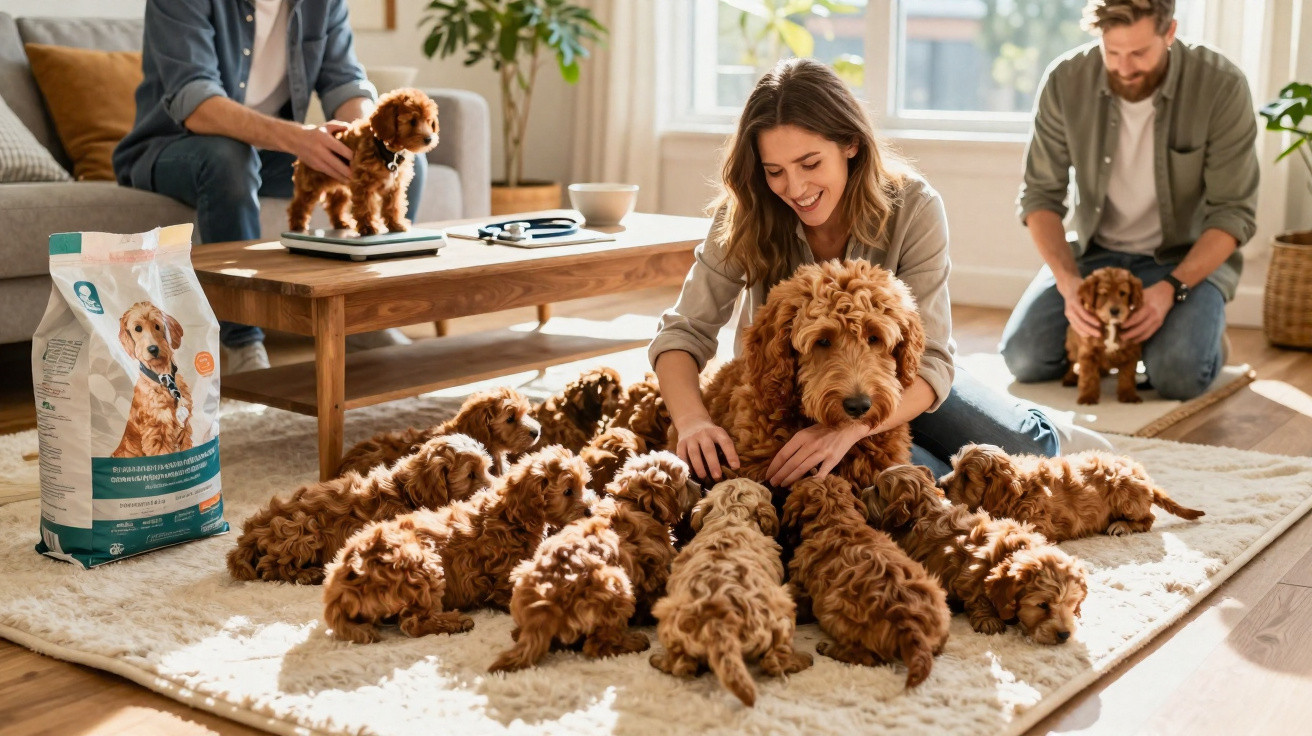
What was expected to be a routine birth for a family dog turned into an entry for the record books. Marigold, a two-year-old Irish Doodle, achieved something in one night that many breeders know only from stories. Puppies arrived one after another – and they simply kept coming.
A routine birth becomes an Irish Doodle record
Marigold lives with her family in England, where she is seen primarily as a cheerful companion rather than a breeding dog in the traditional sense. On 2 January, her pregnancy came to an end and the first contractions began. Although the vet had warned the owners that the litter might be larger than usual, they had expected perhaps eight to ten puppies.
Within the first few hours, it became clear that this estimate had been too cautious. Marigold continued to give birth to one puppy after another. Her family kept count, helped to dry the newborns and monitored their breathing and temperature. Before long, it was obvious that something exceptional was happening.
“A total of 17 puppies in one litter – a worldwide record for an Irish Doodle for several years.”
Until then, a dog called Amelia had held the breed’s highest total with 16 puppies. Marigold genuinely surpassed that figure – at an age when many dogs are only having their first or second litter.
13 hours of hard work for mother and family
The labour lasted around 13 hours in total, a marathon even for larger dogs. Marigold’s owners remained beside her throughout, checked the intervals between births, consulted the vet and kept a veterinary clinic within reach in case of an emergency.
With every new arrival, the same question came up: was this the last one? Once the tenth puppy had been born, nobody seriously expected an even bigger record. Yet Marigold kept going, puppy after puppy. When the 17th finally entered the world, there was enormous relief – although the concern that another might follow lingered briefly.
- Total length of labour: around 13 hours
- Number of puppies: 17
- Breed: Irish Doodle (a cross between an Irish Setter and a Poodle)
- Mother’s age: around two years
Marigold was completely exhausted after such an effort, which is normal following a lengthy labour. According to her family, however, she recovered remarkably quickly once she had enough fluids, rest and food.
Marigold needed a major food boost
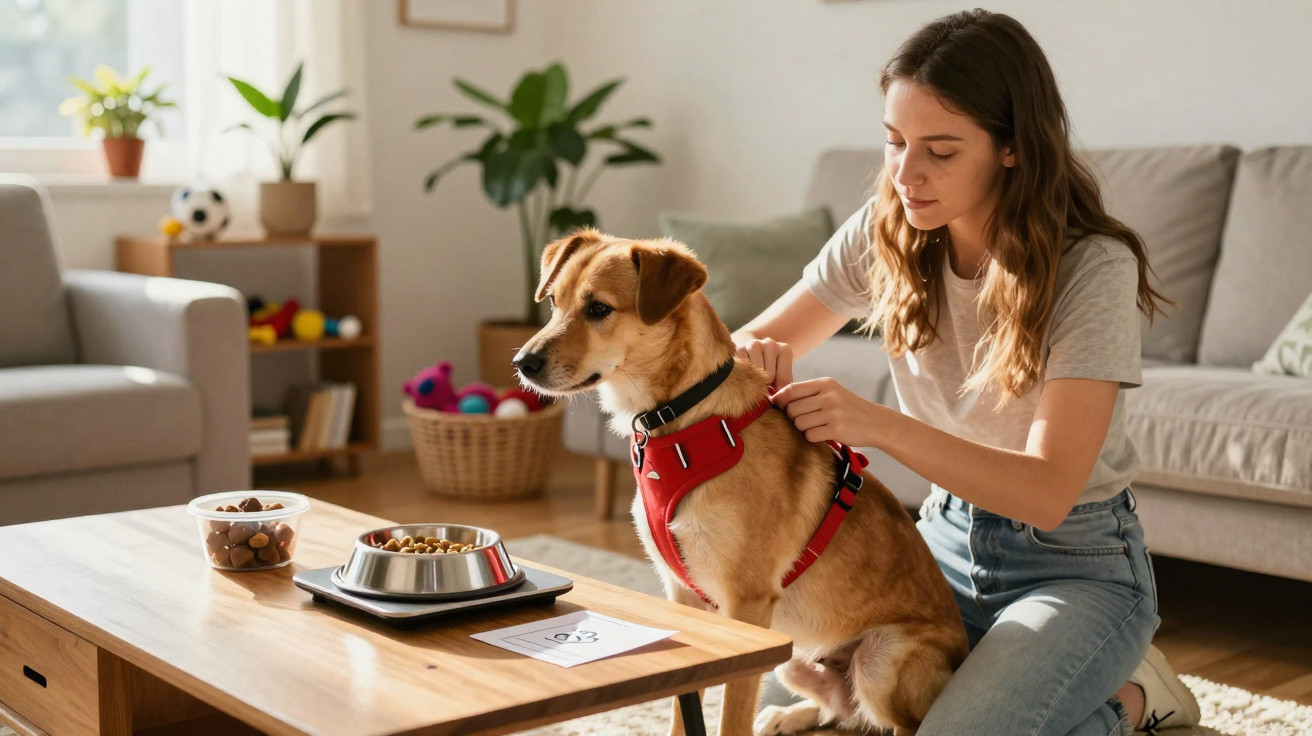
After the birth came the next demanding task: 17 puppies all needed to feed. A dog’s milk production works according to supply and demand – the more puppies suckle, the more milk her body produces. That requires an enormous amount of energy from the mother.
Marigold was therefore put on a feeding plan well above her normal intake. Her family said that she sometimes needed up to twelve tins of food a day, alongside dry food, water and high-protein treats.
“The body of a nursing dog works like a high-performance furnace – without sufficient food, it quite literally has to draw on its reserves.”
The additional nutrition paid off. Marigold regained her strength quickly, her coat became glossy and she behaved calmly and attentively towards her puppies. The vets were also pleased: the puppies’ weight gain and behaviour were within the healthy range.
All 17 puppies are healthy – and highly sought after
The 17 puppies developed steadily during their first weeks. Litters of this size always carry the risk that some newborns will remain too small or struggle to compete with their siblings. In this case, the combination of careful preparation and intensive care appears to have worked.
The first prospective owners got in touch soon after news of the record emerged. Irish Doodles are considered friendly, active and suitable for family life – a combination that has been in demand for years. The owners plan to sell the puppies for around £1,300 each. Before that, they are to be thoroughly vaccinated, wormed and given veterinary health checks.
What responsible owners must consider with so many puppies
Anyone suddenly caring for 17 puppies at home needs to establish routines quickly. Key measures include:
- early familiarisation with human handling, household noises and everyday surroundings
- regular feeding times and checks to ensure every puppy gets enough milk and food
- clean, draught-free sleeping areas with non-slip flooring
- early veterinary examinations for both the mother and her puppies
- an honest selection process for future owners, including discussions and visits
Popular crossbreeds can attract people who see only the “cute factor” and underestimate how much time and energy a dog requires. Marigold’s family stresses that they will rehome the puppies only with people who have considered that commitment seriously.
Irish Doodle – what is behind this fashionable crossbreed?
Irish Doodles are crosses between Irish Red Setters and Poodles. The aim of this mix is an active, people-oriented dog with a curly or wavy coat that usually sheds less than that of many other breeds. They can suit sporty families, but they also need clear training.
Typical Irish Doodle traits include:
| Characteristic | Typical expression |
|---|---|
| Temperament | lively, playful, people-oriented |
| Exercise needs | high, ideal for active owners |
| Coat care | regular brushing required; clipping depends on coat type |
| Size | medium-sized, usually 15–30 kg depending on the parents |
A dog of this crossbreed producing 17 puppies remains an absolute exception. Normal litter sizes are usually far lower. Many owners report six to nine puppies, with ten or eleven occurring occasionally.
Risks of large litters and veterinary advice
Exceptionally large litters always involve a degree of risk. The uterus has to work for longer, the mother loses more fluids and energy, and some puppies may be weaker at birth. Vets therefore recommend close monitoring throughout pregnancy, especially for larger dogs – for instance, through ultrasound scans and X-rays shortly before the due date.
Warning signs that mean owners should go to a veterinary practice immediately include:
- strong contractions for more than 30–40 minutes without a puppy being born
- foul-smelling or bloody discharge before the first puppy arrives
- obvious weakness or collapse in the mother
- lengthy pauses between puppies despite visible straining contractions
Fortunately, Marigold did not require an emergency Caesarean section. This was also because her owners sought advice early and documented the entire process – guidance that breeders and vets repeatedly emphasise.
What dog owners can learn from this record case
Marigold’s story is spectacular, but it also demonstrates in practical terms the responsibility involved in every litter. Even anyone who wants puppies “just once” should recognise how quickly a few expected newborns can become an entire football team.
Anyone considering breeding their dog should establish the following beforehand:
- Is the female dog healthy and suitable for breeding, including checks for age, hips and inherited conditions?
- Are there enough responsible prospective owners nearby if there are more puppies than expected?
- Is there sufficient time, space and money available for veterinary care in an emergency?
- Who will care for puppies that remain longer than planned?
Marigold’s record litter is currently attracting attention around the world, and the puppies’ photographs are touching many people. Behind the viral story, however, lies extensive organisation, hundreds of hours of care and a dog that exceeded expectations to give 17 small lives a successful start.









Comments
No comments yet. Be the first to comment!
Leave a Comment