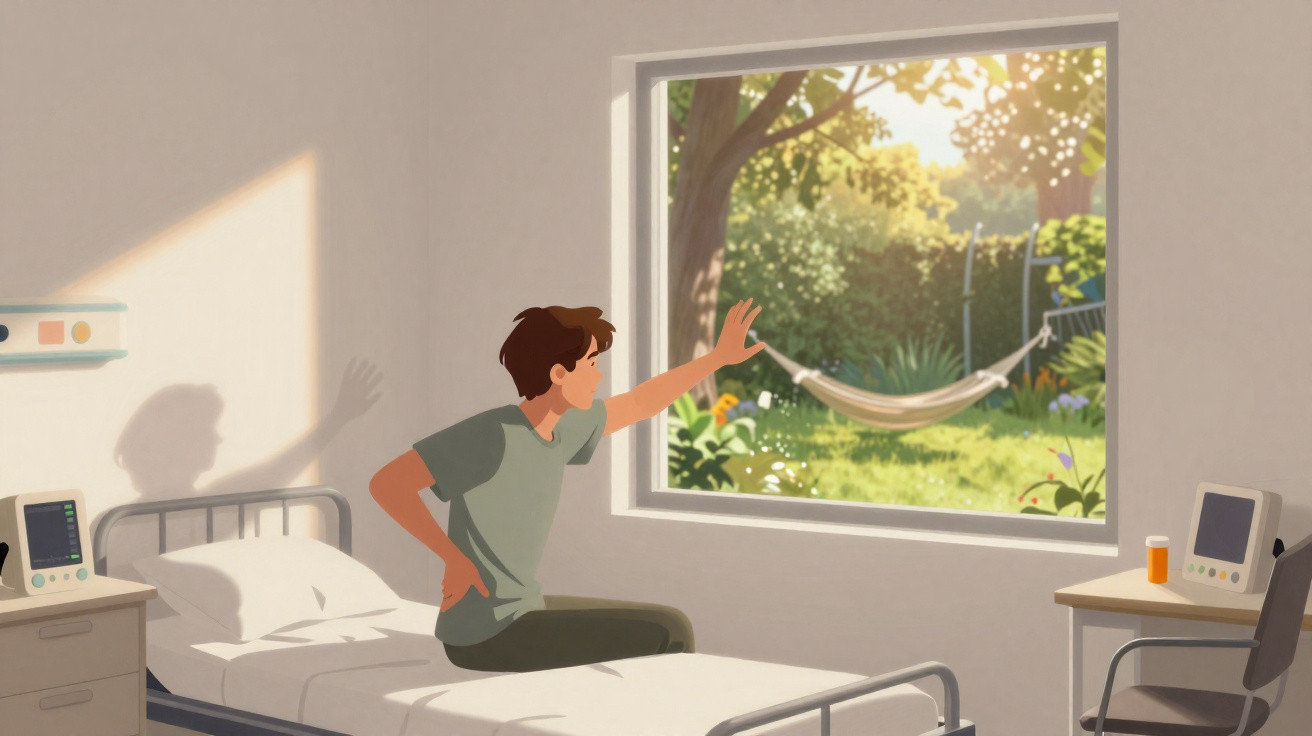
Have you noticed that pain can seem less intense when you are busy, yet feel stronger when you are sitting still with nothing to occupy you?
This familiar experience is not simply in your mind. Scientific evidence shows that our surroundings can alter the way pain feels within the body.
How the environment shapes pain
A review in Frontiers in Animal Science sets out this idea. It shows that pain is not determined by injury alone: an animal’s or person’s surroundings also play a part.
Researchers from several organisations collaborated on the study. They explain that pain varies with movement, social contact, rest and even experiences in early life.
The paper’s central message is that pain is not fixed. Depending on the environment, the same injury can be experienced very differently.
The pain echo chamber
The researchers describe what they call a “pain echo chamber”. It occurs when an environment strips away the body’s natural means of controlling pain while increasing the activity of systems that make it worse.
“We know that barren, confined environments are more likely to induce negative states in animals, including depressive-like states,” said Dr Benjamin Lecorps, senior lecturer at the University of Bristol.
“This review shows that these same conditions also amplify pain, and that pain itself further impairs the cognitive capacities needed to regulate it.”
The result is a cycle in which pain raises stress levels, and stress in turn increases pain. As time passes, the cycle can make pain more intense and persistent.
Pain is more than injury
According to the paper, physical damage is not the sole cause of pain. Pain arises from signals within the body and the brain’s processing of those signals.
It acts as a warning system, drawing attention and prompting the body to respond. But the system is influenced by numerous factors, including attention, emotions and surroundings.
When an animal feels secure, active and engaged, for instance, its brain can lessen pain signals. In an empty or stressful environment, however, the brain may amplify them.
How the body reduces pain
The body has its own mechanisms for controlling pain, and they function best when the environment encourages activity and engagement.
Movement can block pain signals at the level of the spinal cord, an effect known as gate control. As an animal moves or explores, other signals prevent pain from reaching the brain.
The brain also contributes. When an animal concentrates on feeding, exploring or another task, its attention moves away from pain, reducing the intensity with which it is felt.
Positive social contact helps too: it releases oxytocin, a chemical that reduces emotional as well as physical pain.
What happens in barren conditions
In confined or empty surroundings, these protective systems no longer work as well. Animals may be unable to move freely or remain engaged, while opportunities for social contact are restricted. Their rest and sleep can suffer too.
Meanwhile, harmful processes become more active. Stress stimulates the nervous system and makes it more sensitive, so even minor pain may feel intense.
The paper explains that repeated stress or pain can alter the nervous system itself. The body grows more sensitive over time, and even a light touch can become painful.
This demonstrates that the environment can affect pain at a profound biological level.
Stress, sleep and inflammation
The research describes how stress and inadequate sleep intensify pain. Prolonged stress keeps the immune system active, leaving the body in a state of inflammation.
Inflammation strengthens pain signals and delays healing. Poor sleep compounds the problem because it weakens the body’s ability to regulate pain.
The study also shows that stress can delay recovery. In stressful surroundings, injuries heal more slowly because the body cannot repair itself effectively.
As a result, pain persists for longer and is more difficult to manage.
Early-life effects on pain
An important finding is that experiences early in life can influence pain later on. Stress or painful events during early development can alter the way the nervous system develops.
For instance, animals exposed to stress before birth or shortly afterwards may be more sensitive to pain as adults.
These changes may even extend to future generations, showing the lasting power of the environment.
Why enriched environments matter
The study emphasises the value of enriched environments: spaces that allow animals to move, explore and interact.
“Enriched environments don’t just reduce pain, they make it visible,” said co-author Professor Christine Nicol.
“When animals have the opportunity to express a full range of behaviours, subtle changes such as reduced play or exploration can signal emerging pain or disease far earlier than is possible in barren settings.”
These environments activate the body’s natural pain-relief systems and also make it easier to identify illness early.
Barren cages and animal pain
“The same injury or disease can produce fundamentally different welfare experiences depending on the environment where it occurs,” said co-author Dr Cynthia Schuck Paim.
“Until assessment models, certification schemes, and analgesic protocols account for this, we may continue to systematically underestimate the pain of animals in barren settings.”
The implication is that animal care needs to change. Rather than being empty or isolating, recovery spaces should encourage movement, social contact and engagement.
The environment should be treated as a component of care, not merely as a backdrop.
The research underscores a clear principle: pain is not determined by injury alone. Surroundings, activity and experience also influence it.
An enriched environment can lessen pain and accelerate healing, whereas a barren one can have the opposite effect. Recognising this can improve animals’ lives and may also inform better care for humans.













Comments
No comments yet. Be the first to comment!
Leave a Comment