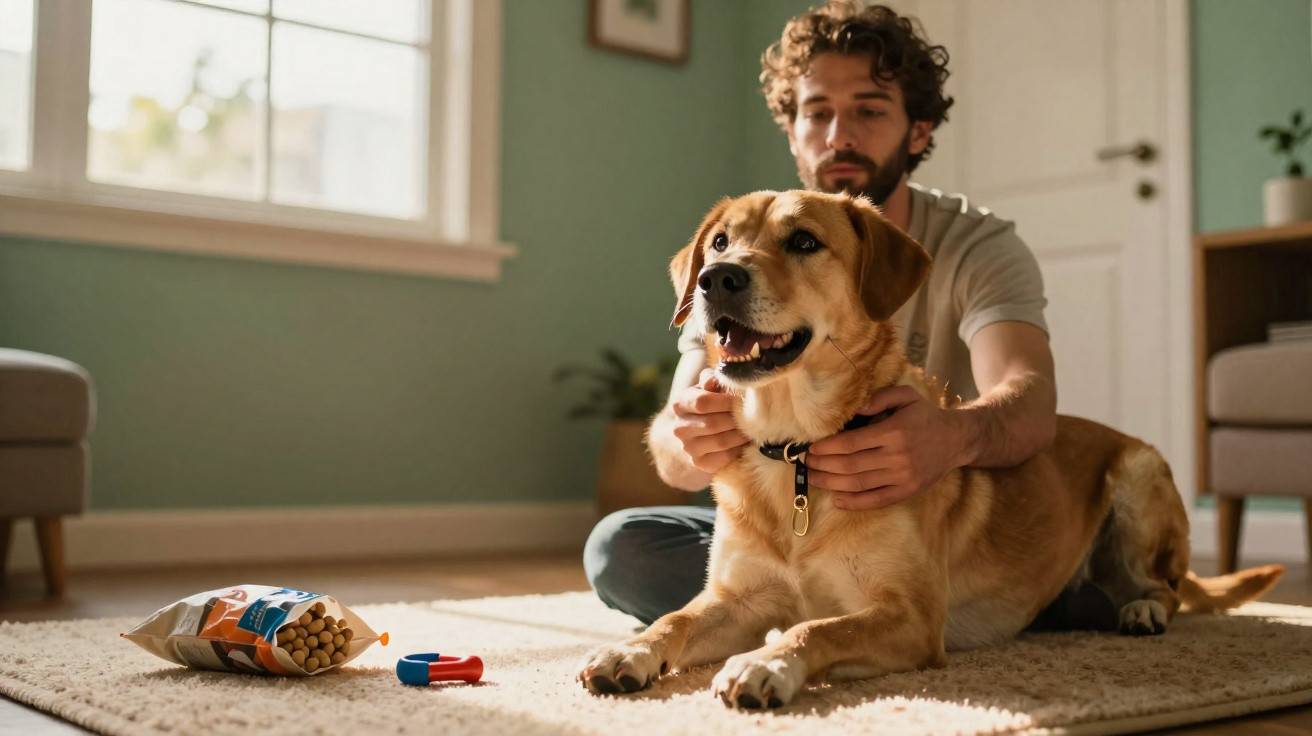
We have all experienced that moment when a neighbour’s dog turns a peaceful afternoon into an impromptu concert.
Barking at the postie, a moving leaf, even the wind itself. On paper, it is “just noise”. In real life, it creates a low-level tension throughout the block: irritated looks on the landing and muttered apologies in the stairwell.
That morning, a honey-coloured Labrador is providing the entertainment in the waiting room of a local veterinary clinic. He barks at every new arrival, rears up and pulls at his lead. His owner blushes and whispers, “Stop, Max, stop…”, but it makes no difference. People offer polite smiles, although everyone is on edge.
The vet arrives and crouches down without raising his voice. Thirty seconds later, the dog is quiet and focused on him. No choke chain, shouting or punishment. The owner watches with her mouth slightly open. She had expected it to be difficult. He explains that it is not. Well, not quite.
Why dogs really bark (and why shouting never works)
Dr Lewis, the vet, often opens his behaviour consultations with one straightforward sentence: “Your dog is not giving you a hard time, he is having a hard time.” In his view, barking is not a flaw but a message. Fear, boredom, excitement, frustration or an alert: every burst of “woof” is saying something specific.
Most people, however, hear only noise. They respond with the one tool they believe they have: an increasingly loud voice. “Quiet!”, “Shut up!”, a name shouted again and again. To a dog, this can sound like a human barking louder than they are. The result is tension, escalation and exhaustion for everyone.
Shouting at a barking dog is un training; it’s joining the chaos. The dog’s brain fills with adrenaline, while its body switches into red-alert mode. In that state, it cannot learn; it can only react. What seems like a correction instead strengthens a vicious cycle: I bark → my human gets angry → everyone feels nervous → I bark even more.
Max the Labrador demonstrates this pattern perfectly in the waiting room. Every person entering becomes an “event”. He barks, his owner pulls the lead and repeats, “No, no, no.” The emotion rises through the room like a wave. The other dogs become tense, and a few begin growling too. You could almost chart the climbing stress level from chair to chair.
Dr Lewis does not rush over to Max. He waits until another patient comes through the door. At the exact moment Max starts barking, he gently redirects his attention with a treat held near his nose. It is not a reward “for barking”, but rather an emotional switch: do not watch the door, watch me.
It starts and stops two or three times. Then something shifts in the dog’s expression. He begins to anticipate. Door opening = turn towards the person to find out what to do. Without a lengthy explanation, the vet has established a new response. The entire room feels it physically: the volume drops and shoulders loosen.
For the vet, the logic is clear. A barking dog is not trying to “dominate the neighbourhood”; above all, he is attempting to manage an overwhelming emotion using the only means available to him. Punishing him or yelling at him is like telling off somebody who screams because they are frightened of lifts. You may silence the sound, but not the fear. In fact, the fear remains and can even grow stronger.
By contrast, when every stressful trigger - a noise, a person or a passing dog - becomes a small, predictable and positive scene, the dog’s brain learns something else: “When this happens, I look at my human. And when I do, something good happens.” That invisible thread can transform the entire relationship. It also opens the way to a very simple method, almost too simple to seem believable.
The simple “Look at me” method vets quietly swear by
The approach is one gesture, one word and one reflex. Veterinary behaviourists often call it a “focus cue”, while trainers may describe it as “watch me”. Dr Lewis explains it to clients this way: “Teach your dog that when the world is noisy, his job is to look at your eyes.” That is all. Almost.
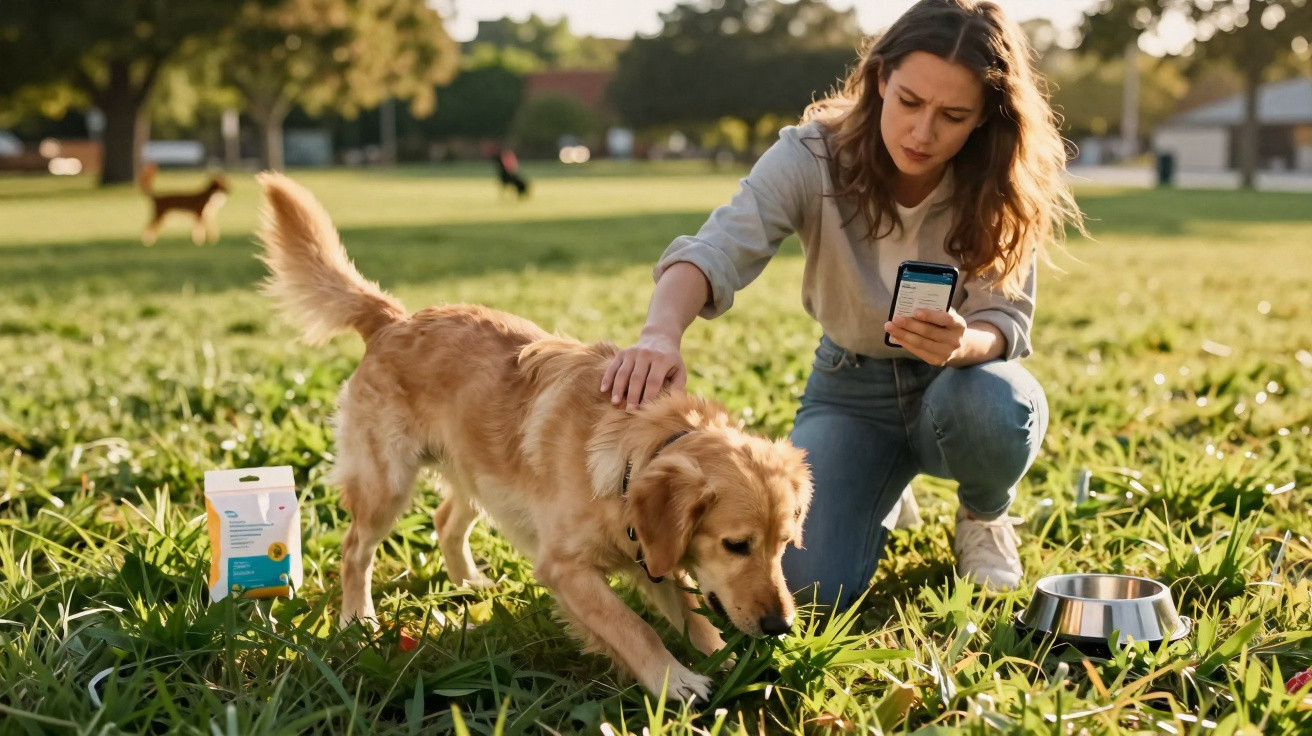
In practice, begin somewhere quiet. Hold a small treat between your fingers near your face. The dog sniffs it and follows the movement. The instant their eyes meet yours, say a short word - “Look”, “Eyes” or “Watch” - and give the treat. It takes no more than two seconds.
Practised for a few minutes each day, this tiny exercise becomes something like an emotional survival reflex for the dog. When something unsettles them, their brain knows the exit route: look at their human. The quicker that glance becomes, the less opportunity barking has to build momentum. It is like fitting an invisible mute button between the two of you.
One evening, a family in a small fourth-floor flat tries the method with Luna, a young Border Collie obsessed with the sound of the lift. Every “ding” had set off a frantic barking explosion at the front door, much to the neighbours’ despair.
During the first week, the parents sit in the living room with a handful of tiny treats. They play “Look” without the lift and without any noise. Just exchanged glances, rewards and brief moments of shared attention. Luna finds it fun. The exercise lasts two minutes, then they stop. Let us be honest: nobody truly does this for 20 minutes every day.
In the second week, they listen out for the lift. At the first “ding”, the dog bolts off… then stops halfway when she hears “Look”. A heartbeat later, she turns around, looks at her human and gets a treat. She runs back to bark, returns and looks again. It is organised chaos. As the days pass, the balance changes: more looks and fewer howls at the door.
After a month, the lift is no longer a threat that needs barking at, but the cue for a mental game: “Ding = I look at my humans = we do something together.” Nobody shouted and nobody punished her. The neighbours ask what has changed. The answer is a few seconds of connection, repeated over and over.
Logically, the technique rests on a very simple equation: where the eyes go, the brain follows. A dog staring at the window, door or fence is likely to bark more loudly because they are mentally feeding what excites or worries them. A dog who deliberately turns their gaze towards their human breaks that emotional loop.
“Look at me” is not magic; it is mechanics. One automatic pattern - I see / I bark - is replaced by another - I see / I look at my human / I get something positive. With repeated practice, the newer pattern becomes quicker than the old one. Some vets describe this as “inoculating safety” into stressful triggers: in effect, you vaccinate the dog against their own excessive reactions.
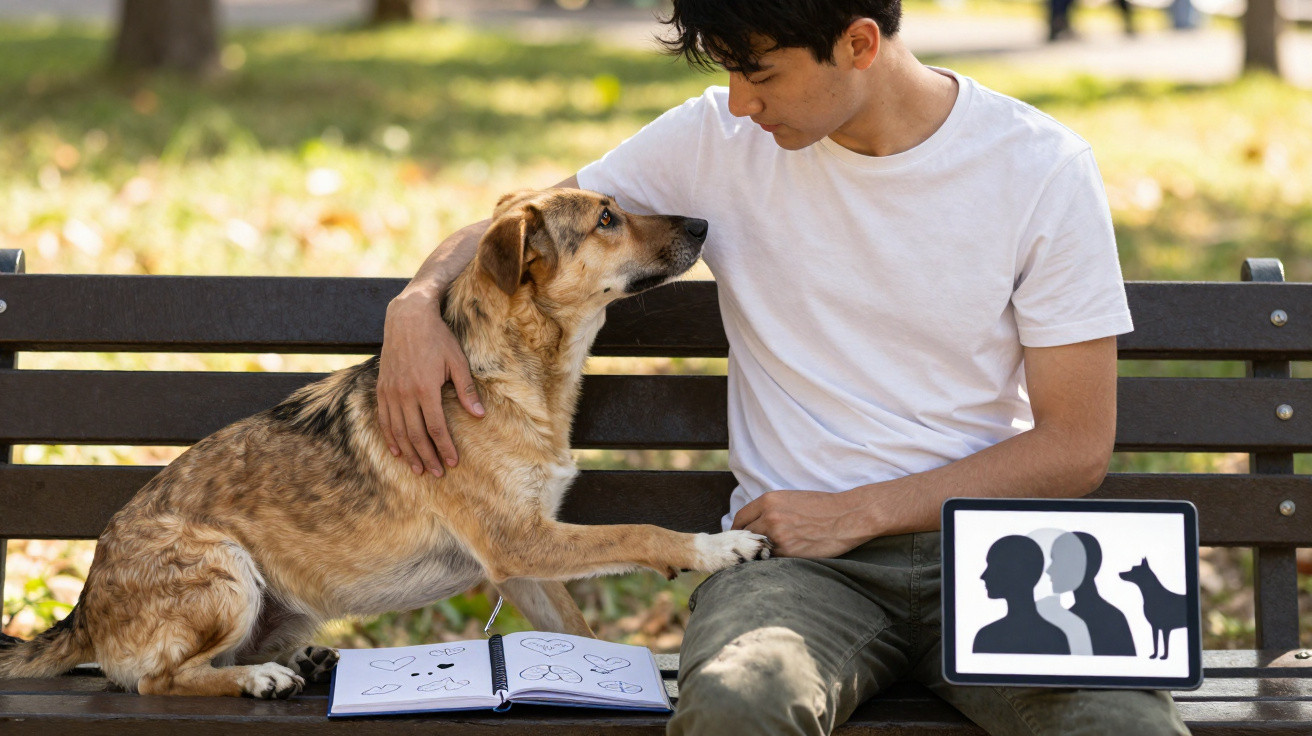
What often surprises owners is that this little eye-contact game does more than settle barking. It also builds overall trust. The dog learns that their human has a “plan” when surprises happen. They no longer have to manage noises, visitors and other dogs alone. This underlying feeling of security changes their behaviour even away from noisy situations.
How to use the “Look at me” method at home without breaking your relationship
Dr Lewis always offers the same instruction when introducing this approach: “Train when it’s easy, use it when it’s hard.” Start well away from the problem. Do not begin at the window where the dog barks at passers-by, or when the delivery driver rings the bell. Start in the calm of the living room, after a walk, when the dog is a little tired and more settled.
Use a few treats, a gentle tone and a word selected once and for all. Allow the dog to look at you naturally, mark that instant with “Look”, then reward them. Soon, add a mild distraction: keys jingling, a step towards the door or a toy falling. Each time, invite the dog back to your eyes. It is almost like a dance for two.
Once the reflex is reliable, begin using it in real-life situations. A dog is approaching in the distance? “Look.” A scooter passes below the window? “Look.” Make sure you maintain a distance at which the dog can still succeed. If they erupt into barking, the trigger is simply too close or too intense. Move back and make it easier. Nothing has been ruined; you are only adjusting the level.
According to vets, the most common mistake is using this method only during a crisis. Owners wait until their dog is howling like a siren, then say “Look” in a stressed voice and hope for a miracle. It is like learning to swim in the middle of a storm. The dog is already overwhelmed by emotion and cannot take in the cue.
Another trap is turning the exercise into an interrogation. Some people repeat “Look, look, look, look!” ten times in a row, without giving the dog time to understand, breathe or succeed. The word loses its meaning and becomes one more sound in the noise. One calm “Look”, followed by a second of silence, is far better than a barrage of randomly thrown commands.
Then there is the guilt. The thoughts that play on repeat: “I do not have enough time to train them”, “My dog is impossible to manage”, “I am useless with animals”. Vets hear them every week. The truth is more nuanced: a tiny change, practised with some regularity, can transform an entire relationship.
“I’m not trying to create perfect, silent dogs,” explains Dr Lewis. “I’m trying to create dogs who know where to send their emotions when life gets loud. And humans who feel they have something kinder than shouting to offer.”
For overwhelmed owners, he often sums up his method in a small handwritten note. It is a kind of gentle agreement between the human, the dog and the noisy world:
- 3 minutes of “Look” in a calm setting, a few times a week.
- One word only, always the same and never shouted.
- Tiny treats, given frequently at the beginning.
- Use the cue before barking erupts, at the first sign of tension.
- Accept that it will work less well on some days, and that this is not a failure.
This framework is not a magic formula. Instead, it is a reminder that you can choose gentleness without losing effectiveness. A simple moment of eye contact, repeated day after day, has more power than an anti-bark collar put on in desperation. Behind every dog howling at a window is often an animal simply looking for somewhere to place its emotions.
Living with a quieter dog in a loud world
Once you begin to view barking as communication rather than “bad behaviour”, the whole picture changes. The neighbour with the noisy dog is no longer simply “unbearable”; perhaps they have never heard about this kind of approach. The urge to judge makes a little more room for curiosity, and even solidarity.
A dog who learns to turn towards their human when life gets noisy is not merely quieter. They become easier to understand, more confident and more approachable day to day. The postie is no longer an enemy, but a test of connection. A visitor ringing the bell is no longer a disaster, but an opportunity to practise a reflex learned together.
For some people, the method sparks another, more personal change: the feeling that they have become active participants in their relationship with their dog again. Less embarrassment in the park, fewer tensions with neighbours and fewer evenings ruined by fear of a complaint. In their place come those almost invisible moments when two pairs of eyes meet and the world’s noise falls by a notch.
A vet cannot remove every bark from the planet. They can, however, offer another way of responding - one that involves neither shouting, punishment nor resignation. The small “Look at me” method may seem like a technical detail. In everyday life, it often becomes the start of a different story between a dog, a human and everything making noise around them.
| Key point | Detail | Benefit for the reader |
|---|---|---|
| Understanding what barking means | Barking is an emotional message - fear, excitement or alertness - rather than “rebellion” | Changes how you see your dog and reduces guilt and anger |
| Establishing the “Look at me” cue | Train the dog to look towards the human in calm conditions, using one word and rewards | Provides a practical way to interrupt barking without shouting or punishment |
| Using the method in real life | Give the “Look” cue before a crisis, while keeping a suitable distance from noisy triggers | Helps you live more peacefully with your dog in a city, block of flats or family home |









Comments
No comments yet. Be the first to comment!
Leave a Comment