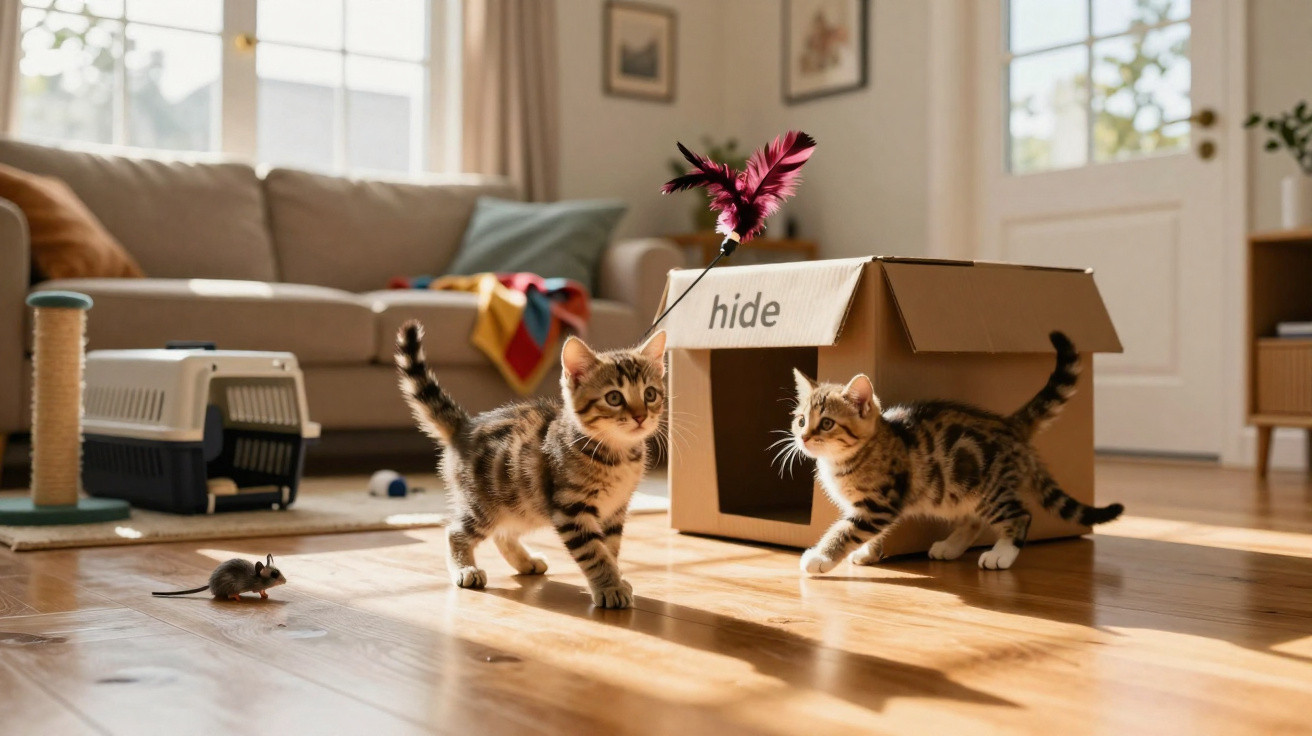
Their first steps across the laminate flooring sent their tiny paws skidding as though it were ice.
Three kittens, streaked with soot, were packed so closely into the hallway corner that they resembled one small furry shadow.
Their pupils were wide, their breaths were shallow, and their bodies jolted whenever a floorboard creaked or a cupboard door shut with a thud.
An hour later, the atmosphere began to change.
The scent of warm chicken coaxed one small nose forwards.
Then came one paw, a second paw, and finally an unsteady little body creeping out of its “safe” corner into the unfamiliar, brightly lit lounge.
They still were not purring on that first night.
Instead, they observed.
Yet you could sense it: their old fear was starting to fracture at the edges.
From trembling in the shadows to ruling the room
What stands out most about kittens entering a home for the first time is not simply how frightened they are.
It is the speed at which that fear can fade once the space around them finally becomes still.
Outside, or in an unsettled environment, every noise may signal danger.
Indoors, the refrigerator's hum turns into background sound, the sofa becomes an island, and a human voice is like weather that arrives predictably each day.
Look away for an afternoon and the kittens who had been fixed to one corner may suddenly be challenging each other to scale the back of the sofa.
There comes a point when they understand that the ceiling will not collapse and hands will not cause pain.
That is when the bouncing begins.
Speak to any fosterer and you are likely to hear a similar tale.
A woman in Ohio fostered three kittens found by the roadside: drenched, flea-ridden, with one literally hiding inside the food bowl.
On their first day, they remained crammed behind the toilet for eight hours.
By the third day, the boldest kitten had worked out that the bedspread was a mountain range designed for pouncing.
After seven days, their “safe corner” had disappeared, replaced by a route of sofa, cat tree, window ledge, kitchen, then back again.
There is no magical solution.
Only four walls, dependable meals, a calm voice, and a door that will not send them back out into the cold.
The reason this change can seem almost miraculous is, in fact, straightforward biology.
A street kitten exists in continual alert mode, with its nervous system powered by small surges of survival panic.
With food, water and secure hiding places indoors, that same nervous system can finally slow down.
Stress hormones decrease.
Curiosity returns quietly.
Movement shifts from an “escape route” into “play”.
Their brains begin to rewire around security rather than danger, while play-fighting, zoomies and climbing are merely the outward signs of that inner change.
Give a baby predator a stable territory and it will test every inch of it with joy.
Helping fearful kittens embrace indoor life
The initial priority is not cuddling.
It is layout.
Rather than giving them access to the entire home, begin with a small, quiet “starter room”.
A bathroom, an office with boxes, or even a well-ventilated walk-in cupboard is more suitable than a large lounge full of echoes.
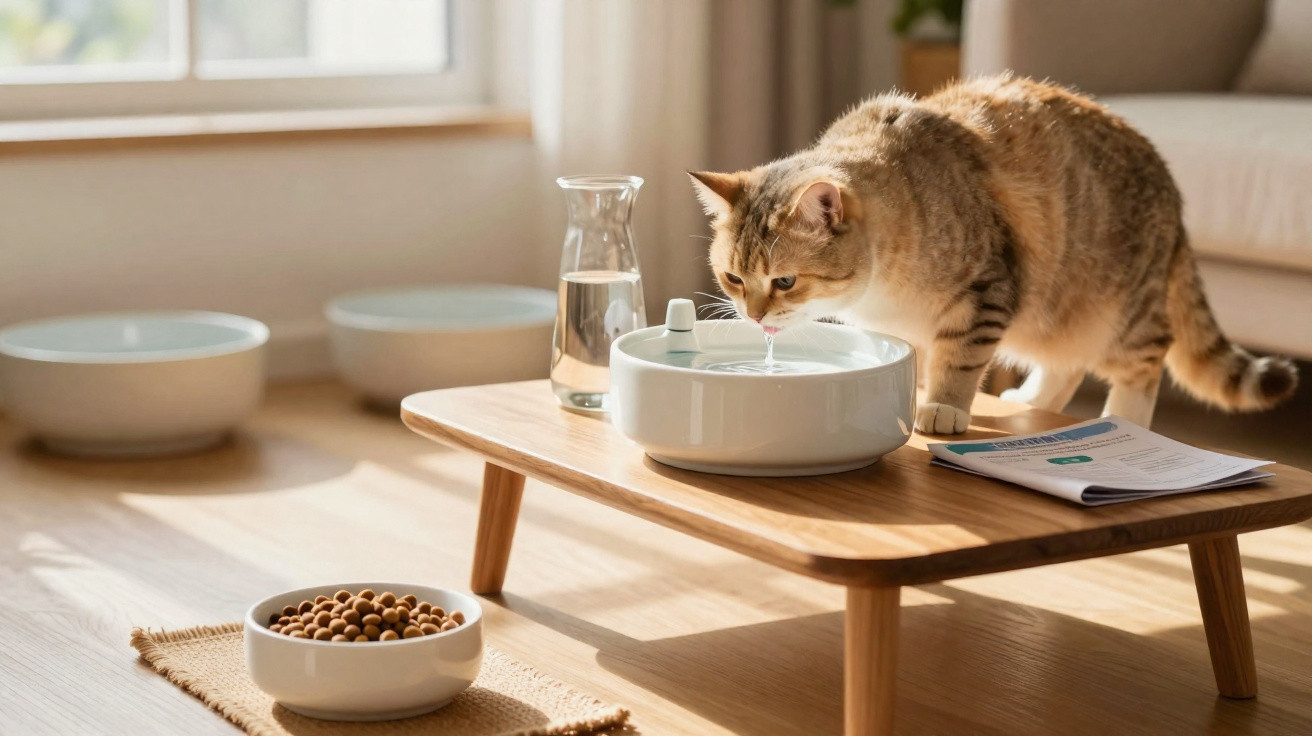
Create a basic plan: a bed or covered carrier, a litter tray in the opposite corner, and food and water set a short distance away.
Next, provide height.
Try a cardboard box topped with a blanket, a low shelf, or a chair seat made into a small fort with a towel.
For fearful kittens, vertical escape routes inspire trust more than almost anything else.
For people, one of the most difficult parts is avoiding the impulse to hurry the process.
We see kittens shaking and want to pick them up, kiss them and “love” the fear out of them.
That approach generally has the opposite effect.
They interpret sudden hands as predators rather than reassurance.
Instead, sit on the floor at their height, speak in an ordinary voice-not an exaggeratedly soft one-and allow food, toys and routine to communicate for you.
Honestly, no one manages this flawlessly every day.
On some days, you will put down the bowl, say “hey guys” and head straight to Netflix.
They will still register your presence, your scent and the fact that the door opens and shuts without any drama.
Eventually, you will spot the first genuine indication that things are changing: the slow blink.
It is that half-closed look that says, “I see you and I am not terrified”.
This is precisely when you should begin linking your presence with small, reliable rewards.
“Fearful kittens don’t need you to be a hero,” says Lena, a longtime bottle-baby foster. “They need you to be boring in the same way, every single day. Boring is safe. Safe becomes fun. Fun becomes trust.”
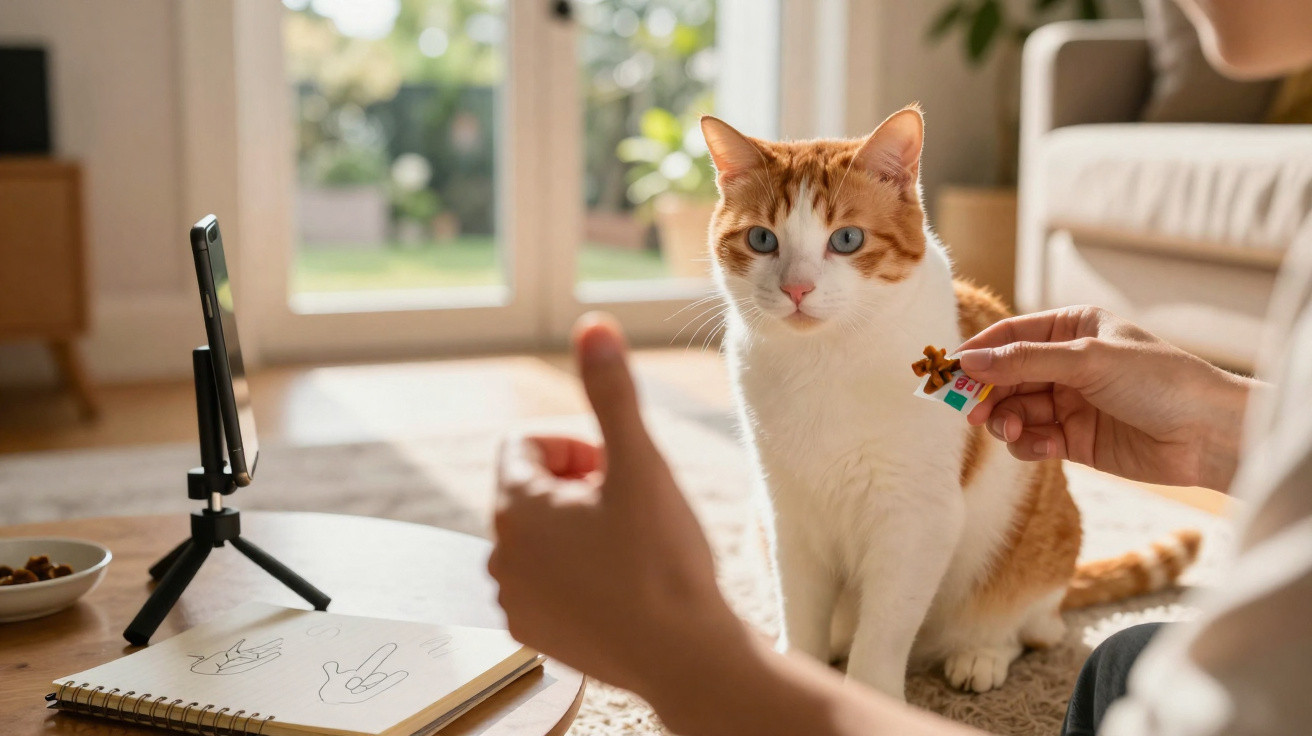
- Move wet food offered on a spoon or from your fingers only a few centimetres nearer each day.
- Begin with a single quiet toy: one feather wand or a shoelace pulled across the floor.
- Make sessions brief, finish with a small success, then leave before they become frightened.
- As you reach towards them, avoid staring into their eyes; glance, then look away, as another cat would.
- Narrate everyday noises-the kettle, door and phone-so that sounds become associated with your calm voice.
When the corner is empty and the zoomies start
One day, you will enter the “starter room” and find the corner strangely vacant.
There is no shivering bundle of fur.
Instead, you hear a faint jingle somewhere overhead and see two bright eyes staring down from the bookcase top like a tiny mountain lion.
That is the point at which your role changes.
You are no longer a lifeguard in an ocean of fear.
You become the stage manager for miniature chaos.
You rotate toys, grant access to more rooms, and “kitten-proof” cables and plants, because they are about to test every law of physics in your home.
You gain something else as well: a front-row view of the before and after.
The wide-eyed little scrap that once flinched at every footstep now lies belly-up in the middle of the hallway, asleep as if the world had never been cruel.
| Key point | Detail | Value for the reader |
|---|---|---|
| Safe starter space | Start with one peaceful room, a clear arrangement and straightforward hiding places | Lowers overwhelm and helps trust develop faster |
| Consistent, calm presence | Brief daily visits, a normal voice and predictable routines | Makes you a signal of safety rather than another threat |
| Play as therapy | Gentle wand toys, gradual interaction and vertical exploration | Directs fearful energy towards curiosity and confidence |










Comments
No comments yet. Be the first to comment!
Leave a Comment