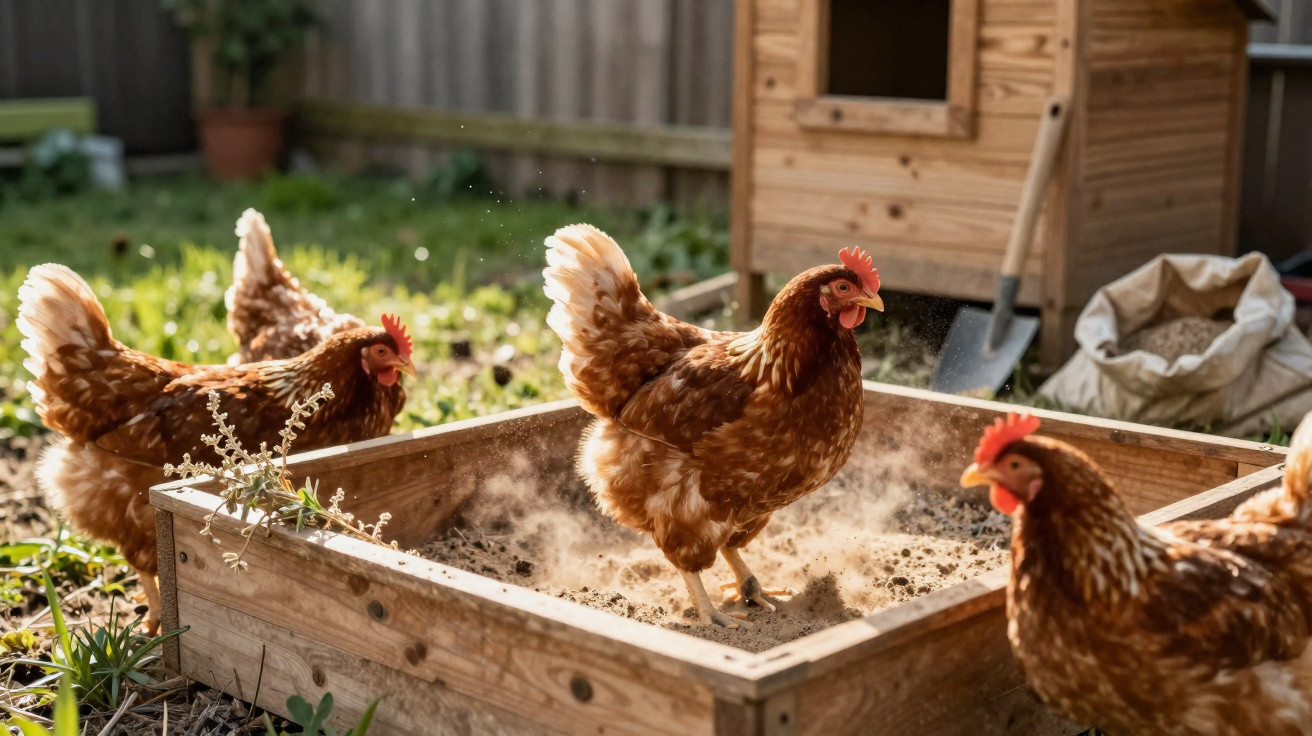
Many backyard chicken keepers only realise something is wrong with their flock in spring: anxious feather pecking, bare patches and fewer eggs. Rather than immediately turning to expensive chemical treatments, a growing number of keepers are relying on an almost forgotten aid: a purpose-made dust bath in the run that helps tackle red mites and other parasites.
When red mites torment chickens
Red poultry mites and other tiny pests thrive in damp, poorly ventilated coops. During the day, they hide in cracks, timber joints and beneath perches, then crawl onto chickens at night to feed on their blood. The consequences are easy to spot:
- Chickens scratch constantly and seem unsettled.
- Their plumage becomes ruffled, dull and untidy.
- Egg production drops, with fewer or smaller eggs.
- Birds lose weight, their immune systems weaken and they become more susceptible to illness.
Garden centres stock plenty of parasite sprays, powders and concentrated products. Although many work at first, they can be costly and need to be reapplied regularly. Repeated spraying or catching birds can also cause them additional stress.
“A deliberately prepared dust bath in the run can significantly reduce parasite pressure – without chemicals and with surprisingly little effort.”
Why chickens willingly roll in dust
Anyone watching their chickens closely will soon notice it: whenever they find a dry patch of ground, they scratch out a hollow and eagerly drop into it. They shake, kick and flap their wings, making it look almost like a spa treatment.
This is not play, but a form of body care. Fine particles reach right down to the skin, loosening dirt, excess oil and parasites. Larvae, eggs and adult mites struggle to survive in this dry, fine-grained environment.
A water bath, on the other hand, does not help chickens. Wet feathers lose their insulating properties, allowing the bird to become very cold, while also creating an ideal breeding ground for bacteria and mites. Many keepers mean well when they wash their chickens, but this often does more harm than good.
The run solution: a proper dust-bath area
With just a few simple steps, a chicken’s instinctive rolling in soil can be turned into a highly effective grooming tool: a dedicated dust-bath area in a suitable container.
Suitable containers for a chicken dust bath
There is no need for anything high-tech. Suitable options include:
- a simple wooden box
- a sturdy plastic container
- an old mortar tray or feed trough
- a discarded galvanised tub
The sides need to be high enough to keep the dust inside. For four to five chickens, a container measuring roughly 50 x 50 centimetres and around 15 centimetres deep is usually sufficient. This gives several birds space to “bathe” at once.
The ideal filling material for a chicken dust bath
The effectiveness of the bath depends entirely on the mixture inside it. Keeping it dry is the top priority. A reliable basic recipe for a larger bath is:
- 10 litres of fine, dry sand
- 5 litres of well-sieved wood ash
- 5 litres of very fine, loose garden soil
Each ingredient serves a specific purpose:
- Fine sand acts like a natural exfoliant. As chickens roll around, the grains work between the feathers and mechanically dislodge firmly attached parasites from the skin.
- Sieved wood ash, taken from a stove and allowed to cool completely, coats mites and other parasites in a dry layer that blocks their breathing openings. It also absorbs excess skin oil.
- Fine soil brings the ingredients together into a pleasant texture in which chickens are happy to remain for a long time while grooming thoroughly.
“The combination of mechanical abrasion, oil absorption and parasite dehydration makes the dust bath a genuine secret weapon against red mites.”
Choosing the right location in the enclosure
The location determines whether the setup will continue to work over time. A very dry spot is best, for example:
- beneath a fixed roof in the run
- under a small homemade shelter
- inside the coop in a dry corner, provided there is enough room
If rain falls directly into the container, the mixture turns into mud, making it completely unsuitable for feather care. A covered position and a container raised slightly off the ground will prevent this.
Keeping the dust bath effective for longer
Once it has been set up, this “wellness area” in the chicken garden needs remarkably little attention. In day-to-day use, a quick weekly check is generally enough.
A few minutes of regular maintenance
A small hand rake or scoop makes it easy to loosen the contents. At the same time, you can:
- break up compacted sections
- remove visible droppings
- take out feathers and coarse debris
If the material feels heavy or damp, or turns a uniform grey colour, it is worth replacing the whole mixture. The old contents can go onto the compost heap, as long as they did not contain strongly chemical additives.
Many keepers report that, after several weeks of consistently maintaining a dust bath, they see the following effects:
- Chickens scratch noticeably less.
- Their plumage appears fuller and shinier.
- Damaged tissue caused by persistent pecking can heal.
- Egg production becomes more stable, and eggs become more plentiful again.
Useful additions for an even better effect
Experienced poultry keepers sometimes mix in extra ingredients in small quantities. Examples include:
- a little food-grade diatomaceous earth
- a small proportion of very fine clay soil
Such additions may increase the dehydrating effect on parasites, but they must be measured carefully so that neither the birds’ nor the keeper’s airways are unnecessarily irritated. A basic dust mask is useful when handling very fine powders.
A dust bath does not replace coop hygiene
As effective as a dust bath can be, it remains only one part of controlling red mites. Anyone who wants to protect their chickens properly should also pay close attention to the coop itself.
- Sweep wooden surfaces regularly and allow them to dry.
- Inspect joints, crevices and the undersides of perches frequently.
- Replace bedding more often and remove damp areas immediately.
- Make perches removable so they are easier to clean.
A well-ventilated, dry and bright coop makes it much more difficult for parasites to multiply in large numbers. The dust bath in the run then acts as an additional protective layer, used voluntarily by the birds themselves.
Why the effort is worthwhile for backyard chicken keepers
For many people, chickens are now far more than egg producers. They are part of everyday garden life, fed by children and often called by name. An effective, animal-friendly defence against parasites fits well with this changing view of chicken keeping.
The best part is that a dust bath costs very little. Sand, fine soil and wood ash are already available in many households. An old container can almost always be found in a shed, cellar or among discarded items. Those who invest a little time in planning and choosing the right location are often rewarded with healthy, relaxed chickens that scratch about cheerfully for months – and, as a welcome extra, reliably lay eggs in the nest again.















Comments
No comments yet. Be the first to comment!
Leave a Comment