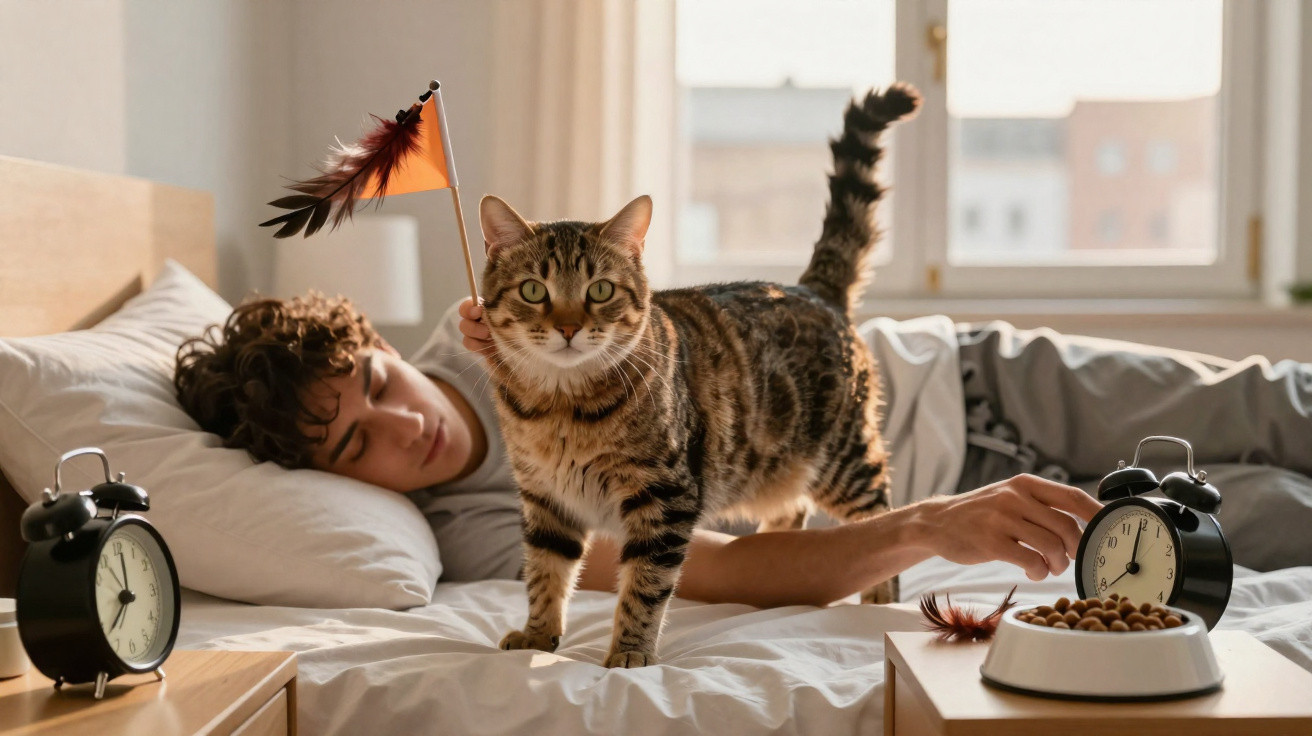
You pay the rent, buy the food and put up the shelving – yet it can still feel as though someone else is in charge. Anyone woken by a paw on the forehead or perched on the edge of the sofa because the middle is “occupied” knows that this home runs by cat rules. But does the cat truly dominate the flat, or are we simply following its brilliant survival strategy?
How cats claim key spots in the flat
Cats do not settle down just anywhere by chance. Their choice of sleeping places follows a clear logic: visibility, safety and control matter.
High vantage points are especially popular, whether that is the wardrobe, a shelf or the back of the sofa. From up there, the four-legged resident can watch everything while remaining beyond reach. To a cat, these are not merely cosy corners but observation posts with a tactical advantage.
“Where the house cat sleeps, it also controls routes, rooms and people.”
Then there are the familiar bottlenecks in a flat: the hallway, doorways and the space in front of the kitchen. By lying across these areas, a cat automatically “filters” household traffic. You have to step around it, slow down or stop.
This strategy allows the cat to achieve several things at once:
- Control of movement: It notices who goes where and when.
- Territory marking: Rubbing and lying in these places leaves behind scent markers.
- Safety: Bottlenecks are easier to “monitor” than open spaces.
- Control of contact: It decides when physical contact happens – often right in your path.
Anyone who nearly trips over their pet repeatedly in the evening is seeing precisely this in action: the cat determines how closely people pass it and how they respond.
The secret keeper of time: when the cat sets your daily routine
Controlling space is one thing; controlling time is another. Many owners only realise years later that it is no longer the alarm clock but their four-legged companion that starts the day.
Cats are naturally most active at dawn and dusk. They tend to wake up particularly early in the morning and again in the evening. In a household, however, food adds a second factor. If you get up at five o’clock even once because the meowing is annoying, you have accidentally programmed a system.
“For the cat, it means: human successfully woken = food or attention. It stores this pattern without mercy.”
Over time, a fixed sequence becomes established:
- The cat wakes you with a paw, meowing or head nudges.
- The human gets up, irritated, “just this once”.
- It receives food, cuddles or at least a response.
- The cat learns: this is exactly how I get what I want.
This does not happen only in the morning. Many people know the scene: the moment you enter the kitchen, the performance begins. The cat meows, rubs against your legs and jumps onto the worktop. In its mind, “human + kitchen” becomes linked to a “chance of food”.
The same applies to closed doors. Scratching at the bedroom door and meowing for minutes until someone eventually gets up in frustration and opens it reinforces the behaviour yet again. The human then acts like a well-trained employee who delivers at the push of a button.
Does the cat dominate – or merely protect its survival?
At first glance, this behaviour can look like minor tyranny. On closer inspection, though, a different motive emerges: safety through predictability. Cats dislike unexpected change, and routines reassure them.
A cat that establishes fixed patterns experiences less stress. That is exactly what it is trying to do: make everyday life as stable as possible. Control over space, food and access to people reduces its inner tension.
“From a human perspective, it looks like a hunger for power; biologically, it is about reducing anxiety and creating clear structures.”
Behavioural studies show that cats chiefly influence three areas in the household:
- Territory: Favourite places, raised resting areas and route intersections
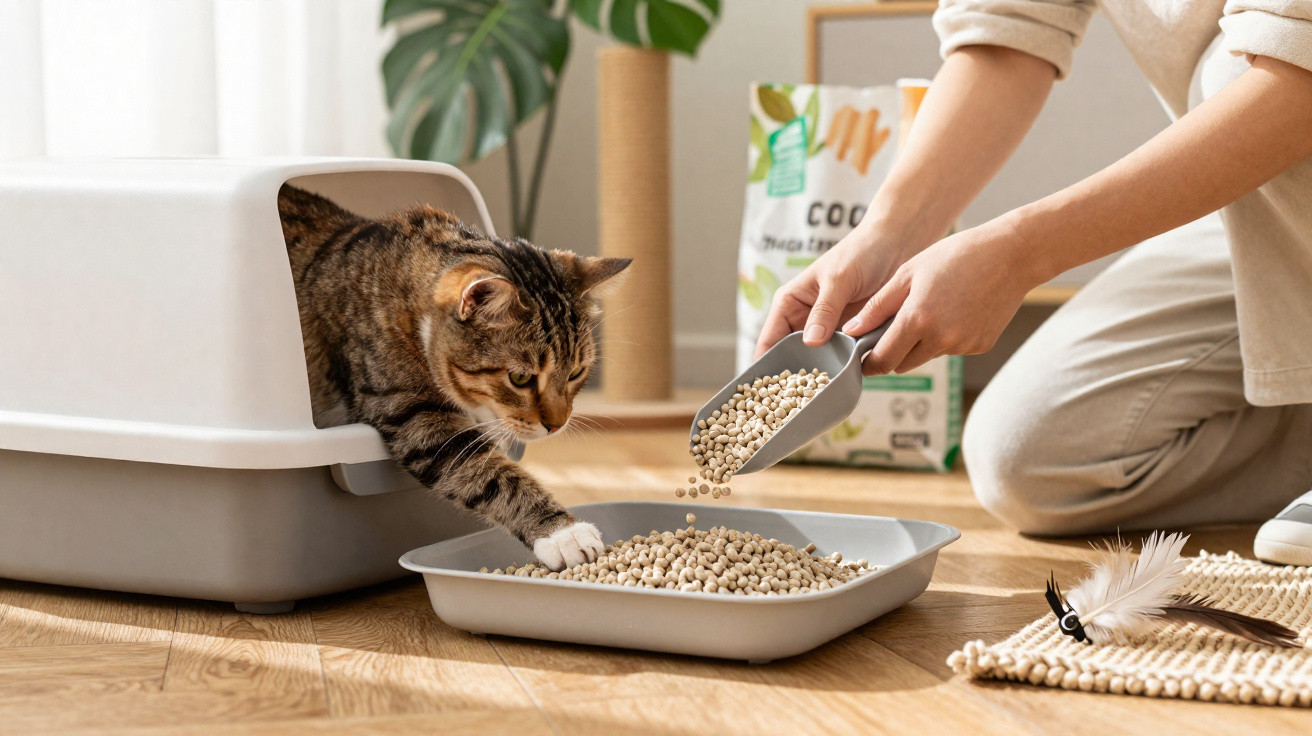
- Resources: Food bowl, water, litter tray and access to rooms
- Routines: Feeding times, getting-up times, play and rest periods
Calling it “greed for power” does not go far enough. The cat adapts to the people around it and uses every small gap in the daily routine to gain an advantage. That often appears more calculating than it actually is.
How owners can regain control over time and space
The good news is that you do not have to arrange your whole life around your cat to keep it happy. Adjusting a few key factors can make the situation noticeably calmer.
Separate food from waking you up – the most important step
The main mistake usually lies in feeding times. Filling the bowl immediately after waking up reinforces the wake-up drama. A better approach is to settle into your own routine first and feed the cat afterwards.
A practical morning routine:
- Has the cat woken you? Calmly ignore it: do not speak and avoid eye contact.
- Get up, go to the bathroom, get dressed and make coffee.
- Put down the food without comment only once you have finished.
This separates “waking the human” from “eating” in the cat’s perception. It may be frustrating for a few days, but it ultimately works more reliably than any scolding.
More safe spaces, less stress
Giving your cat several raised resting places spreads the “centres of power” around the flat. Shelf boards, cat trees with platforms or a cushion on top of a wardrobe let the animal feel it has everything in view without constantly lying in the middle of the hallway.
It also helps to keep routes deliberately clear. If the cat always settles in the same troublesome spot, offer an alternative: a cosy blanket just one metre away, combined with treats, can shift its preferred place.
Play instead of drama: how activity reduces the urge for control
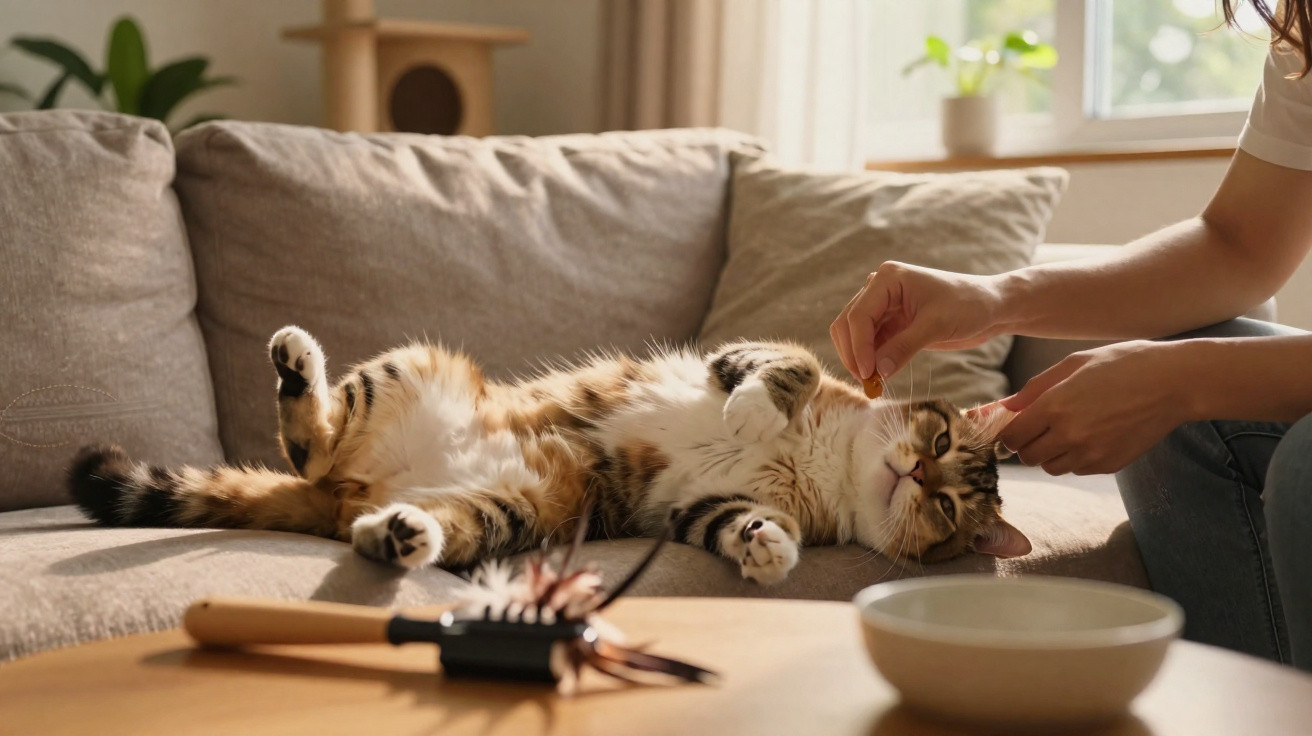
Many house cats ease their inner tension through control because they lack other forms of stimulation. A few minutes of hunting-style play in the evening can often work wonders.
Suitable activities include:
- A teaser wand with a feather or fabric mouse
- Food balls or puzzle feeders
- Short “hunting trails” along the hallway using a string or a small ball
Introducing an active play session in the evening shifts the cat’s active period later. Many cats then sleep longer in the morning because they have tired themselves out overnight, reducing the pressure behind the 5 am wake-up service.
How much “rule” do we give up willingly?
Ultimately, there is an honest question to ask: does the cat really leave us no choice, or do we secretly enjoy this gentle chaos? Many owners like these rituals – the regular greeting meow in the kitchen, the view from above on the wardrobe and the stolen space on the sofa.
Understanding why cats behave this way makes it easier to decide consciously which “rules” are acceptable: wake-up service, yes; scratching at doors, no. Sharing the sofa, yes; filling the food bowl on command, no. This creates a balance that benefits both sides.
A brief explanation is worthwhile for children and visitors: a cat is not a small dog. It thinks more strongly in terms of zones, routines and its own decisions. Those who respect this usually have a more relaxed animal – and may eventually realise with a laugh that, in this flat, they are more of a housemate than the boss.














Comments
No comments yet. Be the first to comment!
Leave a Comment