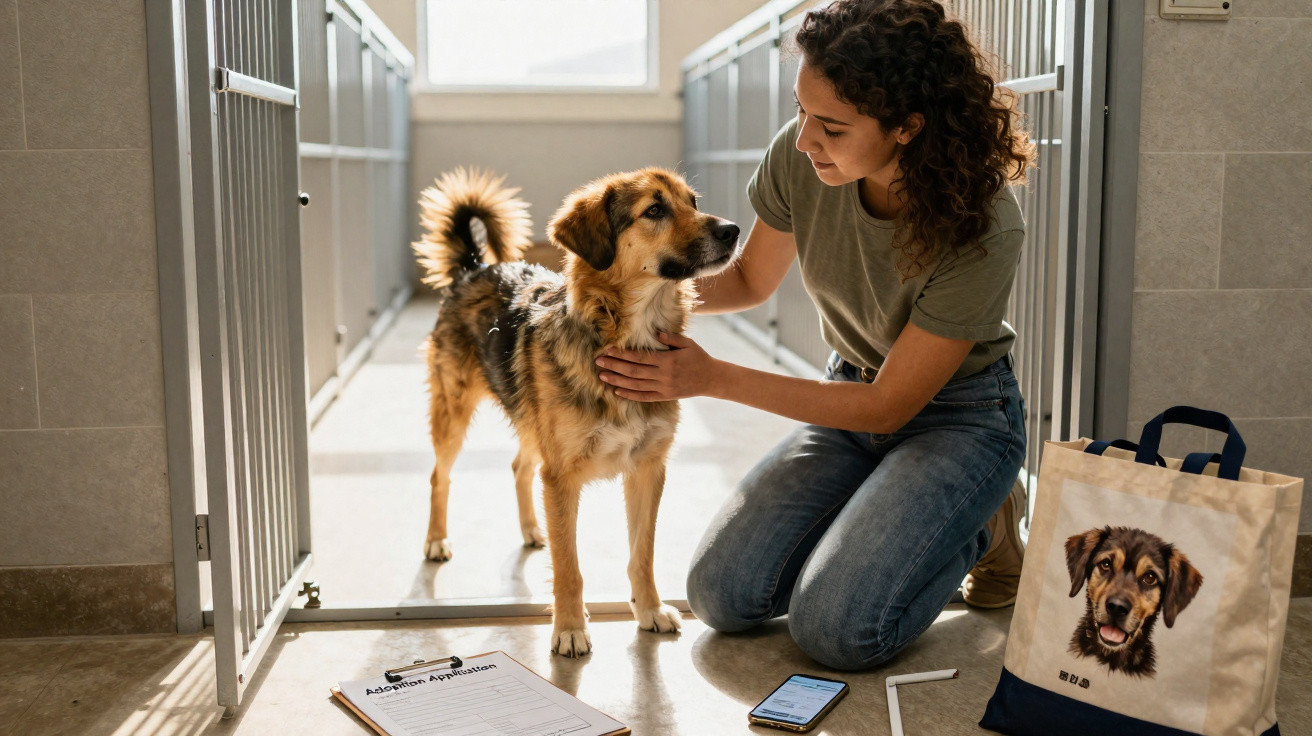
For many families, a dog has long been part of the desired package alongside a house, car and holiday. Yet the way in which many people now acquire an animal is becoming increasingly absurd: breed, coat colour, eyes and size are all planned in advance as if they were choosing a new sofa. Meanwhile, countless dogs remain stuck in rescue centres, while the market for puppies sold through classified websites and questionable breeding operations continues to boom.
From living being to lifestyle accessory
In a consumer world shaped by digital shopping, almost anything can be ordered with a click. This mindset is increasingly being applied to animals too. People who want a dog scroll through online listings filtered by photographs and characteristics, looking for the “right” appearance, the “cutest” face or the “trendiest” breed.
“The dog shifts from being a family member to a status symbol that needs to look good on Instagram.”
Rather than considering which dog suits their everyday life, many people focus only on the image they project. This creates absurd situations:
- Highly active herding dogs end up in cramped city flats with no proper outlet for their energy.
- Very independent, primitive breeds are sold to complete beginners.
- Small fashionable dogs are expected to be “convenient” and “low-maintenance” – then become frustrated because nobody takes them seriously.
The consequences are predictable: owners become overwhelmed, frustration grows, behavioural problems develop – and in many cases, the dog eventually ends up being surrendered to a rescue centre after all.
Obsession with appearance and harmful breeding
Alongside the trend of selecting animals as though they were products, demand for extreme physical features is rising. Flat faces, huge round eyes and exceptionally short bodies may look “cute” in photographs, but for many dogs they mean a lifetime of discomfort.
Typical problems caused by such exaggerations include:
| Feature | Possible consequences for the dog |
|---|---|
| Very short, flat head | Breathing difficulties, problems in hot weather, constant wheezing |
| Excessively long back | Back problems, slipped discs, paralysis |
| Extreme skin folds | Skin inflammation, fungal infections, constant itching |
People who buy these animals often believe they are doing something especially “loving”, yet they may unintentionally support breeding lines in which health takes second place to looks.
Why so many rescue centres miss out
While the puppy trade thrives, many rescue centres are operating at the limits of their capacity. Nevertheless, most prospective owners still choose a breeder or a classified advert. One key issue is the distorted view many people have of rescue centres.
“The stereotype of the ‘damaged problem dog’ stops many people from even setting foot in a rescue centre.”
The reality is often very different. Their kennels contain family dogs surrendered because of separation, illness, financial difficulties or simply unrealistic expectations. Many are well socialised, are used to children and, in some cases, to cats or city life too.
The cost misconception surrounding pedigree dogs
A widespread belief is: “Everything is complicated at a rescue centre; if you buy from a breeder, you know what you are getting.” Yet many people seriously misjudge the financial side.
- Pedigree dog from a breeder: often a purchase price of €1,000 to €2,500
- On top of this come vaccinations, identification, worming treatment and often neutering or spaying – easily adding several hundred euros
- If a dog is bought “cheaply” through classified adverts, its vaccination status and health are often completely unclear
At rescue centres, the adoption fee is generally between €200 and €300. This will usually include identification, vaccinations, worming treatment and often even neutering. The real initial costs are therefore frequently much lower, while the animal’s health status is also more transparent.
Adoption rather than buying: the impact on animal suffering
Anyone who deliberately chooses to buy a puppy affects more than their own life. Every paid-for litter creates an incentive to keep producing more dogs – even when rescue centres are overcrowded.
The online market is particularly problematic. Behind advertisements that appear reputable, there are often:
- Large-scale breeding operations in which female dogs are used purely as breeding machines
- Imports from abroad, where puppies are separated from their mothers far too early
- Forged documents, manipulated vaccination records and concealed origins
“Anyone who quickly picks up a puppy from an advert supports a system in which profit matters more than animal welfare.”
Adoption sends the opposite message. Rather than bringing ever more dogs into the world, it puts the focus on animals that already exist and simply no longer have anyone. Adult dogs in particular are often underestimated, despite offering significant advantages:
- Their character and energy level are already apparent.
- Many are house-trained and know basic commands.
- Some have received targeted training and socialisation at the rescue centre.
Fear of rescue centres often comes from ignorance
People who have never been inside a rescue centre often picture bleak rows of cages. Yet many facilities now have committed teams that include behaviour advisers, vets and volunteers who can assess dogs carefully.
At a reputable rescue centre, staff will normally speak openly about a dog’s quirks, fears and needs. At first, this may seem more demanding than dealing with a friendly puppy seller. In the long term, however, it reduces the risk of taking home a dog that is completely unsuitable.
Anyone who is unsure can start by volunteering as a dog walker at many centres. This offers the chance to get to know different dogs, observe how they respond and gain a far better understanding of what type of dog genuinely fits their daily life.
Responsibility starts before the first click
On average, a dog lives for ten to fifteen years. That commitment does not fit spontaneous impulses, social-media trends or the desire to collect as many likes as possible. Anyone considering getting a dog should ask themselves some very straightforward questions:
- Am I prepared to make time every day for walks and activities – in all weather?
- Can I cover the long-term cost of veterinary care, food, insurance and equipment?
- What will happen to the dog if I change jobs, separate from a partner, have children or move home?
- Can I cope if the dog does not behave “perfectly” or becomes ill?
Only once these questions have been answered honestly does it make sense to consider breed, size or age at all.
Why looking beyond appearance changes so much
Many conflicts between people and dogs arise because expectations are far removed from reality. Those who focus only on appearance overlook the temperament, needs and individual traits of a particular breed or crossbreed.
Other criteria lead to far better matches:
- How active am I really – not just at weekends?
- Do I have experience with dogs, or am I starting from scratch?
- Do I live in the middle of a city or in a more rural area?
- How much patience do I have for training and setbacks?
Rescue centres generally take time to explore these questions and suggest suitable dogs – including some that a person might initially have overlooked. It is often precisely these “unremarkable” encounters that develop into particularly stable bonds.
An animal is not a returnable product with fur
Behind almost every dog in a rescue centre is a decision followed later by someone saying: “This is not what I imagined.” Sometimes fate is responsible, sometimes convenience, and sometimes it is simply a misjudgement.
“Anyone who gets an animal takes on responsibility – not for the first cute months, but for an entire dog’s life.”
That also means coping with sleepless nights during puppyhood, enduring the testing stages of adolescence, supporting a dog through illness and carrying an old dog when its legs no longer cooperate. This reality has little in common with the perfect images used in advertising – but it is exactly where a genuine relationship lies.
Those who embrace this reality and consciously choose a dog from a rescue centre often experience something many pedigree-puppy buyers never do: the feeling of giving an animal not only a new home, but a second chance. For the dog, it means everything – and, for many people, it ultimately means at least as much.


Comments
No comments yet. Be the first to comment!
Leave a Comment