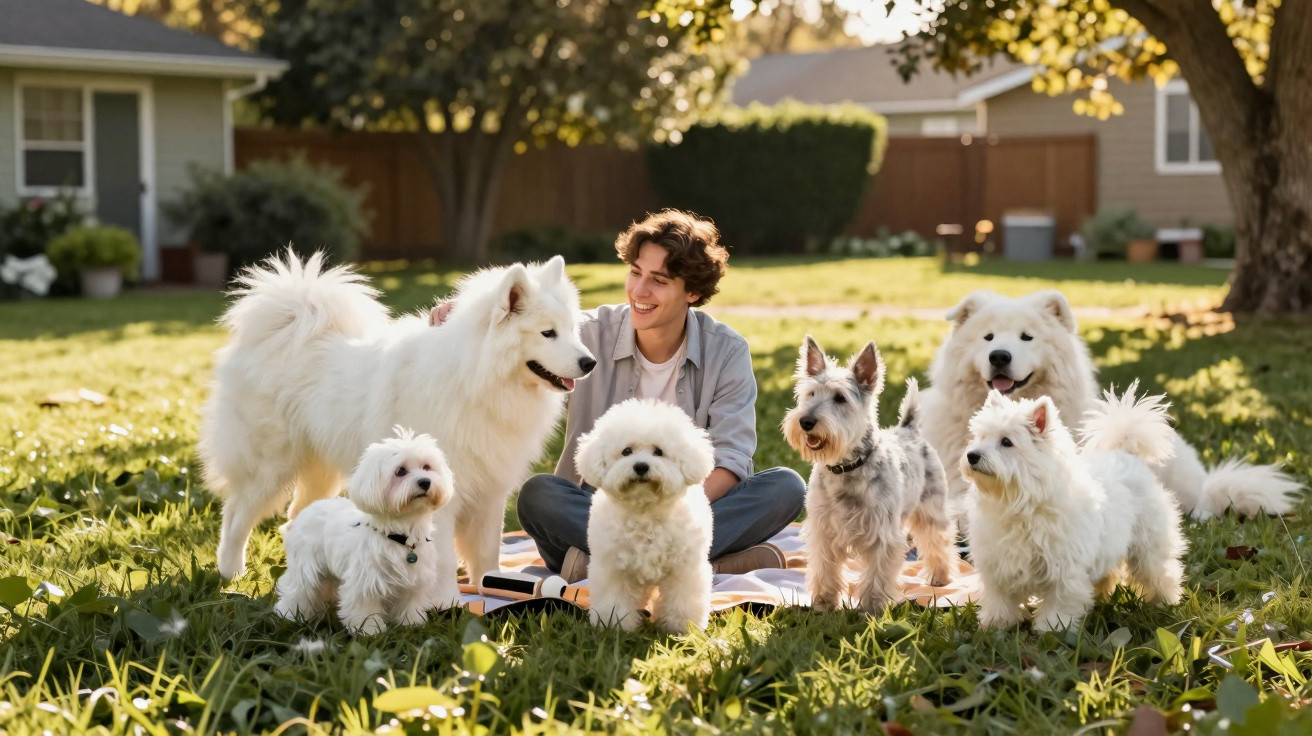
Behind those snow-white coats lie very different personalities, ranging from lapdogs to mountain guardians.
Anyone drawn to dogs with white fur soon discovers that the choice goes well beyond “small and fluffy”. There are hardy mountain dwellers, energetic family dogs and easy-going flat dwellers. Ultimately, appearance is only part of the decision: the dog also needs to fit your everyday life.
Why white dogs make such an impression
A white-coated dog is hard to miss. The pale colouring often brings associations of purity, friendliness and gentleness. Of course, white dogs can be every bit as cheeky, stubborn or greedy as any other dog, but their appearance often gives them an extra touch of appeal.
“When choosing a white dog, always put personality before coat colour – otherwise your dream dog can quickly become more than you can manage.”
One easily overlooked detail is that white fur shows dirt more quickly. Muddy paws, blades of grass and dust from the street all stand out against a pale coat. Regular brushing and paw care are therefore essential, along with professional trimming or clipping for some breeds.
1. Samoyed: a smiling snow dog with a cuddly coat
With its thick white fur and characteristic smile, the Samoyed is the classic “snow dog”. It originally pulled sledges and guarded reindeer herds in northern regions. Although it is now often kept as a family dog, its working instincts are still very much in evidence.
- Size: Medium
- Temperament: Playful, affectionate and independent-minded
- Grooming: Daily brushing recommended
Samoyeds thrive on exercise, making long walks, jogging and hikes excellent activities for them. Someone with only a small city flat and little enthusiasm for going outdoors is unlikely to be happy with this breed. Their independent nature means they like to test boundaries, so clear, loving training is essential.
2. Maltese: a small flat-dweller with a long, silky coat
The Maltese is among the most popular small companion dogs. Its long white coat can make it look almost like a soft toy, but beneath that immaculate hair is an alert, intelligent dog that wants to stay close to its people.
A Maltese can adapt well to city living, provided it has enough physical and mental stimulation. Climbing stairs, short walks and little games at home can all be enjoyable. Long periods alone are another matter: many dislike them and may become stressed or bark more.
Grooming a Maltese coat
The grooming commitment should not be underestimated:
- Comb the coat daily to prevent knots.
- Clean around the eyes regularly to reduce staining.
- Arrange occasional visits to a dog groomer, depending on the cut.
For someone who enjoys brushing and combing, a Maltese can be a loyal companion that usually seems to relish its pampering routine.
3. White Swiss Shepherd: a white working dog with a strong character
The White Swiss Shepherd, also known as the Berger Blanc Suisse or simply the “white shepherd”, is closely related to the German Shepherd. It combines considerable sensitivity with a strong protective instinct, so it needs people who can provide reassurance and guidance.
This dog forms a close attachment to its family and, when carefully socialised, generally copes well with the bustle of children. It does not suit being left alone for long periods, preferring to be “in the middle of things” rather than “just on the sidelines”. Plenty of exercise, mental work and clear rules are equally important.
“Choosing a white shepherd means bringing home a demanding family member, not a status symbol.”
Agility, mantrailing, obedience and long hikes are all good ways to keep the breed occupied. Out-and-out couch potatoes are likely to find its demands overwhelming.
4. Coton de Tuléar: a fluffy little potential clown
The Coton de Tuléar takes its name from the soft texture of its coat, which is much like cotton wool. Small and cheerful, it is often a real entertainer within the family.
Typical Coton characteristics include:
- A playful nature that lasts into adulthood
- A strong attachment to the people closest to it
- Some wariness of strangers without being aggressive
Keeping the “Coton look” takes plenty of coat care. Brushing several times a week prevents mats, which can otherwise quickly reach the skin and cause pain. Many owners choose a “puppy cut”, leaving the coat shorter while retaining its soft, fluffy appearance.
5. West Highland Terrier: a confident character in a white coat
The West Highland Terrier, or “Westie”, is a typical British terrier: brave, amusing and occasionally a little stubborn. Its white coat is coarser than it looks and originally provided protection while hunting in undergrowth.
Westies are lively and inquisitive, and they need clear boundaries. With appropriate training, they become charming companions, faithfully accompanying their people through daily life. Many settle happily into family life as long as children treat them respectfully.
Hand-stripping rather than clipping
The right grooming technique matters for a Westie. Its topcoat should be regularly hand-stripped rather than simply clipped. Otherwise, the coat can lose its texture, mat more readily or contribute to skin problems. A skilled groomer who understands terrier breeds is invaluable.
6. German Spitz in white: an alert whirlwind with a lion-like mane
The German Spitz comes in several sizes, from the Pomeranian to the Giant German Spitz. In white, its bushy coat and thick ruff give it a particularly striking appearance, rather like a miniature polar bear.
Spitz dogs are known for being:
- Spirited and playful
- Highly alert, often with a pronounced tendency to bark
- People-oriented and generally receptive to training
Their guarding instinct should not be underestimated. In a block of flats with thin walls, owners should work on “quiet” behaviour from the outset, or neighbours may soon become irritated. In return, they get a dog that keeps a watchful eye on its family and forms close bonds.
7. Pyrenean Mountain Dog: a majestic guardian giant with a gentle heart
The Pyrenean Mountain Dog, also often called the Patou, originated in the mountains as a livestock guardian. Its job was to defend flocks independently against predators and strangers. That heritage still shapes the breed: it likes to think for itself and cannot be handled like a typical “obedience dog”.
Its thick white coat provides protection from cold, wind and rain. Some dogs have pale grey or reddish-beige markings on the head or body. Its strengths and distinctive needs include:
- A highly independent character
- A strong instinct to protect its family
- A need for plenty of space, ideally a house with a large, securely fenced garden
This breed is rarely suitable for beginners. Anyone considering a Pyrenean Mountain Dog should have experience with large, self-assured dogs and be ready to invest considerable time in training and building a bond.
Would a white dog really fit my everyday life?
Coat colour may seem like a purely visual detail at first, but it can affect daily life more than expected. Dirt, tear stains and saliva marks are often more visible on pale dogs. Anyone hoping for an “always clean” appearance must be prepared to spend considerably more time on grooming.
Health considerations are also worth examining. Some white dogs have sensitive skin or folds around their eyes that need particularly careful checks. Sun protection matters for very short-haired dogs with pale skin too, as their ears and noses can burn more quickly.
Important questions before choosing a white dog breed
| Question | What it means for your choice |
|---|---|
| How much time can I devote to grooming? | Long-haired breeds such as the Maltese and Coton de Tuléar need considerably more care than short-haired dogs. |
| How active am I day to day? | Samoyeds, White Swiss Shepherds and Pyrenean Mountain Dogs require long walks and activities. |
| What is my living situation? | A small city flat is better suited to a Maltese or Coton; large breeds need space. |
| Am I sensitive to noise, or do neighbours live close by? | Alert breeds such as the Spitz and Westie can be prone to barking and need training. |
More than good looks: responsibility for a white bundle of fur
A little research soon reveals that the romantic image of an “angel on four paws” comes with responsibility. Regular grooming, appropriate activity and clear, loving training lay the foundations for a lasting, happy life together for dog and owner.
An open conversation with breeders or animal rescue organisations can help. They can explain how a particular breed behaves in everyday situations, from a children’s birthday party in the living room to daily office hours, holiday trips and the bustle of a city. The more honestly you plan for these circumstances, the less likely your dream of a white dog is to clash with reality later.
Basing your decision chiefly on personality, energy level and living circumstances, rather than coat colour alone, improves your chances of enjoying many relaxed years together – whether with a fluffy Coton, a proud shepherd or a gentle giant from the mountains.









Comments
No comments yet. Be the first to comment!
Leave a Comment