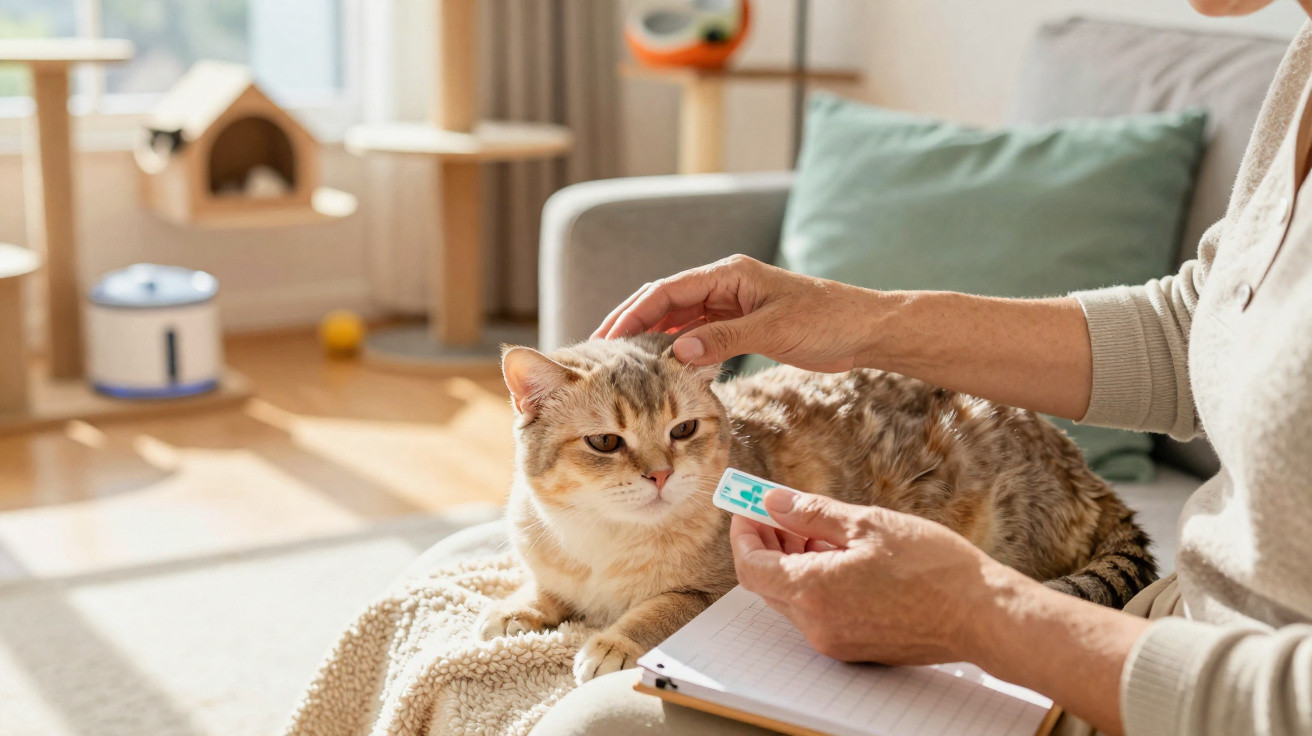
Many cat owners do not realise that cats, like people, can develop dementia. A recent paper found numerous similarities between dementia in cats and humans, suggesting that cognitive impairment may develop in comparable ways.
Some signs of dementia in cats resemble those seen in people, although not all do. Recognising what to look for can help you give your cat the best possible care at this stage of its life.
What is feline dementia?
Feline cognitive dysfunction syndrome, also called feline dementia, is an age-related deterioration in a cat’s cognitive abilities. It is typically identified by behavioural changes that cannot be explained by another medical condition.
Feline dementia is thought to be very common among older cats. One study found that more than half of cats showed signs of dementia by the age of 15. However, some behaviours linked to the condition have also been observed in cats as young as seven.
A separate survey of cat owners found that around 28 per cent of cats aged 11 to 14 displayed at least one behavioural change associated with dementia.
Eight signs of feline dementia
Behavioural changes are often the first clue that something may be wrong. There are eight signs that could suggest your cat has dementia:
- Unusual vocalisation: Your cat may begin making excessive sounds or vocalising in unfamiliar situations. Loud meowing at night is a common example.
- Altered interactions: Cats with dementia may seek attention more frequently or become “clingy”. Alternatively, they may interact less than before, seem irritable or appear not to recognise people they know.
- Sleep changes: Your cat’s sleeping patterns may change. Cats often become restless at night and sleep more during the day.
- House soiling: Changes in toilet habits can point to several conditions, but going to the toilet outside the litter tray is a common possible sign of dementia in cats.
- Disorientation: Like people with dementia, cats can become confused or wander. They may lose their bearings, stare blankly at walls, get trapped behind objects or approach the wrong side of a door.
- Changes in activity levels: A cat with dementia may be more or less active than normal. It might play less, show less interest in exploring or spend less time looking after itself, for example by grooming or washing less often.
- Appearing anxious: Cats with dementia may show anxiety in situations where they were previously confident, such as around familiar people, places or sounds. An anxious cat may hide more frequently, escaping under a bed or onto the top of a cupboard.
- Learning problems: Cats with dementia may find it harder to carry out tasks they have already learned, such as finding their food bowl, and may struggle to learn new ones.
Caring for a cat with feline dementia
The symptoms of feline dementia overlap considerably with those of other common conditions, including arthritis and kidney disease. If you notice any of these behavioural changes, speak to your vet so that other conditions can be ruled out.
Research on feline dementia remains limited. Much of the information available about prevention and treatment is drawn from studies of humans and dogs. As in those species, there is no cure for dementia in cats, but its effects can be limited.
Some changes to a cat’s environment can provide stimulation, activate the brain and encourage nerve growth. Before making any changes, however, the severity of your cat’s dementia needs to be considered.
For healthy cats or those with mild symptoms, encouraging play, mimicking hunting with interactive toys and promoting exploration through hide-and-seek games are thought to delay the progression of cognitive dysfunction.
For cats with severe cognitive impairment, however, changes to their surroundings could cause confusion and anxiety, making behavioural symptoms worse.
Changes to diet may also help. In particular, adding supplements containing antioxidants, such as vitamins E and C, and essential fatty acids may reduce inflammation in the brain and slow the progression of the disease.
However, scientific research has tested only dog-specific supplements and shown that they improve cognition in dogs. If you want to try supplements for your cat, make sure they are approved for felines. Do not give cats dog supplements, which may contain substances toxic to them, such as alpha lipoic acid.
Feline dementia is both highly prevalent and difficult to manage. Recognising the symptoms can help ensure your cat is diagnosed earlier, allowing you to make the necessary changes to its surroundings or diet and ultimately improve its quality of life.
Emily Blackwell, Senior Lecturer in Animal Behaviour and Welfare, University of Bristol, and Sara Lawrence-Mills, Postdoctoral Researcher, Bristol Veterinary School, University of Bristol
This article is republished from The Conversation under a Creative Commons licence. Read the original article.















Comments
No comments yet. Be the first to comment!
Leave a Comment