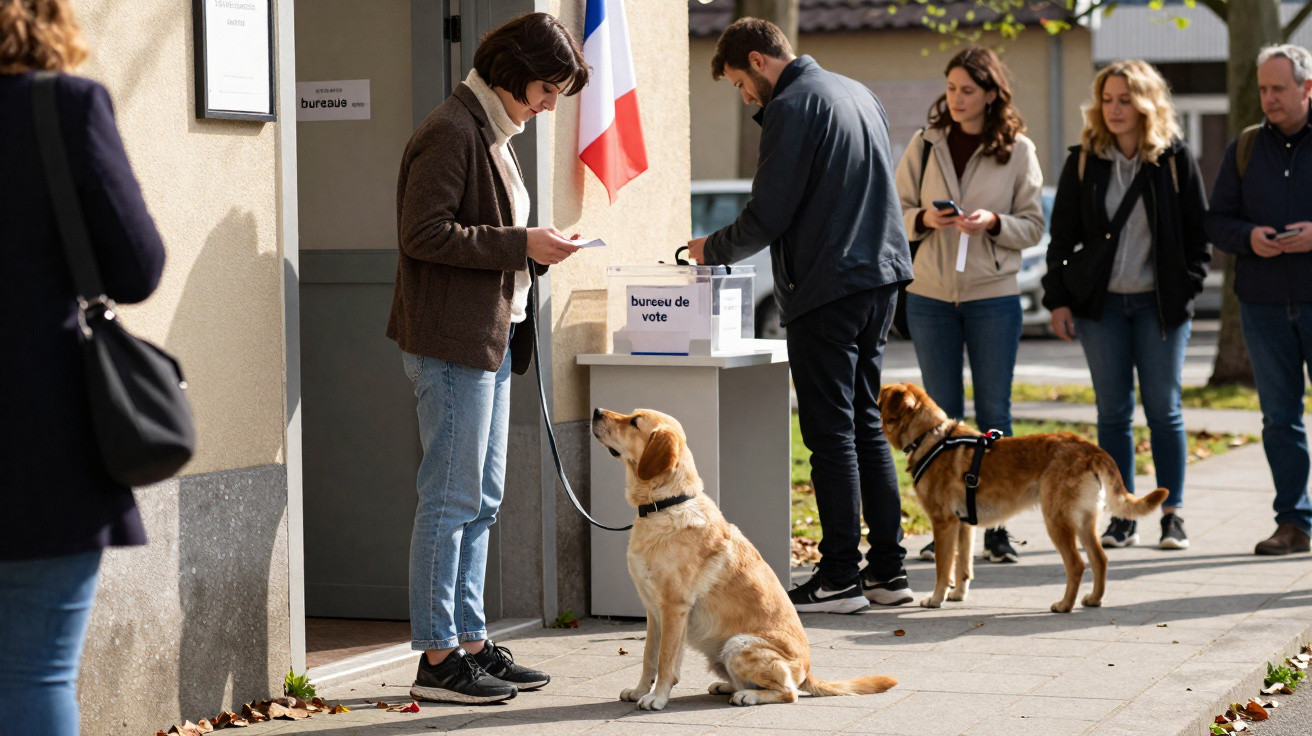
A dog lead in one hand and a polling card in the other may seem like a perfectly natural combination. Many people like to fit a walk around their trip to vote. But in France, this raises a straightforward question: is a dog legally allowed inside a polling station, or could its owner be asked to leave?
Why dogs in polling stations raise a sensitive question
For dog owners, the daily walk is part of normal life. Extra time outdoors benefits a dog both physically and mentally. Elections often take place on Sundays, when many people are already out and about, so bringing a four-legged companion along can seem an obvious choice.
A polling station, however, is a sensitive setting. Special rules are in place to ensure voting is orderly, peaceful and free from pressure. Unfamiliar noises, an anxious dog or an argument about access can quickly disrupt that calm.
“Polling stations are not ordinary public spaces: they are tightly organised places with special rules, including rules that affect dogs.”
This meeting of everyday dog ownership and a protected voting process is where uncertainty arises: can the dog come inside, or must it wait outdoors?
What is and is not permitted in France
France has no single nationwide legal provision stating unequivocally that “dogs may enter polling stations” or that “dogs are banned in all cases”. This complicates matters and means local approaches can differ considerably.
A clear exception: assistance dogs
Assistance dogs have particular legal protection. They include guide dogs for blind people and dogs that support people with physical or mental impairments.
- Assistance dogs have special access rights in France.
- They can generally accompany their owners into buildings where other dogs are not allowed.
- In practice, their presence at a polling station cannot be refused.
This is a matter of participation in the democratic process, rather than convenience. Without the dog, the person concerned might find it very difficult, or even impossible, to attend and vote.
The problem of dogs classified as dangerous
The situation is quite different for dogs placed in a special risk category in France. Strict conditions apply to these animals, and they cannot be taken into many public areas.
If a dog belongs to the highest risk category, taking it to a polling station in France is generally ruled out. Restrictions on these breeds and types still apply when the owner intends to vote “only briefly”.
Ordinary family dogs: a local decision
The question becomes less clear for other dogs, including the typical family pet that walks calmly on a lead, attracts little attention and behaves well around others. France has no nationwide yes-or-no rule for these animals.
“In practice, whether a dog can enter a French polling station often depends on the municipality or the people in charge on the day.”
In practical terms:
- Some towns and municipalities allow dogs on leads inside polling stations.
- Other local authorities refuse animals altogether, whatever their size or behaviour.
- In some cases, polling station staff decide on the spot whether to admit a dog.
Animal welfare advocates and local authorities therefore advise owners to check in advance to avoid problems.
How dog owners can prepare in France
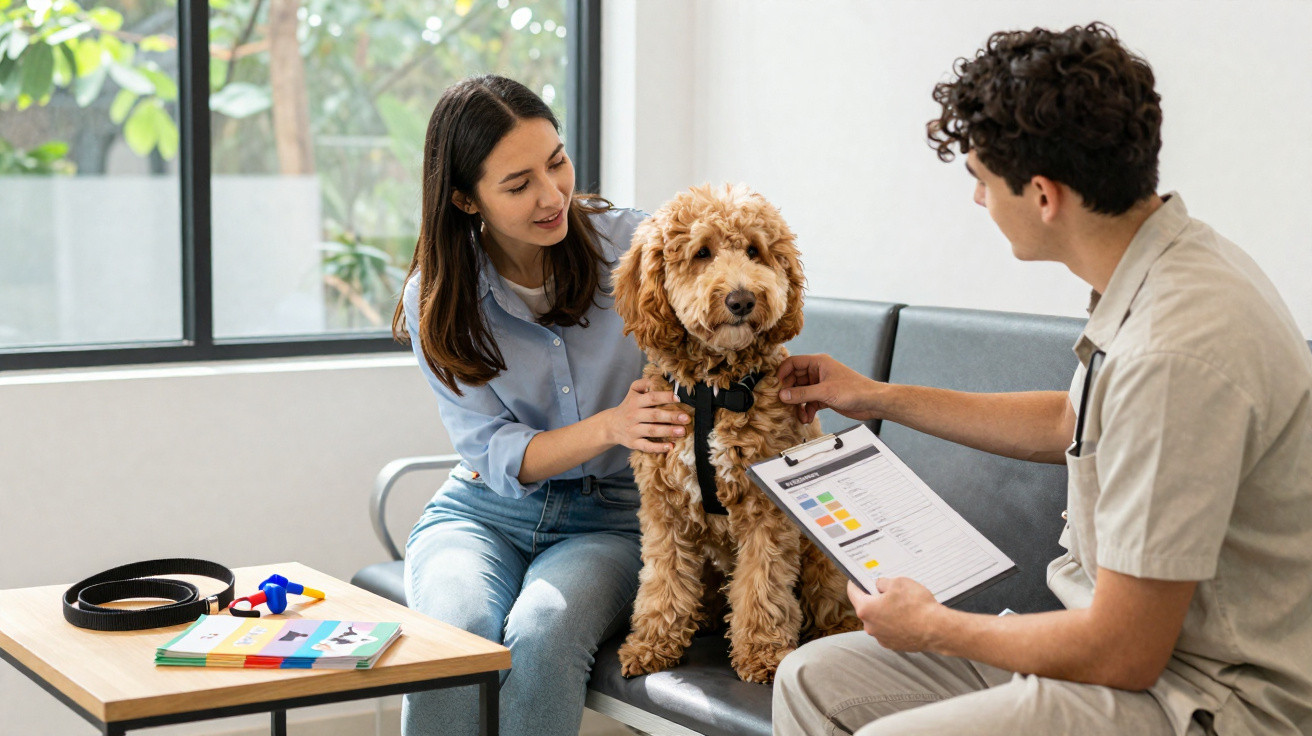
Anyone hoping to vote with a dog in France should avoid leaving the discussion until they reach the polling station door. A quick phone call beforehand can save considerable stress later.
- Contact the town hall or the relevant polling station before election day.
- Explain clearly that the dog will be on a lead and under control.
- Ask whether the municipality has written or published rules.
If the answer is no, there are essentially two options: leave the dog at home, or go with another person so that one of you can wait outside while the other votes.
Why calm, unobtrusive behaviour matters
Even where dogs are admitted, they must not disrupt the proceedings. A nervous dog that barks repeatedly, jumps at people or blocks their way may prompt an immediate request to leave the room.
Before heading to the polling station, owners should consider:
- How does the dog react to crowds and queues?
- Can it remain relaxed on a short lead?
- Is it comfortable in confined indoor spaces with unfamiliar smells?
Anyone who honestly answers no to these questions is better off leaving the dog out of the trip to the polling station.
A look at Britain: voting with a dog as a trend
While much remains unclear in France, the situation in Britain offers an interesting contrast. Dogs accompanying people to vote have been a familiar sight on the streets for years.
In many British constituencies, it is entirely normal for voters to bring dogs or other pets along. A social media trend has grown around the practice, with people sharing photographs of their animals outside polling stations, sometimes using humorous hashtags.
“In Britain, the dog outside the polling station has long been both a symbol of civic participation and a popular subject for photographs.”
Despite the relaxed atmosphere, there are limits. Animals that threaten other voters or disrupt proceedings through loud behaviour can be asked to leave the building. Protecting an orderly voting process remains the top priority.
What readers in Germany can take from this
Similar questions arise in Germany: can a dog enter a polling station? Many municipalities follow principles comparable to those in France. Assistance dogs are generally allowed, while other animals may be admitted only at the discretion of local officials, or not at all.
People who travel internationally, including Germans living in France, should therefore follow three guiding principles:
- Check the legal position where information is available.
- Respect the municipality’s individual rules.
- Take their own responsibilities as dog owners seriously.
Voting should take place calmly and without distraction. A friendly manner, a willingness to let the dog wait outside if necessary and a short call beforehand can resolve most conflicts before they arise.
Voting rights, animal welfare and consideration: a balancing act
Two entirely legitimate interests meet here: a person’s wish to take their dog almost everywhere, and the state’s need to protect the voting process rigorously. Balancing them can sometimes require tact at a local level.
Owners who understand their dog, show consideration and check the rules in advance can often enjoy both a relaxed walk and an undisturbed vote. By contrast, anyone who rushes into a polling station with an overexcited animal risks not only trouble but also understandable opposition from election staff.
A simple reminder can help with planning: call first, then pick up the lead. That way, election Sunday can remain stress-free for the owner, the dog and the polling station staff.










Comments
No comments yet. Be the first to comment!
Leave a Comment