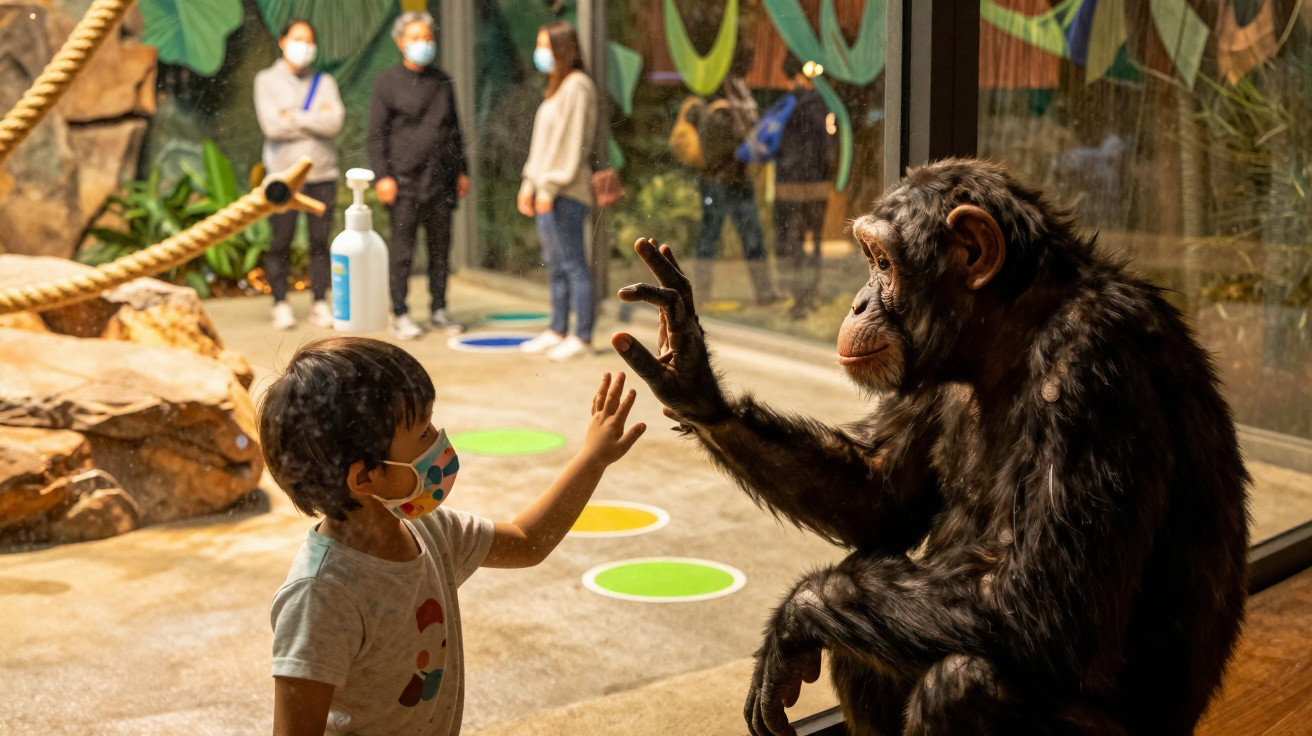
As the COVID-19 pandemic unfolded, everyone had to adapt – including zoo animals, which suddenly no longer saw crowds of visitors passing by each day.
In a study published in 2022, researchers examined how primates responded to the change. They observed bonobos, chimpanzees, western lowland gorillas and olive baboons, finding a range of changes in their habits, including how much time they spent resting and eating.
Interactions with visitors are thought to be important to zoo animal welfare, although their effects can be positive or negative. The researchers therefore wanted to understand what changed when the crowds were absent.
"Primates are some of the most cognitively advanced species in zoos and their interactions with visitors are complex," explained Samantha Ward, a zoo animal welfare scientist at Nottingham Trent University in the UK, at the time.
"A limitation to understanding how visitors can affect behaviour of animals in zoos and parks is that they rarely close to the public for prolonged periods, so this provided us with a unique opportunity."
How zoo primates responded to returning visitors
The researchers recorded observations at Twycross Zoo and Knowsley Safari in the UK, both before and after visitors returned. Across several months and multiple periods of opening and closure, they noted changes in primate behaviour that differed between animals.
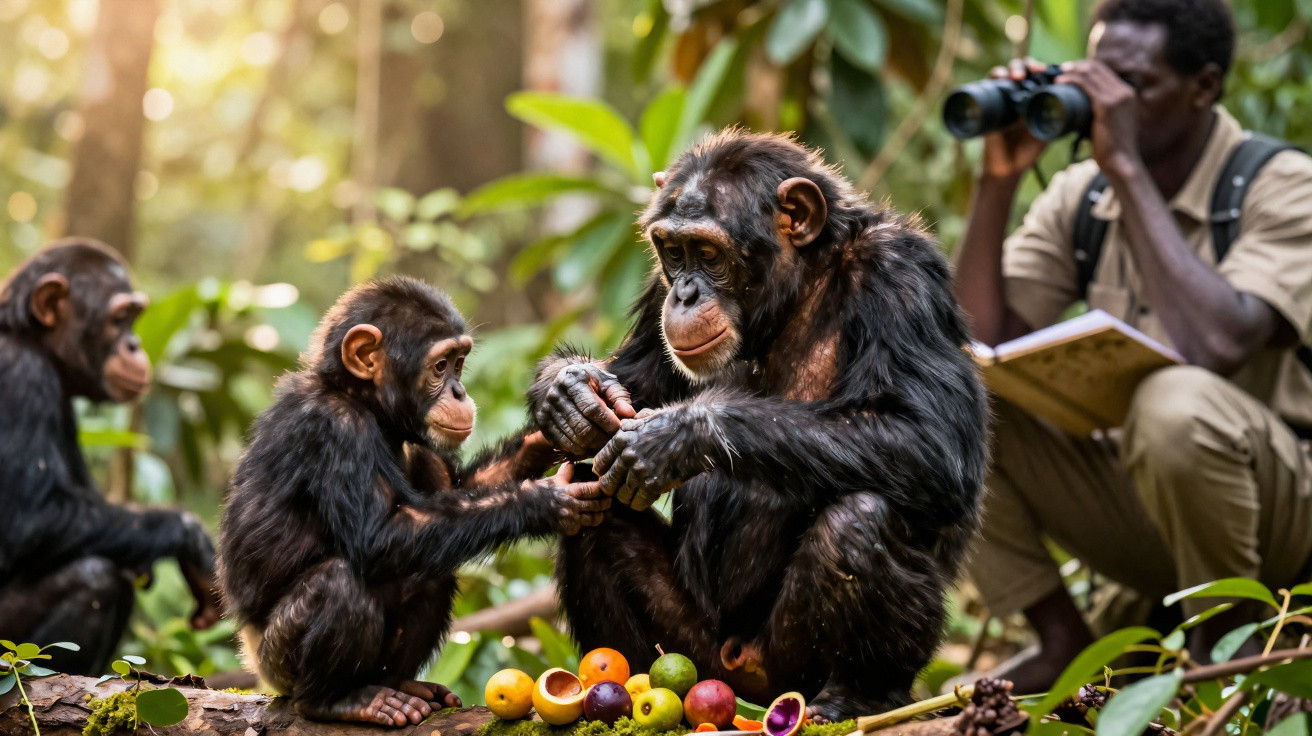
When visitors began coming back to the zoo, bonobos and gorillas spent less time alone, and gorillas also spent less time resting. Chimpanzees, meanwhile, ate more and interacted more with their enclosures after the zoos reopened.
At the safari park, olive baboons displayed less sexual and dominance behaviour once visitors returned. They also approached visitor cars more frequently than they had approached ranger vehicles while the park was closed.
What the behaviour changes could mean for primate welfare
Determining whether these changes were positive is less straightforward. The researchers suggested that returning visitors appeared to stimulate chimpanzees and baboons, while the reduction in time gorillas and bonobos spent alone could also be seen as beneficial.
However, the gorillas – naturally more sedentary animals – might have been disturbed by the crowds, as they spent less time resting. When visitors returned, the gorillas also changed which parts of their enclosures they used most, suggesting they could manage that disruption to some extent.
"Behavioural changes and changes in enclosure use in the presence of visitors highlights the adaptability of zoo species to their environments," said Ellen Williams, a zoo animal welfare researcher at Harper Adams University in the UK.
"Provision of environments which enable animals to actively adapt in this manner is really important for their welfare."
Visitor numbers and future research
The team also identified a visitor-number threshold for olive baboons: beyond it, the animals stopped becoming increasingly active and stimulated by cars passing through the safari park.
These findings provide valuable information for animal welfare researchers, who know that visitors can affect wildlife in many ways. They can offer feelings of companionship and safety, but can also be a source of annoyance or even a threat. Such effects need to be considered in the design and operation of zoos and parks.
Although there may, hopefully, be no further lockdowns in the foreseeable future, the researchers want to continue investigating how visitor numbers affect animal behaviour. They plan to collect data involving more animals over a longer period.
"Future work could involve looking at the impact on a wider range of species in both zoos and safari parks as well as differences among individual animals," said Williams.
The research was published in Animals.
An earlier version of this article was published in September 2022.







Comments
No comments yet. Be the first to comment!
Leave a Comment