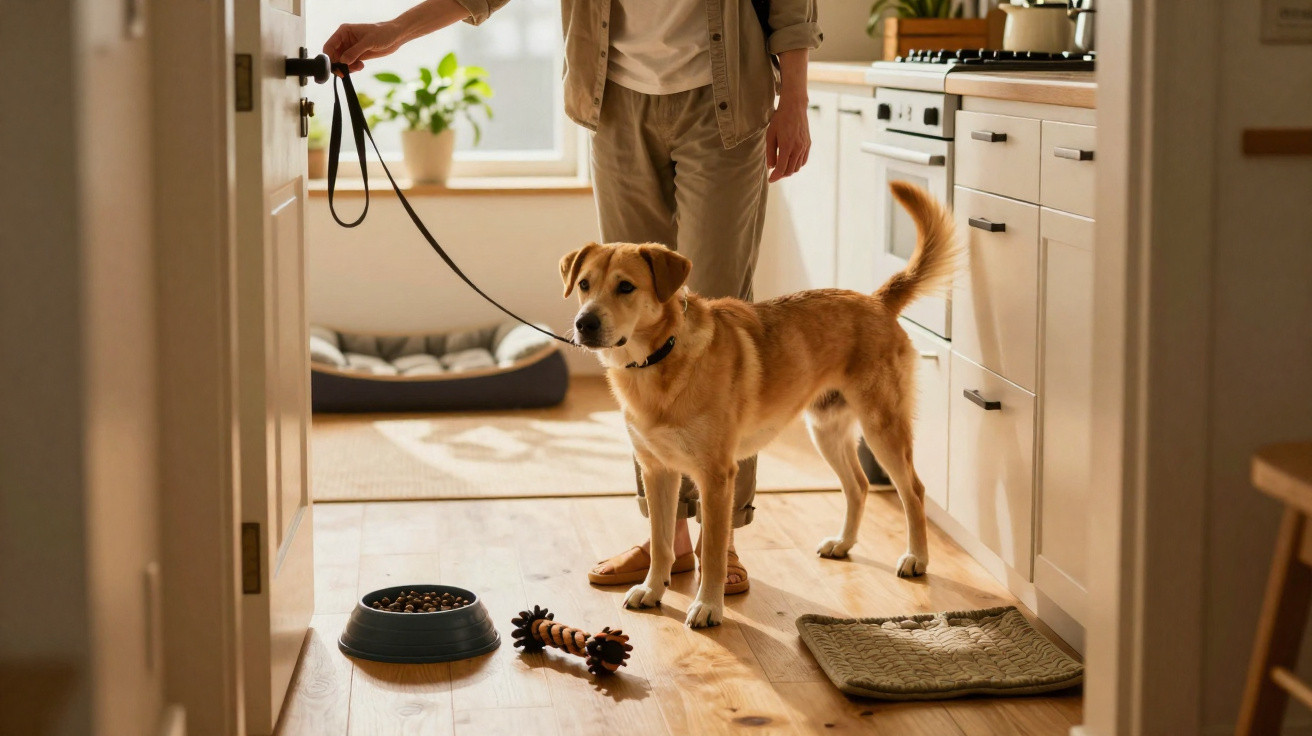
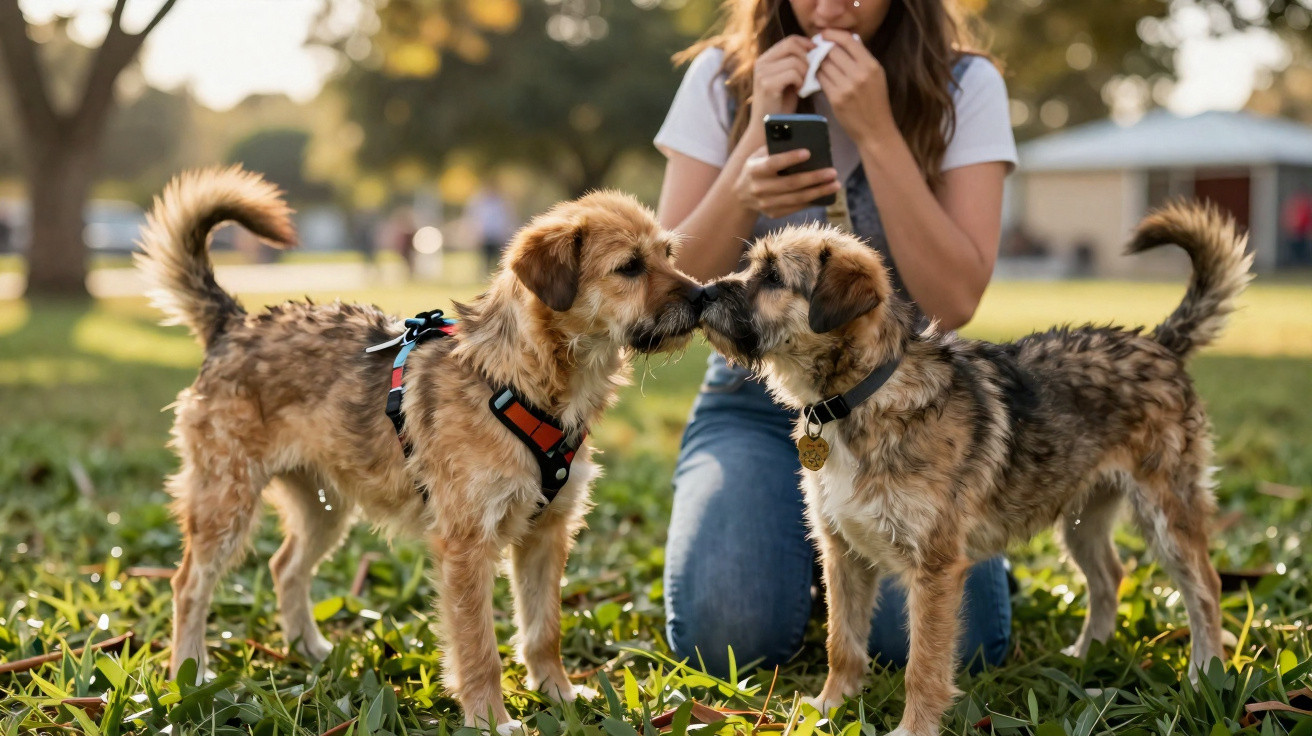
You get up to pour yourself a glass of water, and there they are. You make your way to the bathroom, with four furry paws padding along straight behind you. You creep quietly towards the kitchen, only for your dog to appear by your feet like a little breathing shadow.
Initially, it seems adorable. Then it feels slightly odd. Before long, you realise that your dog follows you absolutely everywhere: from one room to the next, from the sofa to your desk, even when you only want half a minute to yourself.
Is it affection, fixation, or a quiet request for help? Something is clearly happening inside that canine mind.
When your dog becomes your shadow
Once you notice it, the routine can seem almost unsettling. You rise from your chair, it scrapes across the floor, and that sound alone works like a bell for your dog. Their head comes up, their ears sharpen, and they jump down to follow you with calm purpose.
There is no obvious reason for it. You are not holding a lead, filling the food bowl, or carrying a toy. They trail behind simply because you have moved. Simply because you are there. At first, such devoted attention can feel flattering, but eventually you may start asking what it truly indicates.
Imagine the situation. You are working from home, have a Zoom call coming up, and are trying to appear at least somewhat professional above the waist. Beneath the desk, your dog is pressed against your feet like a warm, living footrest.
The moment you stand to collect a notebook, they leap up too. Hallway, kitchen, bedroom: it is always the same. If you shut the bathroom door, they lie against it and wait. Some dogs will even whine or scratch as though you have vanished for good.
You are far from the only one. Research estimates that as many as half of pet dogs display “clinging” behaviors at some stage. Dogs now spend more time indoors with people than ever before, meaning their entire world may narrow to one person: you.
There are several explanations for this persistent following, and “because they’re needy” is rarely the whole answer. Dogs are naturally pack animals. In the wild, separation from the group could bring danger or death, so remaining close is a survival instinct built into their genes.
By shadowing you, your dog may be looking for reassurance, predictability, or merely clues about what will happen next. They study your posture, monitor tiny movements, and anticipate when something interesting could be about to occur. From their point of view, you are both Netflix and Wi‑Fi.
At times, however, this shadowing can pass an unseen boundary. That is when affection can begin to merge with anxiety.
Love, anxiety, or just really good training?
First, the reassuring part. In many cases, a dog follows you everywhere simply because they love you and feel secure around you. That is the straightforward, lovely explanation.
You provide their meals, walks, scents, play, and cuddles. You are the one who opens doors, in both the literal and figurative sense. Dogs are excellent at making associations: when enjoyable things tend to happen after you get moving, they will stay close so that they do not miss what comes next.
Genetics can play a part too. Certain breeds, including border collies, shepherds, and many “velcro dogs” such as some spaniels, are naturally inclined to work in close partnership with people. For these dogs, following is not an unusual habit. It is work.
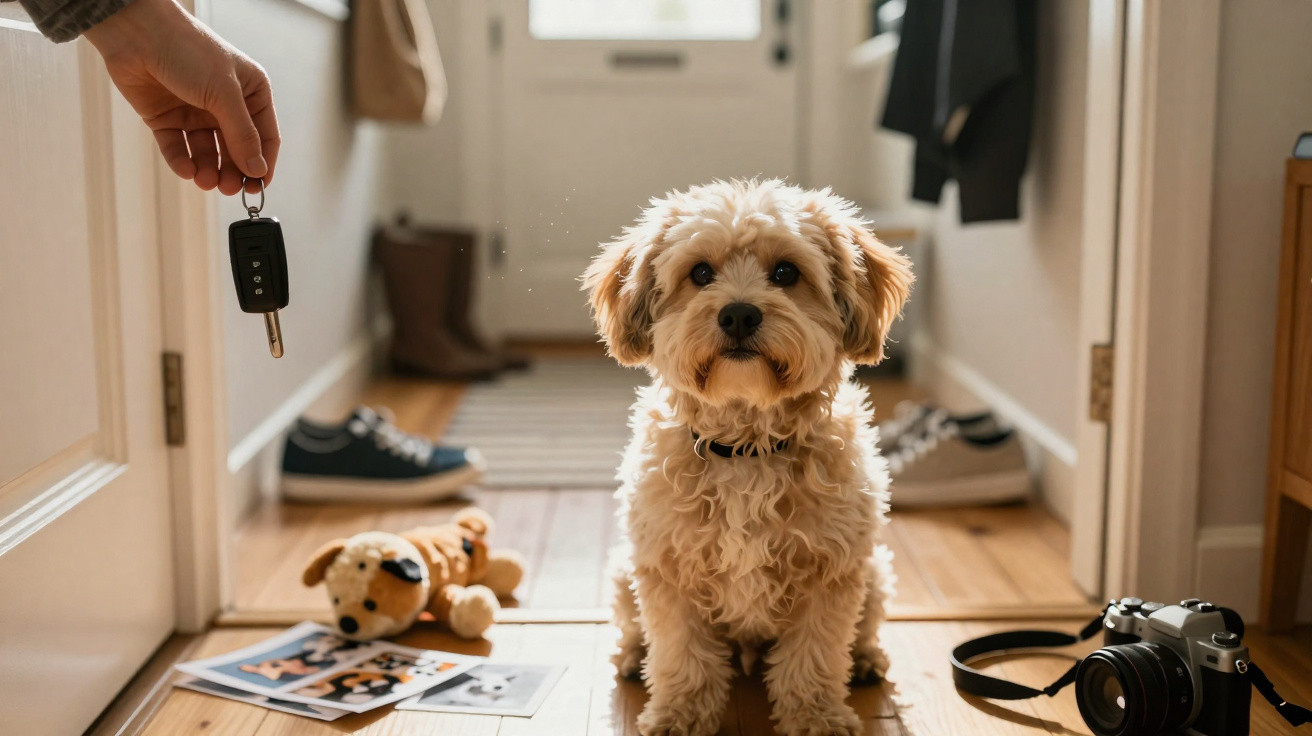
Now consider another scenario. You pick up your keys and your dog begins pacing, licking their lips, perhaps yawning in the tense way dogs can. You lift your bag, and they cling to your legs while breathing more quickly.
After you leave, they bark, scratch at the door, or howl. Perhaps a neighbour has already messaged you about the sound. Perhaps you return to find chewed shoes or puddles, despite your dog being house-trained.
These are familiar signs of separation-related stress. The following is no longer merely “aww, they love me so much”. It becomes “I only feel safe when you’re here, and I can’t handle it when you disappear”. This is not devotion; it is panic disguised as attachment.
There is another possibility that is less comfortable to acknowledge: we can unintentionally teach our dogs to act like shadows. You stand up, they follow, and you instantly speak to them, stroke them, or offer a treat “because they’re so cute”. You walk into the kitchen, they pad in after you, and you casually drop a bit of cheese close to their nose.
Without meaning to, you reinforce the behaviour on every occasion. Dog follows human = attention, food, walk, play. Realistically, nobody does this every day intending to create a clingy dog. Yet these small routines can build up in exactly that way.
After several months, your dog may learn one clear lesson: “If I stick to this person like Velcro, good things rain from the sky”. And, from their perspective, that conclusion is correct.
How to gently give your dog some emotional space
Helping your dog does not mean pushing them away. Rather than treating it as rejection, view it as teaching an important ability: feeling comfortable alone, even while you are nearby.
Begin with tiny steps. Build brief “independence moments” into the day. Place a food puzzle or chew in another room, then calmly leave them to it. Allow your dog to enjoy it without you standing over them.
Praise relaxed behaviour from a distance. When they decide to remain on their bed or the sofa while you move about, quietly place a treat near their paws. Do not make a fuss. Just offer a gentle, “Good choice”. You are showing them that being a few metres away can be every bit as secure and rewarding.
Many people respond to clinginess by going to the other extreme: shutting doors, ignoring their dog, or becoming frustrated. This often has the opposite effect. Instead of learning independence, the dog learns that your movements are unpredictable and worrying.
A gentler method is more effective. Make ordinary moments into small training opportunities. If your dog rises whenever you do, occasionally sit down again without doing anything interesting. Walk into another room, return, and behave as though nothing noteworthy has happened.
In doing so, you gradually weaken the mental connection between “human moves” and “something huge is about to happen”. Your dog’s nervous system can eventually relax a little.
Sometimes the bravest thing a clingy dog can learn is this: “I can rest over here, and my person will still be there when I wake up.” That quiet confidence is worth more than any trick.
- Create a “safe spot”: Choose a bed, mat, or crate where your dog receives chews, calm praise, and no pressure. In time, it can become their emotional anchor.
- Use background sound: Gentle music, a podcast, or white noise may make time alone feel less stark and empty for sensitive dogs.
- Practise micro-separations: Go outside for 10 seconds, then return without fuss. Slowly extend the time, always remaining below the point at which panic begins.
- Break the food-follow connection: Do not feed or treat your dog whenever you enter the kitchen. Make good things less predictable.
- Get help when necessary: If your dog screams, destroys items, or harms themselves when left alone, a qualified behaviourist or vet is not a luxury. It is a lifeline.
Living with a furry shadow without losing your mind
The reality lies somewhere between “my dog is obsessed with me” and “my dog is broken”. Often, they are simply reacting to a world they cannot fully make sense of, guided by the only compass they know: you.
On long days, the constant trailing can feel exhausting. There will be times when you want to close a door and breathe without four paws clicking along behind you. Still, there is something profoundly touching about a small creature that has quietly decided your presence is the safest place in the world.
Your role is not to become their entire universe. It is to help them learn that they can feel comfortable in themselves, even when you are not touching them, speaking to them, or watching them. When they eventually choose to remain in their bed as you walk into another room, that small, peaceful decision reveals more about trust than every tail wag in the world.
| Key point | Detail | Value for the reader |
|---|---|---|
| Understand the “why” | Tell the difference between affection, habit, and anxiety behind your dog’s shadowing | Allows you to react with empathy rather than frustration |
| Teach calm independence | Build confidence with safe spots, food puzzles, and micro-separations | Lessens clingy behavior without harming your bond |
| Know when it’s serious | Watch for panic, destruction, or distress after you leave | Points you towards professional help before issues worsen |

Comments
No comments yet. Be the first to comment!
Leave a Comment