Small yet crucial mistakes are often the reason.
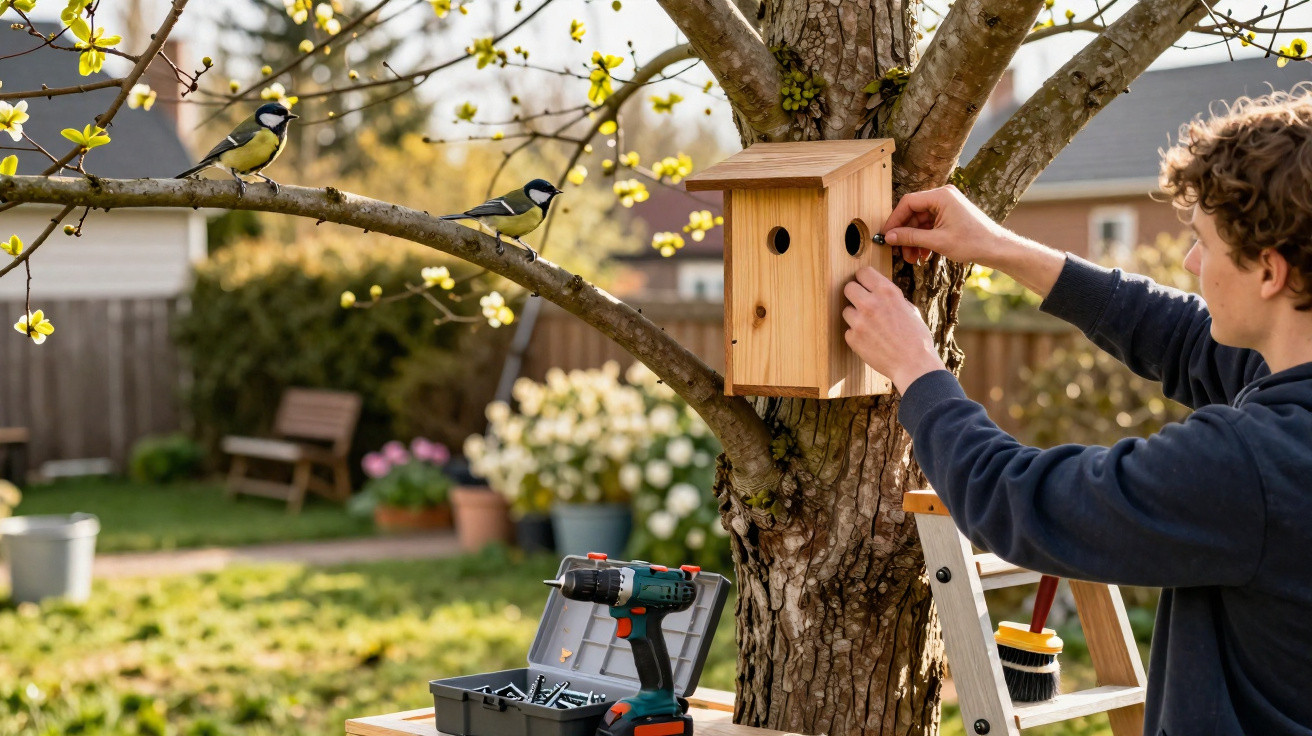
For many bird pairs, early spring marks the search for a secure place to raise their young. Tits in particular are now carefully inspecting every crack, hole and nesting box. Following a few straightforward rules greatly improves the likelihood that your own box will become a nursery rather than remaining empty – with lively activity right outside the window.
Why early spring is the crucial period
Tits begin planning their families when daylight hours increase and there is likely to be sufficient food for their chicks. In Central Europe, they generally lay their eggs from April to June. Before that, often as early as March, they patrol their territory and inspect possible nesting cavities.
A brood of tits can contain between five and twelve eggs. Incubation lasts around two weeks. Once hatched, the young remain in the box for approximately 18 to 20 days before fledging. Throughout this period, they need peace, protection from predators and stable conditions.
“Anyone who prepares a nesting box in good time during late winter gives tits enough time to inspect and accept it.”
If the box is only put up in mid-April, the best window has often already passed. By then, many pairs will have found a cavity elsewhere. It is therefore worth taking action by the end of winter at the latest, checking the box and improving it where necessary.
The right nesting box: simple, sturdy and suitable for the species
For tits, practicality matters more than appearance. Brightly painted decorative birdhouses, often made from plywood or thin materials, may look attractive but rarely provide a serious nesting option. They heat up quickly, may leak, or allow predators easy access.
Materials that genuinely work well
- Untreated timber: It should ideally be 18–22 mm thick, providing effective insulation and a stable internal climate.
- No paint on the inside: Leave the interior unfinished, free from chemicals and strong smells.
- A solid roof overhang: A slightly projecting roof protects against driving rain and helps keep the inside drier.
Metal boxes and plastic versions are rarely accepted. They become very cold overnight and can heat up excessively in sunshine. This presents a risk to vulnerable nestlings.
Why the entrance hole matters
The diameter of the entrance hole determines which birds can move in – and which must stay out. The following sizes apply to the two most common garden species:
| Species | Recommended entrance-hole diameter |
|---|---|
| Blue tit | 25–28 mm |
| Great tit | 32 mm |
If the hole is substantially larger than 34 mm, sparrows and other species are more likely to squeeze in and displace tits. In a typical house garden, a 30–32 mm hole is often a practical compromise: it suits great tits and frequently other small nesting birds too.
The entrance should be positioned roughly 4 to 6 cm above the base of the box. This leaves an insulating layer of air that offers protection from cold and damp. A perch directly beneath the hole may look appealing, but it mainly helps cats, martens or magpies reach the nest. It is better omitted.
Keeping the nesting box clean: little work, major benefits
Many boxes are used successfully for their first few years, then attract birds less and less frequently. One common cause is an interior that has become completely dirty. Droppings, food remnants and old nest material can harbour parasites and mould.
“A thorough clean once a year is usually all that is needed to keep the box appealing.”
How to clean the box properly
- Choose an autumn date: A day in late autumn is ideal, once the breeding season has certainly ended.
- Open the roof or front panel: Well-designed nesting boxes have either a removable roof or a flap at the front.
- Remove the old nest: Wearing gloves, clear out all previous nesting material and dispose of it.
- Scrape the interior: Use a scraper or brush to loosen any heavy soiling.
- Rinse with water: A rinse with clean, lukewarm water is entirely sufficient; do not use cleaning products.
If desired, inspect the box again towards the end of winter. Should you find fresh cobwebs or new leaves, remove them briefly, then leave the box undisturbed again. Once tits begin approaching it with interest, no one should look inside or move it.
Choosing a site: height, direction and a quiet setting
Even an ideal box is of limited use if it is hung in the wrong place. Tits may be curious, but they are sensitive to continual disturbance and danger from below.
The best height and method of fixing
- A height of 2–3 metres: This largely keeps the box beyond the reach of cats and other ground predators.
- Secure fixing: Attach it firmly to a trunk or wall using rustproof screws or straps.
- A slight forward tilt: Positioning the box with a minimal lean forwards allows rainwater to run off more effectively.
When a box is hung too low and exposed, cats or raccoons pose a greater risk. Tits are also unlikely to feel comfortable if it is placed directly at eye level beside a patio.
The best direction for the entrance hole
An east- or south-east-facing entrance has proved effective. This allows mild morning sun to reach the box without exposing it to overheating at midday. It is also less affected by rain and wind arriving from the west.
A south-facing box may become too warm in strong sunshine, while one facing north often remains cool and damp. In densely built-up areas, it is worth checking the usual wind direction and where early-day sun falls.
A quiet zone rather than bustle: distance from feeding areas and paths
Many gardeners hang a nesting box right beside a feeding station. Although this seems convenient, it creates disturbance during the breeding season. The constant arrivals and departures of various species can cause stress.
“The nesting box should hang in a relatively quiet corner; the feeding area can be within sight, but not directly beside it.”
A small separation is enough: a few metres farther along the tree, in another area of the garden or on the opposite wall of the house. The adult birds can then feed their young in peace while other species use the food source.
An open water source nearby is another advantage. A shallow bowl or small pond provides drinking water. It is important to replace the water regularly and keep the container clean.
Legal considerations and respectful behaviour
Wild songbirds are protected in Germany. Nobody may disturb or destroy tit nests, including their eggs or young. Once breeding has started, the box must be left alone.
If adult birds are constantly flying in and out with food in their beaks, keep your distance. Children are often fascinated by the activity, so clear rules are helpful: do not shake the tree, knock on the box or attempt to climb up; use binoculars instead.
Useful additions: plants, insects and further nesting aids
One nesting box is a start. A garden becomes truly appealing to tits when there is an appropriate food supply around it. Tits feed their chicks mainly on caterpillars and insects, not on seed from a bird feeder.
- Natural hedges: Hawthorn, rose hips, privet or elder attract insects.
- Flowering perennials: Early flowers such as crocuses and snowdrops support insects in early spring.
- No blanket pesticide use: Avoiding chemical sprays encourages a varied food supply for young birds.
Where there is enough space, several boxes can be installed. Leaving five to ten metres between them prevents territorial disputes immediately next door. Different entrance-hole sizes also create opportunities for other species.
What to do if the nesting box still remains empty
Sometimes everything appears perfect, yet no tit moves in. In that case, it is worth taking a critical look: is the box too shaded or too sunny? Could it be too close to a heavily used patio? Are there already plenty of nesting opportunities nearby, such as old trees with cavities?
In these situations, relocating the box for the following season can help, even if it is moved only a few metres. Many garden birds are creatures of habit: a box that stays empty for one or two years may suddenly become highly sought-after in its third year.
With patience, a well-positioned and properly maintained nesting box, and some consideration for peace and safety, there is a good chance that spring in your garden will soon bring not only blossom, but also the quiet chirping of young birds.














Comments
No comments yet. Be the first to comment!
Leave a Comment