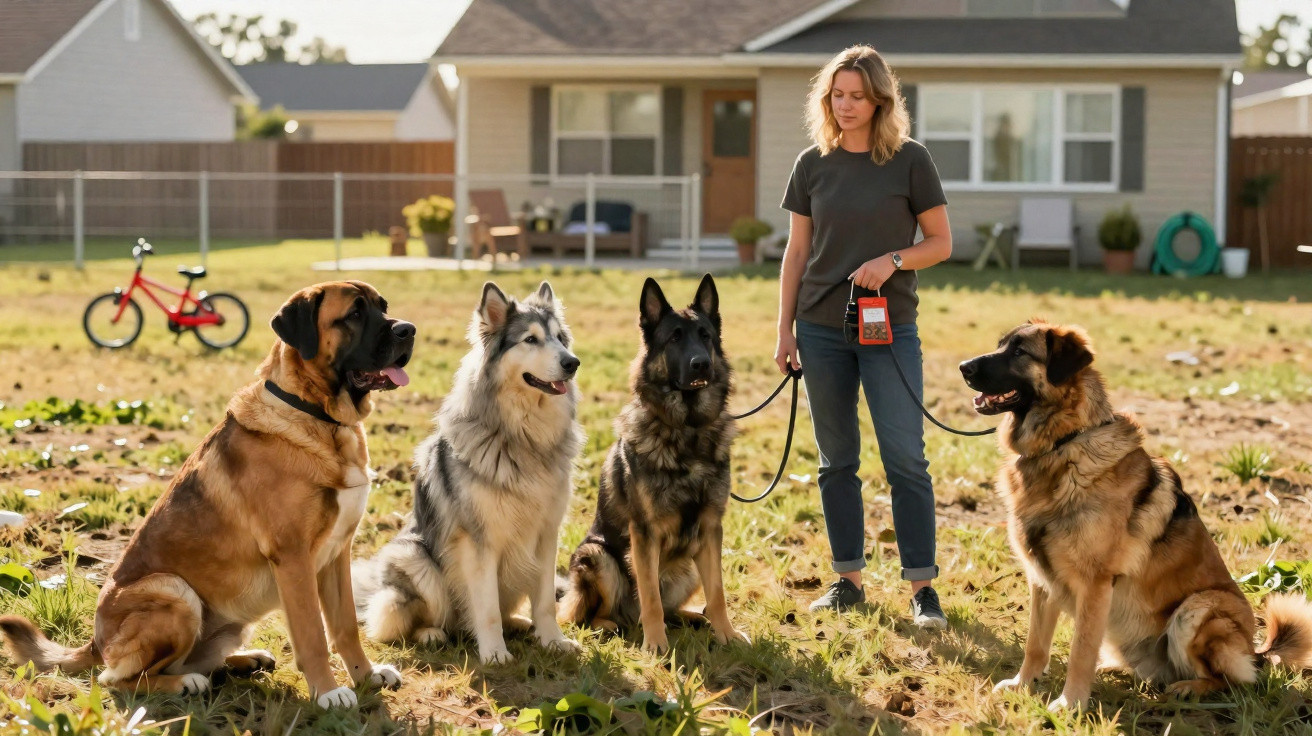
Between adorable puppy videos and photographs of enormous cuddly dogs, it is easy to overlook just how demanding some breeds can be in daily life. A British dog trainer with an audience of millions has named three specific breeds he would never keep in his own home, despite holding them in high professional regard. His reasoning will strike a nerve with many dog lovers.
Why an experienced trainer cautions against certain breeds
British dog trainer and behaviour specialist Will Atherton has worked for years with a wide range of dogs, from family crossbreeds to highly formidable guard dogs. In his assessments, he stresses that every breed was originally developed for a particular purpose: herding, guarding, protecting, companionship or work.
“Anyone who ignores a breed’s original purpose risks severe stress – for both the dog and its owners.”
Many of these working dogs still possess precisely the traits they once needed on farms or in mountainous regions: immense physical strength, pronounced territorial behaviour, a powerful protective instinct, and an exceptionally high need for exercise and meaningful activity. Today, those characteristics can clash with small city flats, tightly packed terraced housing, busy playgrounds and owners returning exhausted from work each evening.
Atherton makes clear that this is not about demonising particular breeds. These dogs are not “bad”. They are highly specialised. In an unsuitable setting, they suffer – and can make life difficult for the people around them.
The three challenging breeds: impressive but exceptionally demanding
1. Kangal: a natural guard dog with an independent mind
The Kangal originates from Turkey, where it was bred over generations as a livestock guardian dog. Its role was to protect flocks of sheep and goats independently from wolves, bears and unfamiliar people. There was no fence and no person holding a lead – the dog itself determined what posed a threat.
This history has produced traits that can quickly become difficult in everyday life:
- an extremely pronounced territorial nature
- considerable physical strength and a high threshold for stimulation
- a strong protective instinct towards “its” territory and “its” people
- demanding requirements for leadership, experience and consistency
In rural surroundings, with extensive fenced land and knowledgeable owners, a Kangal can be an impressive and dependable companion. In a terraced house with a narrow garden, inquisitive neighbours’ children and different visitors arriving every day, that very same protective behaviour creates continual conflict. Atherton sees huge potential for frustration: for the dog, unable to fulfil its role, and for owners who can quickly become overwhelmed.
2. Caucasian Shepherd Dog: a giant with its own view of security
The Caucasian Shepherd Dog comes from the mountain regions around the Caucasus. It too was developed as a livestock guardian dog, often serving as the final line of defence against predators and strangers. Obedience was never the foremost aim of this breeding; independence and courage were.
Will Atherton points out that these exact qualities may become problematic in a typical family household. The dog makes highly independent judgements about who is a friend and who may be a threat. A child running wildly, rough play on the lawn, or a visitor enthusiastically greeting a child – a livestock guardian dog may misread any of these situations.
“A dog accustomed to judging danger alone is hardly suited to an environment with close contact with neighbours and constantly changing stimuli.”
Its size and weight add another consideration: an adult Caucasian Shepherd Dog can easily weigh well over 50 kilograms, with a substantial build and imposing presence. Anyone unable to manage this dog confidently, both physically and mentally, will simply be pulled along in a critical moment – quite literally.
3. English Mastiff: a gentle giant with a health cost
Atherton’s concern about the English Mastiff is different. In terms of temperament, he describes these dogs as generally calm, friendly and closely attached to their people. Many owners rave about gentle giants that amble peacefully through daily life and enjoy a cuddle at home.
From the trainer’s perspective, the issue is the extreme breeding for size and mass. The daily lives of many Mastiffs are shaped by health problems:
- breathing difficulties and limited stamina
- susceptibility to cardiovascular disease
- joint issues, arthritis and pain at a young age
- a high body weight that makes every additional kilogram painful
For many families, this means a routine dominated by veterinary appointments, medication, restricted walks and financial pressure. Atherton openly asks whether it is right to knowingly place an animal in a body with such limited resilience.
Why these breeds are rarely suitable for typical families
The reality in many households is similar: both partners work, children need attention, every day is tightly scheduled, and the garden is relatively small. Add close neighbours, encounters with other dogs and regular visitors, and the needs of all three breeds collide head-on with everyday life.
A Kangal or Caucasian Shepherd Dog that constantly sees unfamiliar people at the fence, watches continuous traffic outside the house and keeps track of joggers and cyclists is permanently on alert. It treats every movement seriously and feels compelled to signal, monitor and protect. If this is consistently suppressed without offering alternatives, frustration develops – along with an increasing risk of unwanted behaviour.
The English Mastiff faces another form of suffering: physically, the dog may often be unable to do what its mind would like to do. Even a short walk can be tiring, stairs can hurt, and heat affects it severely. Families anticipating the dream of a “gentle giant” may suddenly find themselves caring daily for a chronically ill animal.
Which dogs may be better suited to an ordinary home
People living in a flat or a house with a modest garden while managing a busy working routine should consider breeds deliberately developed for living closely with people and families. Atherton recommends, among others, traditional companion and pet dogs.
More suitable options may include – always depending on bloodlines, breeding and individual personality:
- small to medium-sized companion dogs with moderate exercise needs
- family dogs known for willingness to cooperate and emotional stability
- robust rescue crossbreeds, with honest advice about their history
- dogs from breeders who deliberately prioritise health and temperament over extreme physical features
Speaking to an independent dog trainer, alongside veterinary advice, can correct many misconceptions before getting a dog. Reputable professionals ask about working hours, location, previous experience, children in the household and future plans – then rule out certain breeds from the outset.
What to know about livestock guardian dogs
Many people confuse livestock guardian dogs with traditional herding dogs such as the Border Collie. The difference is substantial: herding dogs work with people in response to signals, whereas livestock guardian dogs make their own decisions for the most part and usually remain close to the flock rather than to people.
“Anyone who puts a livestock guardian dog in the garden as a ‘large family dog’ is assigning it a role it was never intended to have.”
For professionals with large properties, a clearly defined task and extensive dog experience, the Kangal and Caucasian Shepherd Dog can be fascinating companions. For families with frequent visitors, children’s birthday parties and close residential surroundings, however, this becomes a constant balancing act with major responsibility.
Practical advice for anyone dreaming of a large dog
Anyone still drawn to large dog breeds should be very honest with themselves before buying one. Useful questions include:
- How many hours each day is someone genuinely at home?
- How tolerant are the neighbours of noise and visitors?
- Am I physically capable of handling a very heavy dog safely?
- Do I have funds available for high veterinary costs and insurance?
- Am I prepared to invest several hours a day in training and enrichment?
Many trainers report that, following an honest consultation, people decide against extreme breeds – and ultimately become happier with a less spectacular but more practical dog. A healthy, well-matched dog that settles calmly into its owner’s life brings far more lasting enjoyment than an imposing problem dog at the end of a lead.





Comments
No comments yet. Be the first to comment!
Leave a Comment