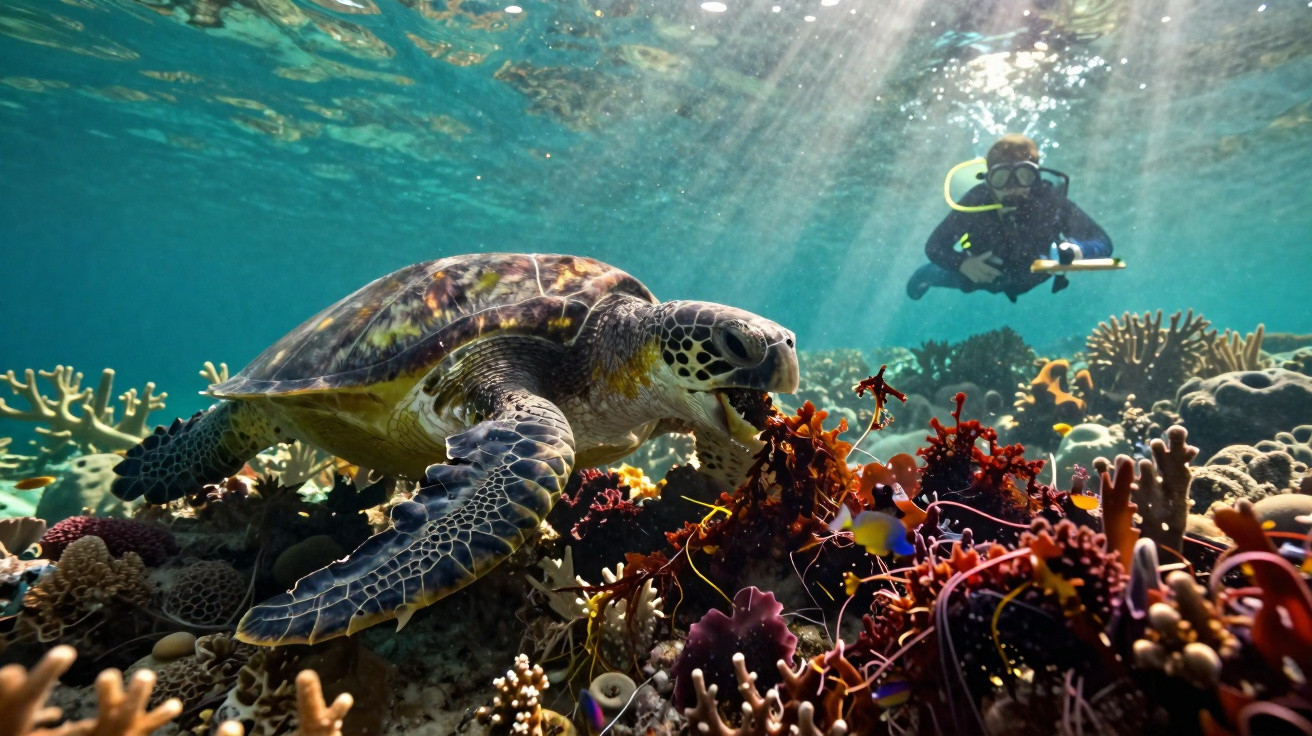
Sea turtles may have a far more significant role in protecting coral reefs than previously thought. Researchers have documented these animals eating an invasive alga that threatens Hawaii’s ecosystem for the first time. The finding suggests that this natural behaviour could curb the spread of the invasive species, although scientists are also examining potential risks linked to its dispersal. The study underlines the value of turtle conservation and ongoing monitoring of marine environments.
How do sea turtles tackle invasive algae?
Sea turtles have been seen feeding on the invasive alga Chondria tumulosa, which grows across reefs and hinders coral development. As they feed, the turtles strip away substantial amounts of vegetation, something fish and sea urchins cannot achieve as effectively.
The observation suggests that these animals may serve as natural allies in reef protection. By lowering the amount of algae present, they can ease pressure on corals and support balance within the marine environment.
Why does this alga threaten coral reefs?
Chondria tumulosa creates dense mats that blanket corals and block out light. As a result, native species lose room to grow, while the wider ecosystem experiences negative effects over time.
Researchers highlight the main problems caused by this invasive species:
- Reduced marine biodiversity.
- Smothering of living corals.
- Less habitat for fish and invertebrates.
- Greater difficulty in restoring degraded areas.
What conservation benefits could this discovery offer?
Footage captured by scientists indicates that safeguarding sea turtle populations may bring indirect benefits to reef health. The larger the number of these natural herbivores, the greater the potential pressure on the invasive alga.
Alongside species protection, other actions remain essential for preserving these ecosystems:
- Continuous monitoring of affected areas.
- Control of the invasive alga’s spread.
- Protection of natural habitats.
- Investment in reef research.
What do scientists still need to find out?
Although the turtles’ consumption of the alga is encouraging news, researchers are investigating whether small fragments can survive the turtles’ digestive process and be carried to other locations during migration. This possibility still requires scientific confirmation.
Future research will also examine how much each turtle can eat per day and the true effect of this behaviour on reducing the invasive alga. These answers could inform new conservation strategies and strengthen long-term protection for coral reefs.






Comments
No comments yet. Be the first to comment!
Leave a Comment