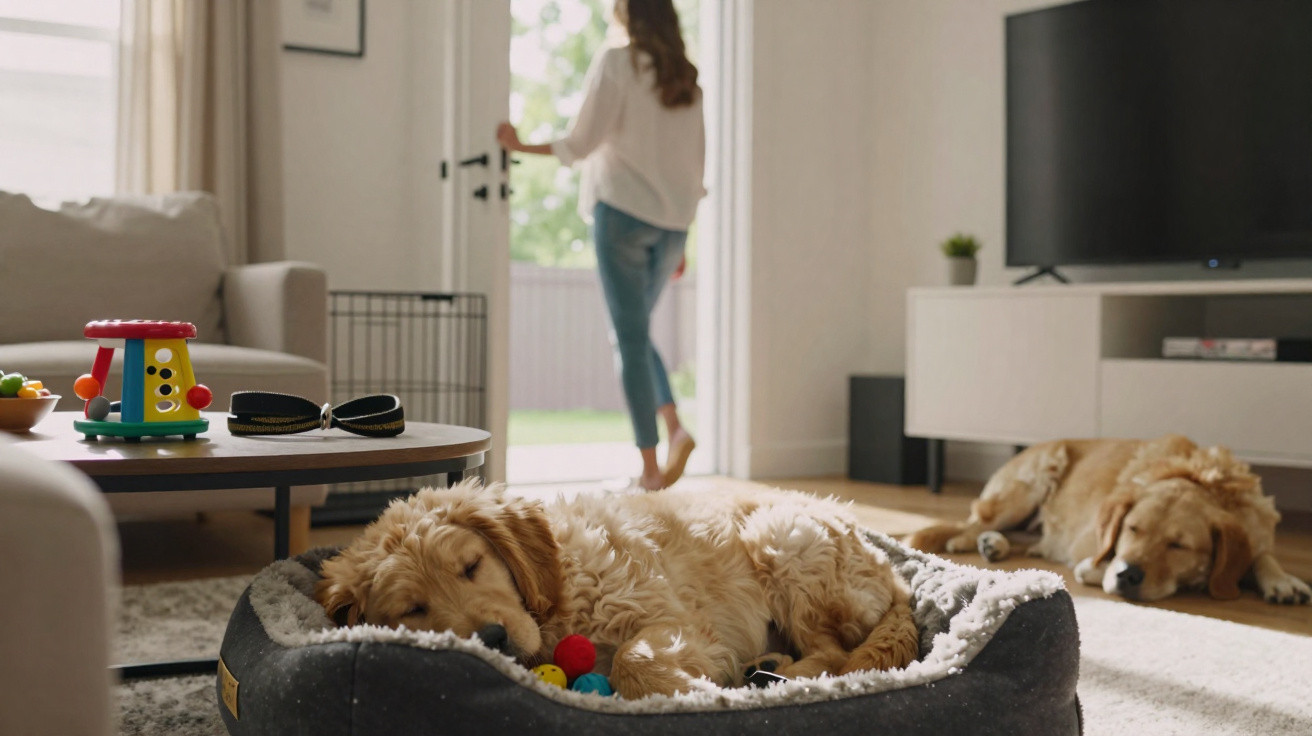
Puppies whose owners leave and come home calmly spend more time resting while alone, researchers have found.
The finding suggests that excited greetings are not merely displays of affection: they can also signal heightened stress that influences how puppies manage time apart from their owners.
Puppies and separation anxiety
Home video recordings followed puppies left alone during their first few months, capturing their behaviour in everyday living spaces where departures and reunions provided repeated emotional cues.
By examining the footage, Fiona C. Dale of the Royal Veterinary College (RVC) found a direct link between calmer owner behaviour and longer periods of stillness and rest while puppies were separated from them.
The same pattern appeared at several observation points, suggesting a consistent change in the puppies’ response to being left alone rather than a temporary effect.
It pointed to a particular behavioural pathway, indicating that the way owners manage their routines could affect how separation stress develops over time.
Why puppy greetings matter
A quiet greeting can express affection just as readily, whereas frantic barking and jumping may indicate a different level of arousal.
Vets describe this pattern as separation-related behaviours: actions associated with stress that occur when dogs are away from people they trust.
Whining, toileting, chewing and watching the door can all suggest that being left at home has become distressing for a dog.
A 2024 UK survey found that 19% of dogs were left alone for five hours or more, making early practice an important welfare issue.
Studying puppy separation anxiety
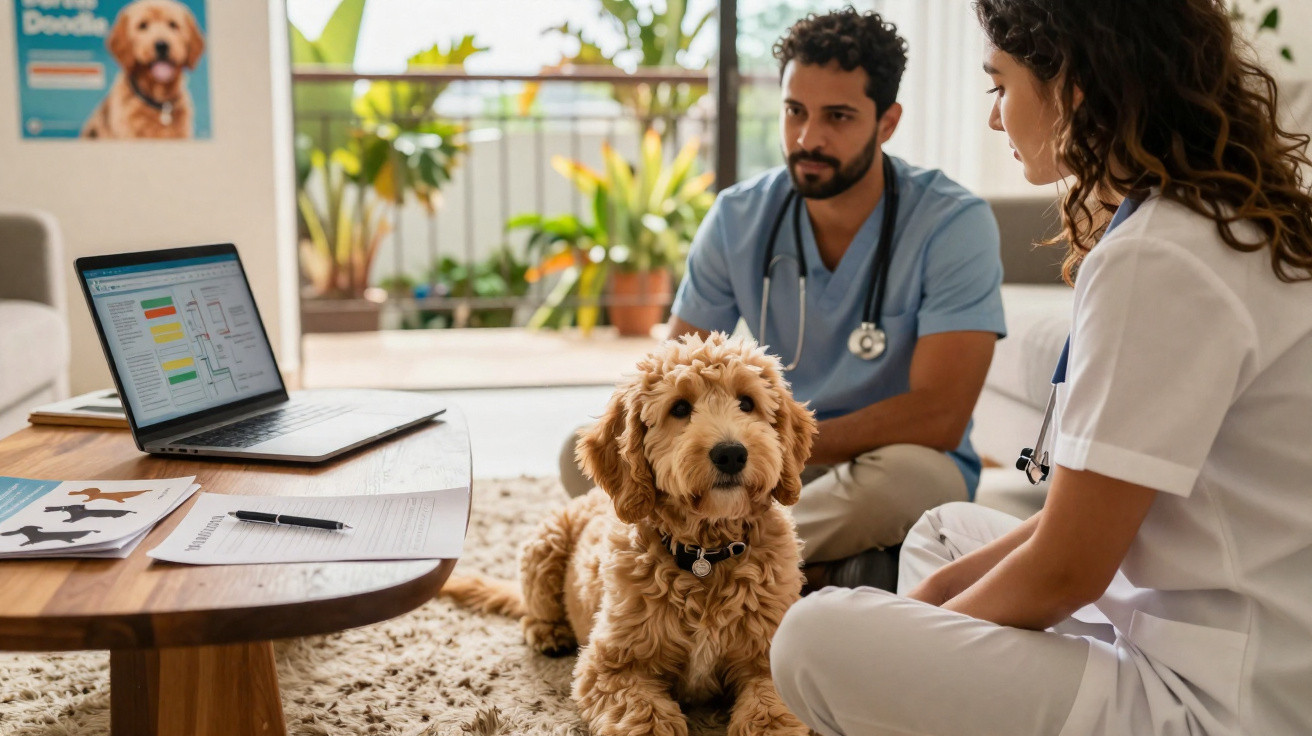
The RVC team recruited 34 new puppy owners and provided each household with one of four advice packages before the day they collected their puppy.
One group was given general care advice; the others received guidance on calm returns, practice in spending time alone, or both.
Owners subsequently recorded their puppies at four stages over six months, as well as during a brief separation test at home.
The small group means that these exploratory findings can highlight potentially useful patterns, rather than establish rules for every young dog.
Calm routines helped
Puppies whose owners received calm-routine advice spent longer lying still than those whose owners were given general care guidance alone.
Low-key departures and returns reduce emotional peaks by making leaving and coming home seem like ordinary events to the puppy.
Exercise and safe chews before an owner leaves may also help puppies settle once the room becomes quiet after the goodbye.
Even so, the advice had a clearer effect on increasing rest than on reducing barking, whining or other active signs of distress.
Practice changed behaviour
Gradual practice at being alone also helped some puppies settle more calmly during the controlled separation test at home.
The training relies on habituation: gentle, repeated exposure through which a puppy can learn over time that an owner’s absence is temporary and survivable.
Puppies whose owners followed more of these steps displayed fewer passive signs of anxiety, such as lip-licking or panting.
The benefit depended on owners putting the advice into practice, so a short set of written instructions alone may not change routines in a busy household under pressure.
Other dogs helped
Having another dog for company appeared to ease some of the quieter signs of worry when puppies were left without people nearby.
Passive signs decreased among puppies with canine company, possibly because social contact reduced uncertainty while their owners were away.
That does not mean every anxious puppy needs another dog: relationships between dogs differ considerably.
For owners, the safer lesson is to pay attention to the individual puppy rather than introduce another pet and potentially add pressure.
Background noise backfired
Radio and television did not appear to offer an easy solution during the recorded separations involving these young puppies.
When media was playing, puppies displayed more passive signs of worry and fewer playful or food-seeking behaviours during the short tests. A sound can become a signal that an owner is leaving if it is switched on only before daily departures.
Calm audio may still benefit some dogs when used thoughtfully, but the trial cautions against relying on easy habits and shortcuts.
Earlier risks surfaced
A separate six-month analysis tracked 145 puppies and found that 46.9% had shown separation-related behaviours by the age of six months.
Fussing over unwanted behaviour after returning was associated with six times the chance of those signs appearing later.
Owners who used aversive training - corrections that frighten or hurt a dog - also increased risk by introducing fear into the learning process.
Consistent sleep and overnight enclosure appeared to offer protection, although those findings were based on owner reports rather than camera footage.
Dealing with puppy separation anxiety
An improved routine begins before keys, a bag or shoes become stress signals in a puppy’s morning routine.
Short departures, calm returns, food puzzles and exercise before leaving can help the body learn to settle more easily over time.
If distress involves injury, destruction or repeated toileting, a vet or qualified behaviourist should be involved promptly and safely.
“Implementing the Calm treatment could help to increase ‘relaxation’ in puppies during absence and compliance to Habituation advice could help to decrease passive anxious behaviours,” wrote Dale.
Frantic behaviour at the door, whining when alone and restless pacing all point to the same lesson about emotional practice in young dogs.
Puppies learn from the way their owners leave and return, so patient, calm repetition can support welfare without suppressing affection or making everyday life feel tense.




Comments
No comments yet. Be the first to comment!
Leave a Comment