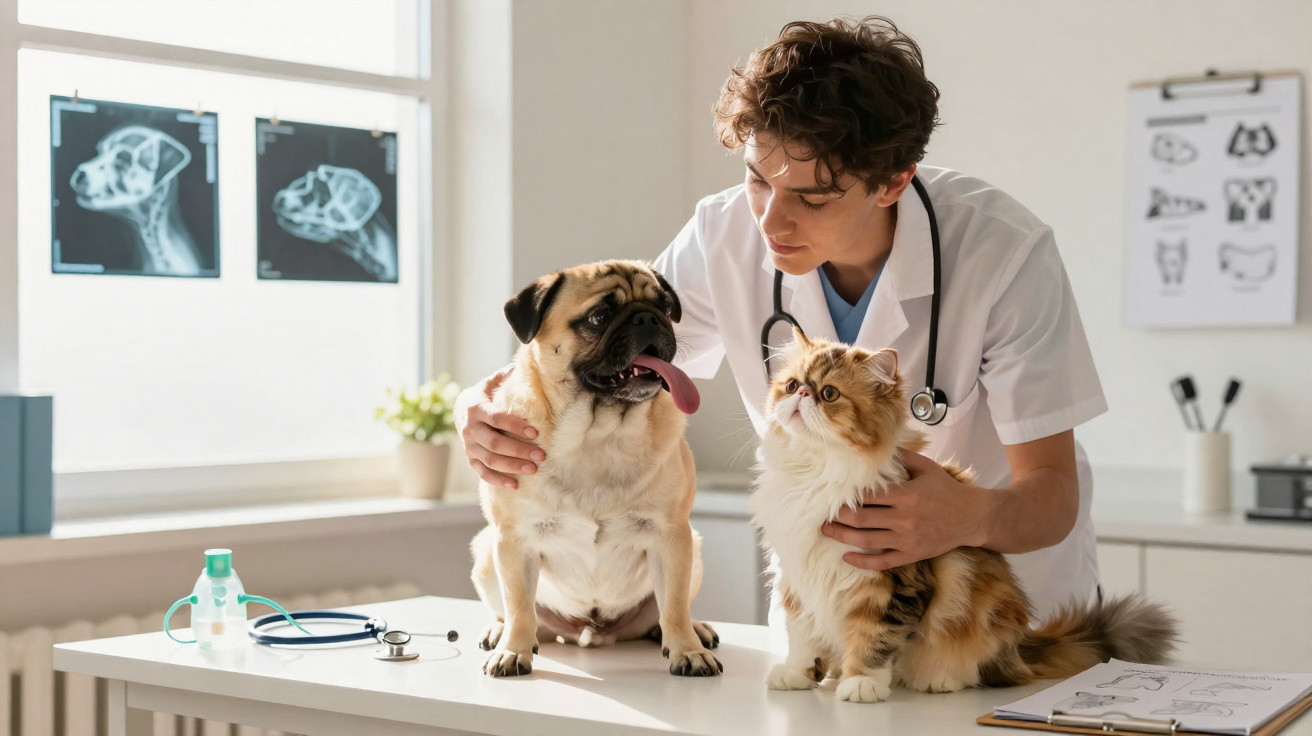
Domestication has made cats and dogs more varied, yet also unexpectedly similar, with serious consequences for their health and welfare, according to new research.
Persian cats and pugs might appear to have little in common at first. After all, one is a cat and the other a dog, with 50 million years of evolution separating them.
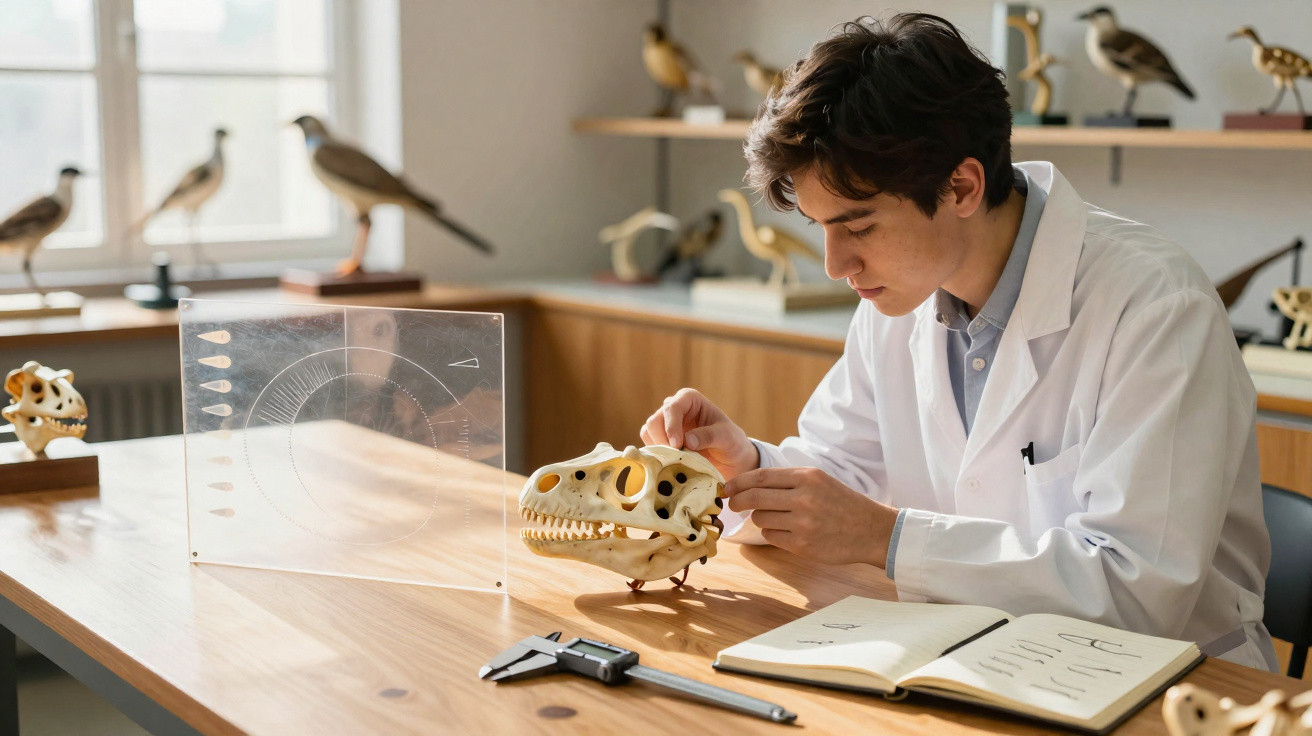
Yet evolutionary biologist Abby Grace Drake and her colleagues discovered an unusual pattern when they scanned 1,810 skulls belonging to cats, dogs and their wild relatives. Although their evolutionary histories are far apart, many cat and dog breeds have remarkably similar skull shapes.
How domestication shaped cat and dog skulls
Divergence is a familiar process in evolutionary biology. Put simply, it occurs when two organisms with a shared ancestry grow increasingly different over time, whereas convergence describes the process of becoming more alike. When animal populations separate and adapt to different environments, they gradually acquire new characteristics through a process called divergent evolution.
This is one of the principal ways species develop different traits, sending populations down separate evolutionary paths. Evolution can, however, work differently. Convergence occurs when unrelated species independently develop similar features in response to comparable pressures.
For domestic cats, dogs and many other domesticated species, deliberate and unintentional selection by humans appears to have produced convergence, inadvertently guiding different species towards similar characteristics.
Despite their long evolutionary separation, flat-faced breeds such as Persian cats and pugs have similar skull structures.
To explore how extensively domestication has altered skull structure, Drake and her colleagues examined 3D scans of skulls held by museums, veterinary schools and digital archives. Their dataset covered domestic cats, including Siamese, Maine coon and Persian breeds, alongside more than 100 dog breeds, ranging from short-muzzled pugs to long-muzzled collies.
The results showed that domestication has increased the diversity of skull shapes beyond that found in wolves and wildcats. It has also made some cat and dog breeds look more like each other, with convergence towards either long or flat faces.
Wild canids, the animal group comprising dogs, wolves, foxes and jackals, generally have similarly elongated skulls. Wild felids, the group that includes domestic cats, lions, tigers and jaguars, display greater natural variation.
Domestic breeds of both species, however, now cover a more extreme range at either end of the scale. The emergence of cats bred to look like XL bully dogs illustrates this trend.
Domestication has long demonstrated that human intervention can leave even distantly related species looking alike, and sometimes suffering in similar ways.
Selective breeding has intensified traits across species, while many other changes brought about by humans can stretch animals beyond what their bodies can naturally sustain. Some chickens bred for meat, for example, carry 30% of their body weight in breast muscle, often causing heart and lung problems.
Why humans favour flat-faced cats and dogs
The appeal of flat-faced pets draws on some of our most fundamental instincts. Humans are hard-wired to respond to infant features such as rounded heads, small noses and large, low-set eyes. These characteristics, exaggerated in many flat-faced cat and dog breeds, echo the appearance of human babies.
Humans are among the most altricial species: we are born helpless and depend on caregivers to survive, as do puppies and kittens. Precocial animals, by contrast, can see, hear, stand and move soon after birth. Because human babies depend so heavily on adult care, evolution has made us sensitive to signs of vulnerability and need.
Such signals, including babies’ rounded cheeks and wide eyes, are called social releasers. They prompt adults to behave in caring ways, from using higher-pitched speech to providing parental care.
Herring gulls, a type of seagull, provide a non-human example. Their chicks instinctively peck at a red spot on a parent’s beak, prompting the adult to regurgitate food.
The red spot functions as a social releaser, helping ensure that the chick’s needs are met at the right time. In much the same way, domesticated animals have effectively hijacked ancient caregiving mechanisms that evolved for our own offspring.
Although these features may help pets attract human care and attention, there is a cost.
Selective breeding and animal welfare
The UK government commissions its Animal Welfare Committee to offer independent expert advice on emerging animal welfare concerns. In reports published in 2024, the committee expressed serious concern about the effects of selective breeding on both cats and dogs.
Those reports noted that breeding for extreme physical characteristics, including flat faces and exaggerated skull shapes, has caused widespread health problems. These include breathing difficulties, neurological conditions and complications during birth.
The committee argues that animals with severe hereditary health problems should no longer be bred and calls for stronger regulation of breeders. Without such reforms, preventable, life-limiting conditions will continue to cause suffering in many popular breeds.
Selective breeding has demonstrated how readily humans can mould nature to suit their preferences, and how quickly a few decades of artificial selection can override millions of years of evolutionary separation.
By choosing pets whose faces resemble those of our own infants, we have often unknowingly selected characteristics that harm the animals. Understanding what drives convergence between species reminds us that our role in shaping it is powerful and sometimes dangerous.
Grace Carroll, Lecturer in Animal Behaviour and Welfare, School of Psychology, Queen’s University Belfast
This article is republished from The Conversation under a Creative Commons licence. Read the original article.

Comments
No comments yet. Be the first to comment!
Leave a Comment