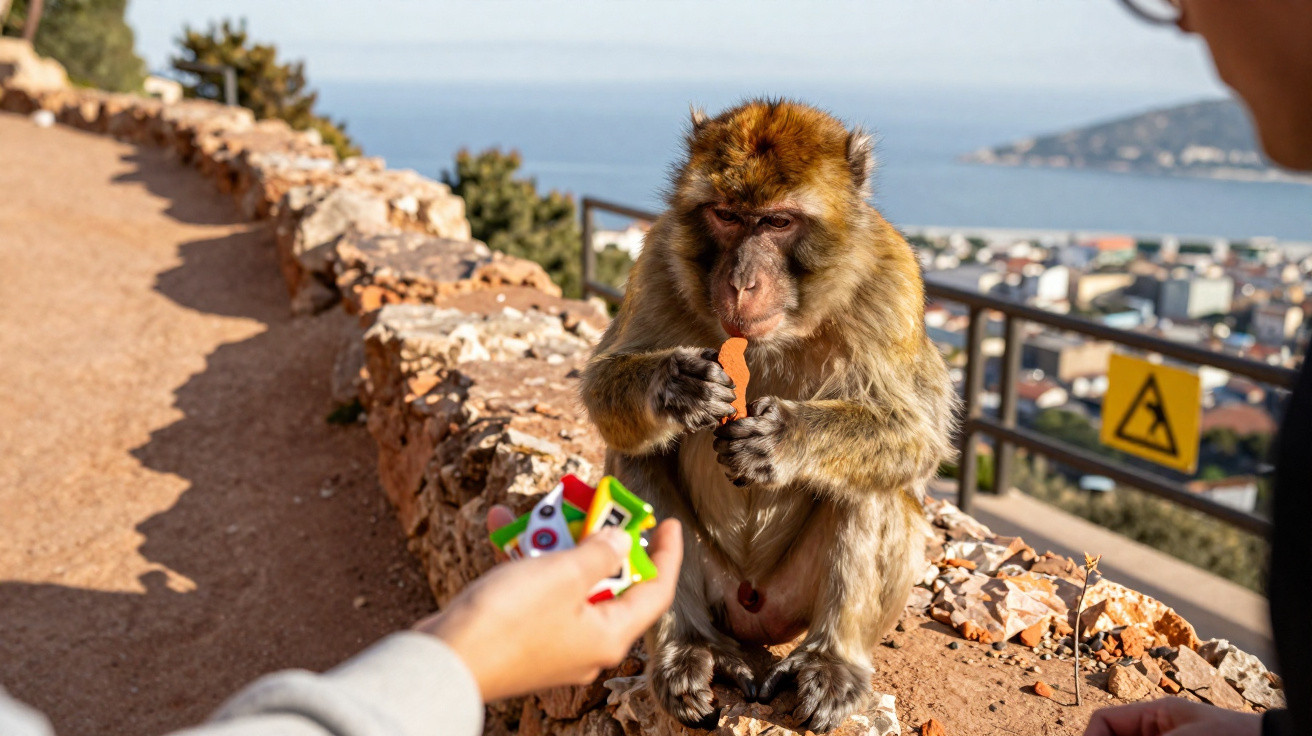
It should be common sense, yet our food is unsuitable for monkeys and can even be toxic to them. Gibraltar’s macaques are paying the price, despite the warnings given to tourists.
Offering a monkey a snack out of “kindness”, or because it feels like a way to connect with the animal, may be tempting, but it is one of the worst things you can do. In some places, mass tourism has made the practice hugely damaging. One is the Rock of Gibraltar, a limestone monolith home to 230 Barbary macaques (Macaca sylvanus). In this beautiful corner of the southern Iberian Peninsula, the animals roam freely in the Upper Rock Nature Reserve, but are not afraid to venture into tourist areas.
Why Gibraltar’s Barbary macaques eat clay
Although feeding or even touching the macaques is prohibited, some visitors ignore the warnings. As well as disrupting the animals’ natural foraging instincts and sometimes sparking violent fights between monkeys competing to beg for food, this has led them to develop a particular behaviour to detoxify themselves: geophagy. This means eating soil, or more specifically the red clay found in large quantities on the Rock of Gibraltar.
Feeding a monkey: a kind gesture that ends in the mud
The Rock draws nearly 850,000 visitors a year, a tourism windfall for the Government of Gibraltar, which has done everything it can to make the site Instagram-friendly. There is a balcony overlooking the drop, a suspension bridge, a developed cave and, above all, dozens of souvenir and food shops selling products without VAT or with very low taxes. Everything is arranged so visitors can leave with their best selfies, ideally alongside the famous macaques, which gather around the shops and bus drop-off areas.
Such close contact between people and animals has serious consequences for the macaques’ way of life. Human food is now estimated to make up 20% of their total diet. Chocolate, crisps, ice cream and manufactured biscuits are naturally appealing to the monkeys: they are high in calories, sugar and salt, and some contain dairy. Although their usual diet of grasses, leaves, seeds and occasional insects is quite different, their brains, like ours, are programmed to favour immediate sources of energy.
The risks of clay for Gibraltar’s macaques
For the macaques, this food acts like a highly addictive substance. Once a monkey has tasted a very sugary ice cream, going back to bitter roots becomes difficult. They are also lactose intolerant, which is one reason they eat clay soil. Rich in iron oxides, the clay reaches the stomach and coats the intestinal wall, absorbing toxins and limiting the passage of harmful compounds into their bodies. It acts rather like a homemade version of Smecta, lowering the pH of their stomachs and neutralising the acidity caused by the fermentation of fast-acting sugars.
The animals are therefore self-medicating to make up for the thoughtlessness of many tourists, who apparently cannot read the numerous prohibition signs dotted around the Rock. Geophagy is also passed down through generations: youngsters watch adults eating soil and learn from an early age that their survival depends on this detoxification ritual.
The irony is that this “remedy” is not really a remedy at all. The clay contains heavy metals, notably lead, as well as worm eggs and faecal bacteria. Repeated consumption wears down the macaques’ teeth prematurely and can cause intestinal blockages. If you visit Gibraltar this summer, please use some common sense: admire these beautiful animals, but leave them alone. The same advice applies anywhere you encounter monkeys: they are wild animals and know perfectly well how to feed themselves.







Comments
No comments yet. Be the first to comment!
Leave a Comment