
A quiet morning in the Australian town of Bendigo, a walking track familiar to many local residents – and a moment that pushed an animal shelter to its limits. What began as a chance encounter with one puppy ended with a box full of puppies at the door of the Bendigo Animal Relief Centre.
From one puppy to an entire litter
The man was walking along a well-used trail when a small puppy suddenly appeared in front of him. There was no owner in sight, only the unsettled youngster at the side of the path. When he bent down to find out where the little dog had come from, the situation took an unexpected turn.
More puppies emerged from the undergrowth. First two, then four, then more and more – until the walker was surrounded by a whole group of young dogs approaching him curiously. They appeared hungry, sought human contact and seemed relieved to have finally found someone.
“A chance encounter with one puppy turned into a rescue operation for 15 young dogs.”
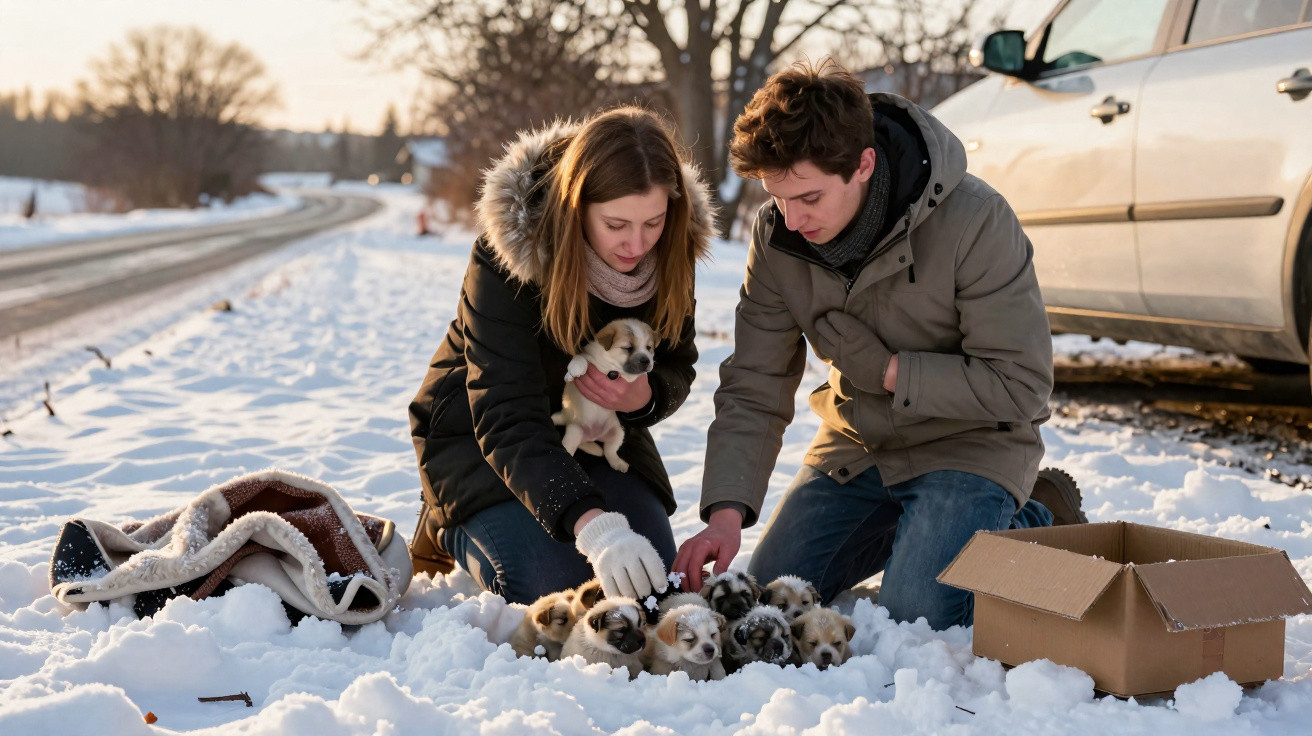
The man faced a difficult choice. Leaving the animals behind was not an option for him. He gathered up the puppies, found a box, loaded them all into his car and drove straight to the nearest shelter: the Bendigo Animal Relief Centre.
Shock at the shelter: 15 puppies at once
For the shelter team, this was not how the day had been expected to unfold. Individual animals or small groups usually arrive there, but a box containing 15 puppies created an immediate emergency. Space, food and veterinary care all had to be arranged within minutes.
Staff estimated that the dogs were around seven weeks old. At that age, puppies would normally still need close contact with their mother. Some of the youngsters appeared reasonably stable, while others were noticeably weaker and thinner. Every puppy was examined straight away, wormed and treated for parasites.
Sadly, one of the young dogs did not survive the first few days. Despite veterinary efforts, it was simply too weak. It was a painful outcome for the animal welfare workers, although unfortunately not an unusual one when litters have been left without care.
The positive news was that the remaining 14 puppies responded very well to treatment. They gained weight, ate eagerly, slept a great deal and quickly began displaying the typical energy of young puppies.
A playful Bendigo Animal Relief Centre puppy group despite a difficult start
In spite of their tough beginning, the dogs showed remarkable adaptability. Their carers reported that they were very people-oriented from the outset. Whenever anyone entered the room, the tiny puppies would be at the gate with wagging tails, wanting to be stroked and climbing over one another to get closer to people.
They investigated toys with curiosity; some preferred physical closeness, while others played boisterously with their siblings. Their sociable and open nature significantly improved their prospects of finding homes.
- Age of the puppies: around 7 weeks
- Number on arrival: 15
- Surviving puppies: 14
- Location found: a busy walking trail near Bendigo
- Shelter that took them in: Bendigo Animal Relief Centre
The puppies’ unknown background
While the youngsters were being cared for at the shelter, questions emerged: where was their mother? And how had so many young dogs ended up wandering around unsupervised?
The shelter issued an appeal across the region and on social media. Local people came forward with information, and the pieces of the puzzle gradually came together. The biggest surprise was that this was not one large family.
In fact, the 15 puppies came from two separate litters born only a few days apart. Two female dogs had given birth at almost the same time, and the youngsters had apparently either been roaming together or had been abandoned in the same place.
Mother dog rescued, while the second remains with her owner
Animal welfare workers were able to locate and secure one of the mother dogs. At the shelter, she was given the name “Mumma Sue”. The dog was exhausted and needed rest, but she showed a gentle and friendly nature. She was then placed in foster care so that she could recover and regain her confidence.
The second mother dog remained with her owner. The shelter provided advice and covered the cost of her neutering to prevent further unwanted litters. This was an important step, because owners often do not lack affection for their pets, but may lack the knowledge and money needed for veterinary treatment.
“By neutering the mother dog, the shelter hopes to prevent one tragedy becoming a repeating cycle of unwanted puppies.”
Foster homes as a vital lifeline
Because the shelter could not permanently accommodate 14 growing puppies, the team began looking for foster homes. The aim was for the animals to learn what they would need for future family life in a home environment: everyday household sounds, human contact and their first boundaries.
The helpers placed the dogs in pairs across different households. This allowed them to remain close to a sibling while receiving far more individual attention than they would in a busy shelter setting.
For foster carers, this meant plenty of work as well as a great deal of joy. Feeding several times a day, toilet training and socialisation all take time. In return, people get to watch a group of small furry companions learn to trust, develop and greet every step forward with wagging tails.
The first adoptions begin
Soon after the first reports about the unexpected puppy discovery, numerous prospective adopters got in touch. Demand for young dogs is high, particularly when their stories are so moving. Nevertheless, the shelter remained careful: anyone wanting a puppy had to meet certain requirements.
These include:
- enough time for training and exercise
- stable circumstances and long-term planning
- willingness to cover veterinary costs and insurance
- appropriate care suited to the dog’s size, temperament and breed mix
Several puppies have already moved into permanent family homes. They will continue to receive veterinary monitoring and will initially remain under observation to ensure that they develop well.
What this case reveals about unwanted litters
The discovery of 15 ownerless puppies may initially appear to be an extraordinary one-off story. In reality, it reflects a structural problem: uncontrolled dog breeding, particularly in rural areas and among animals that have not been neutered.
Just two female dogs can cause a real “puppy boom” within a short period. Even when all the animals originally have homes, owners can quickly become overwhelmed, both emotionally and financially. The result is that puppies are given away, advertised cheaply online or, in the worst cases, abandoned.
Neutering programmes are therefore considered the most effective way to reduce the number of unwanted litters. Many shelters and animal welfare organisations now offer financial help or work with veterinary practices, just as they did in the case of the second mother dog of the 15 puppies.
What prospective adopters should consider when choosing a rescue puppy
For people considering a dog, a rescue story can be especially appealing. A few points can help them make the right decision:
- Long-term responsibility: A dog may live for 10 to 15 years. Career plans, housing circumstances and family planning should be compatible with that commitment.
- Training commitment: Puppies are adorable, but they require a lot of work. Toilet training, lead walking and learning to be left alone must all be taught patiently.
- Costs: Food, insurance, vaccinations, neutering and possibly training classes – the ongoing expenses soon add up.
- Character over appearance: Looks and coat colour are not the only considerations. Rehoming staff can provide valuable information about an animal’s temperament, activity level and needs.
The case of the 15 puppies from Bendigo shows how one walker’s courageous decision can quickly give many animals a chance. At the same time, it makes clear how heavily shelters and foster homes depend on responsible owners, neutering measures and carefully considered adoptions.













Comments
No comments yet. Be the first to comment!
Leave a Comment