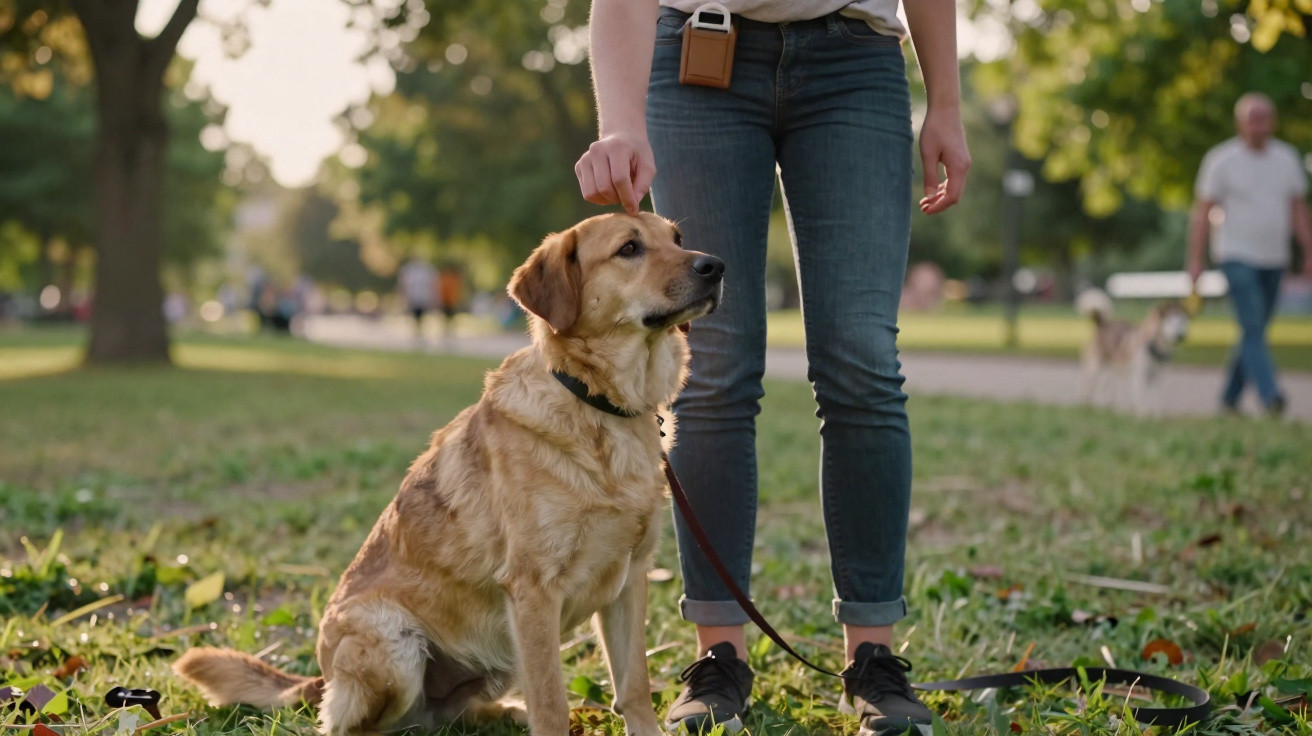
Many dog owners deal every day with pulling on the lead, barking or jumping up – yet a different training approach is often all that is needed.
Rather than relying on scolding and strictness, modern dog training uses rewards, clear cues and trust. Anyone who understands how positive reinforcement works will usually notice a more relaxed everyday life with their four-legged companion surprisingly quickly. The following five basic rules come from the practical experience of skilled dog trainers and can be used easily in ordinary family life.
Positive dog training: what it really means
Positive reinforcement means rewarding desired behaviour while making unwanted behaviour unrewarding for the dog. From the animal's perspective, this is entirely logical: it will repeat behaviour that brings success, while it is more likely to stop behaviour that achieves nothing.
“Anyone who rewards their dog for good behaviour builds trust – anyone who mainly punishes it builds fear.”
Many people unknowingly fall into an outdated pattern: they notice the dog when it “does something wrong”. They then scold it, tug the lead or push it away. When it behaves calmly, it receives barely any attention. Positive reinforcement turns this whole system around.
1. Do not punish – reward consistently
Shouting, lead jerks, tapping the nose or shutting a dog in its crate may briefly stop what it is doing, but these methods cause harm over the longer term. Above all, the animal learns one thing in these moments: people are unpredictable.
- Fear prevents learning.
- Dogs often link negative experiences to a place, person or situation.
- The person becomes an uncertain presence rather than someone the dog can trust.
A far better approach is to manage situations so the dog is rarely tempted in the first place, then reward every desired behaviour precisely. For example, rather than shouting when a dog jumps up at people, actively reward it whenever all four paws remain on the floor.
“Punishment suppresses behaviour, but it does not tell the dog what it should do instead.”
Mistakes are part of the learning process. A dog that dares to try new things is showing courage and trust. That is exactly what it needs in order to navigate everyday life confidently.
2. Clear cues instead of constantly changing commands
Dogs read people far more closely than many realise. Posture, voice and eye contact all communicate signals. When those signals keep changing, the animal becomes confused. Clear communication means:
- Using one cue for each behaviour, such as always saying “sit” rather than alternating between “sit”, “sit down” and “take a seat”.
- Keeping the same tone of voice and hand gesture for that cue.
- Staying calm, even when it does not work the first time.
Predictability helps dogs relax. When they understand what a person means, they do not have to keep guessing. They learn more quickly, respond more reliably and automatically seem more “obedient”, although it is actually the person's communication that has improved.
What good leadership looks like in dog training
Good everyday leadership has nothing to do with dominance or harshness. It means making dependable decisions and creating a sense of safety. Someone who is consistent yet fair becomes a point of reference for their dog – much like a traffic light: clear, predictable and not threatening.
3. Finding the right reward: what truly motivates your dog
Positive reinforcement only works when the reward is genuinely appealing from the dog's point of view. Many owners wonder why their pet does not respond, when in reality the “payment” is simply too dull.
Typical reinforcers include:
| Type of reward | Examples | Suitable for |
|---|---|---|
| Food | Treats, cubes of cheese, cooked meat | Most dogs, particularly at the beginning |
| Social attention | Praise, stroking, a friendly voice | Dogs with a closer bond, calm exercises |
| Play | Tug games, a ball, scent games | Active dogs, exercises involving lots of movement |
What type of dog is sitting in front of you? A small test can sometimes help: offer a treat, offer a toy, offer a stroke – which does the dog choose first? This reveals what is most effective to work with.
“Motivation is not bribery; it is the tool through which a dog learns which behaviour is worthwhile.”
Over time, the reward can be adjusted. At first, give a strong reward for every small step; later, brief praise or a short game will often be enough. This keeps the dog engaged without making it appear dependent on food.
4. Do not give unwanted behaviour extra attention
Many training mistakes happen purely out of habit. For instance, a dog barks at the window, and the person calls its name, walks over, talks to it and pushes it away. From the dog's viewpoint, something interesting has happened – it has received attention.
Look closely and it becomes clear that people often unintentionally reinforce precisely the behaviour they want to stop. The four-legged companion learns: “When I bark or jump up, something happens. When I am calm, nothing happens.”
A useful approach works like this:
- Ignore unwanted behaviour as neutrally as possible, provided there is no danger.
- Quickly offer the dog an alternative, such as sitting, going to its bed or fetching a toy.
- Reward that alternative warmly and generously.
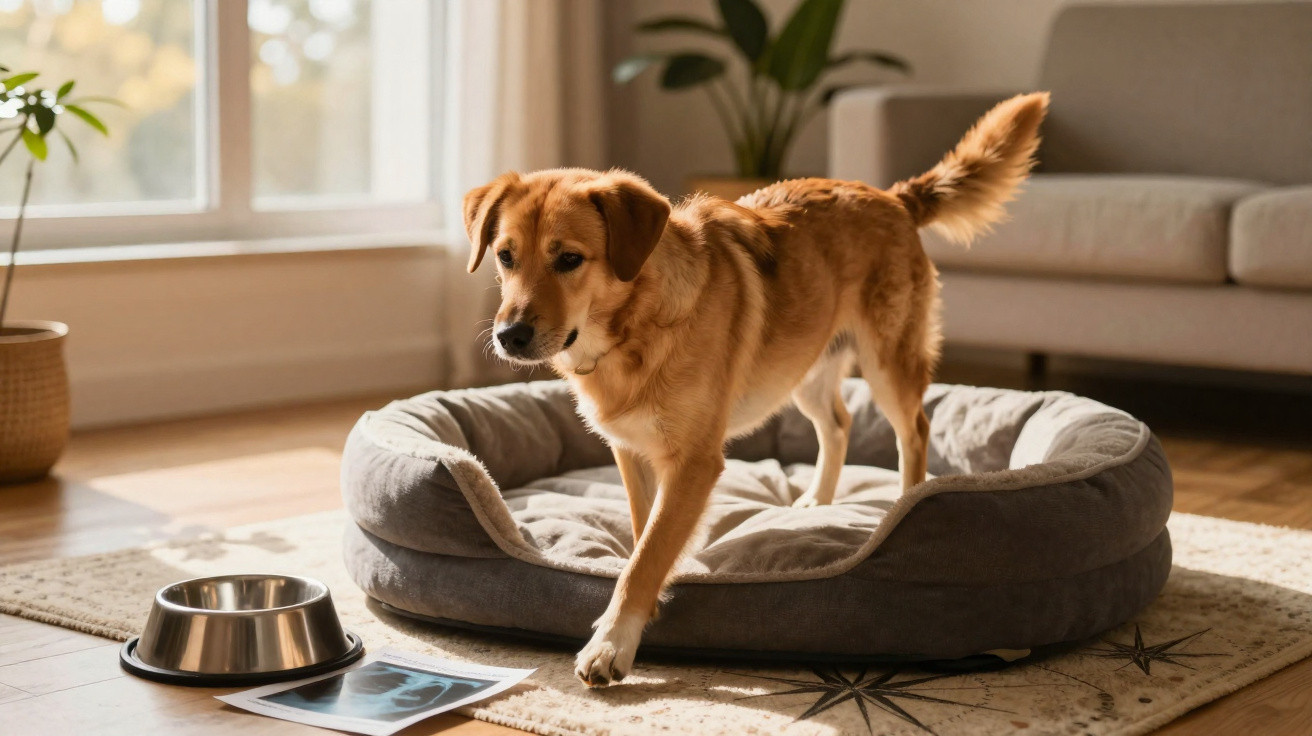
Jumping up at the front door can be redirected in this way: when visitors arrive, a chew is already waiting on the dog's bed. The dog is sent to its place, receives the chew there and learns: “When the doorbell rings, going to my bed is worthwhile.” The old pattern becomes less appealing because it no longer brings success.
5. Make training suitable for everyday life and stay consistent
One major misconception is that dogs learn only at training classes. In reality, behaviour develops wherever the dog lives – in the stairwell, the park and the sitting room. Those who want to use positive reinforcement should build it into everyday situations:
- The lead is loose – give the dog a quick glance, quiet praise and a treat.
- The dog lies calmly in a café – offer praise now and then, perhaps with a chew strip.
- The dog ignores another dog – say a calm “good” and give a reward.
This teaches the four-legged companion, step by step, which behaviour pays off in these particular environments. Short, frequent practice sessions work better than occasional, lengthy “training blocks”. Five lots of two minutes a day usually achieve more than half an hour of frustration.
Common pitfalls: why a positive approach often fails
When owners say positive reinforcement does not work for their dog, a closer look often reveals one of the following:
- The reward is too weak or arrives too late.
- Expectations increase too quickly.
- Several family members use different cues.
- The dog is overexcited, stressed or tired.
Behaviour always develops in context. A dog that reliably knows “sit” at home effectively has to learn it again in a busy park, with more distractions, scents and stimuli. Here too, the answer is small steps, clear cues and valuable rewards.
Why gentle methods bring better long-term results
Positive reinforcement shapes not only a dog's behaviour but also its emotional state. An animal that has learnt that being close to people signals good things will respond more calmly to unfamiliar situations. It will naturally look for guidance instead of panicking or becoming aggressive.
Typical everyday effects include:
- Less stress at the vet, because the dog has formed positive associations through many small steps.
- Better lead manners, because pulling no longer leads to the desired destination while walking calmly does.
- A stronger bond: the dog seeks contact voluntarily instead of merely having to “function”.
Another advantage is that children can use this approach effectively. Rather than strictness and physical strength, they need patience, timing and imagination when rewarding – skills that can also be transferred to other areas of life.
Practical tips for getting started with positive reinforcement
Anyone ready to begin can start with small routines:
- A treat jar by the flat door: calmly sitting before going out is rewarded every time.
- Short “check-in” exercises on walks: the dog looks at the person and receives a treat.
- A quiet basket in the sitting room: every voluntary lie-down in the basket earns a gentle reward.
To clarify the term, “reinforcement” in behavioural science simply means that a behaviour occurs more often because something pleasant follows it. “Positive” does not mean “nice”; it refers to adding something – praise, food or play. Once this is understood, it becomes possible to guide very deliberately what the dog retains in everyday life.
People using this approach soon notice that their dog does not merely “function” better. The relationship feels easier, kinder and more cooperative. That is what makes the difference between a reasonably obedient dog and a genuine four-legged team-mate.








Comments
No comments yet. Be the first to comment!
Leave a Comment