
Could birds be protected without always relying on vast forests? Might a handful of trees in the right location make a substantial difference? A new global study suggests they can.
The research challenges established thinking about wildlife protection, showing that small interventions in suitable places can help many species survive.
Why fragmented forests still support life
Farming, cities, roads and dams are breaking forests around the world into smaller fragments, known as forest remnants.
For many years, scientists thought that large forests alone could sustain a wide range of species. Smaller fragments were considered too vulnerable to support much wildlife.
That thinking was based on “island theory”, which treated each forest patch as an island. Under this view, larger patches could sustain more species, whereas small, isolated ones could not. The emphasis was on size and distance alone.
But the theory overlooked an important factor: the landscape around each patch. Birds and other animals do not exist in isolation; they travel, seek food and interact with their surroundings.
The land beyond the forest boundary therefore matters too.
Why the surrounding landscape matters
The area surrounding a forest patch is known as the matrix. It may contain farmland, grassland, water or scattered trees.
Birds must cross this landscape to travel between forest areas, and its quality influences their chances of survival.
Where the matrix contains trees and other vegetation, birds can travel more safely and find food. Open land or water makes movement riskier, potentially leaving fewer species able to survive in the patches.
The new study suggests that the matrix is far more influential than scientists previously believed. Better management of surrounding land can enable even small forest patches to support many bird species.
How trees increase bird survival
Researchers from several organisations studied bird populations across tropical and subtropical regions.
Their results were clear: forest patches with trees around them supported more bird species than patches surrounded by open land. Even a modest rise in tree cover had a substantial effect.
“This study clearly shows how high-quality surrounding landscapes increase species retention within forest remnants across the tropics,” said Professor Carlos Peres of the University of East Anglia.
“The conservation gains from investing in a more hospitable matrix in agricultural and urban areas are far greater than previously realised.”
In other words, biodiversity can be greatly improved by managing nearby land, without altering the forest itself.
Same forest size, different results
The study also found that a forest’s size does not, by itself, determine how many species it can sustain. Two equally sized patches can produce very different results because of what surrounds them.
“Habitat remnant size is not the whole story. Two forest remnants of the same size can support very different numbers of bird species – those surrounded by farmland with nearby trees may host more than twice as many species as isolated remnants within reservoirs,” said study co-author Dr Anderson Bueno.
The finding matters because it suggests biodiversity can be improved without enlarging forests. Adding trees and improving the neighbouring land can turn even small forests into rich habitats.
Small changes with powerful effects
One striking finding was how little change is needed to help birds. Even a small number of trees within 300 metres of a forest patch can improve survival.
Places with greater tree cover supported more bird species, particularly those entirely dependent on forests. These birds are among the most affected when forests become fragmented.
“We hope our work will inform more effective land-use policy and encourage governments and landowners to invest in wildlife-friendly farming practices that support both biodiversity and agricultural productivity,” said Dr Chase Mendenhall of Slippery Rock University.
Simple measures, such as planting trees or retaining patches of vegetation, can therefore benefit both nature and farming.
A new direction for conservation
The study points towards a different approach to conservation. Protecting large forests remains important, but improving the land around them is equally important.
Planting native trees, restoring degraded land and managing farms in ways that support wildlife can reduce the risk of species loss. The approach is practical because human activity now affects more than half of Earth’s land.
Rather than concentrating solely on untouched forests, people can also work within landscapes dominated by human activity, creating a balance between nature and human needs.
A global effort with strong evidence
The research brought together 58 scientists from 19 countries. They examined 50 bird surveys from regions of the Americas, Africa and Asia that have experienced extensive forest loss and fragmentation.
The team studied more than 1,000 forest remnants, including 336 forest islands formed by dams and 669 forest patches surrounded by land. Across thousands of observations, they recorded nearly 2,000 bird species.
The study covered species at a range of risk levels, from Critically Endangered to Least Concern.
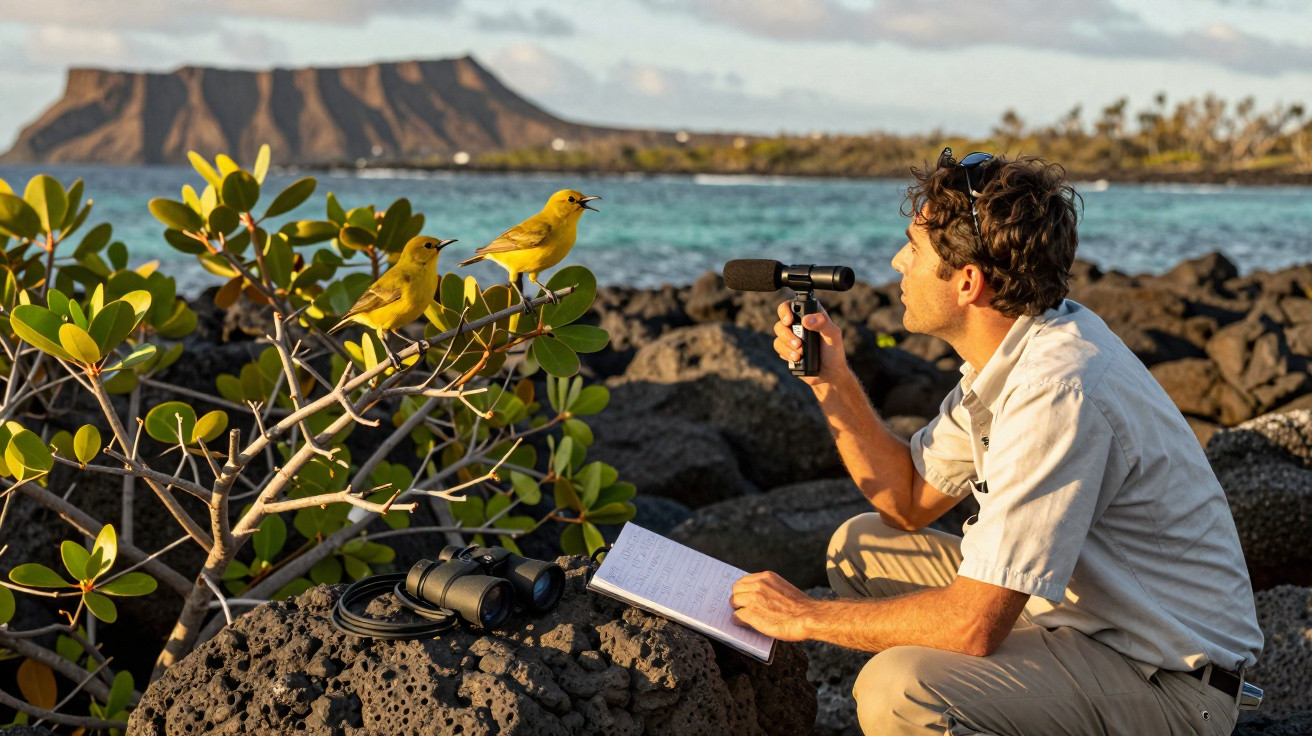
Researchers used field surveys, sound recordings and satellite imagery to assess tree cover and the presence of birds.
This extensive dataset provided strong evidence that the surrounding landscape has a major influence on species survival.
What this means for the future
The findings offer hope that straightforward actions can protect nature. Planting trees, preserving nearby vegetation and using land wisely can help birds survive.
Forests ultimately depend on the land around them. With better planning, people can protect wildlife while continuing to use land for farming and everyday life.
Scientists from the Federal Institute of Education, Science and Technology Farroupilha also contributed to the research.








Comments
No comments yet. Be the first to comment!
Leave a Comment