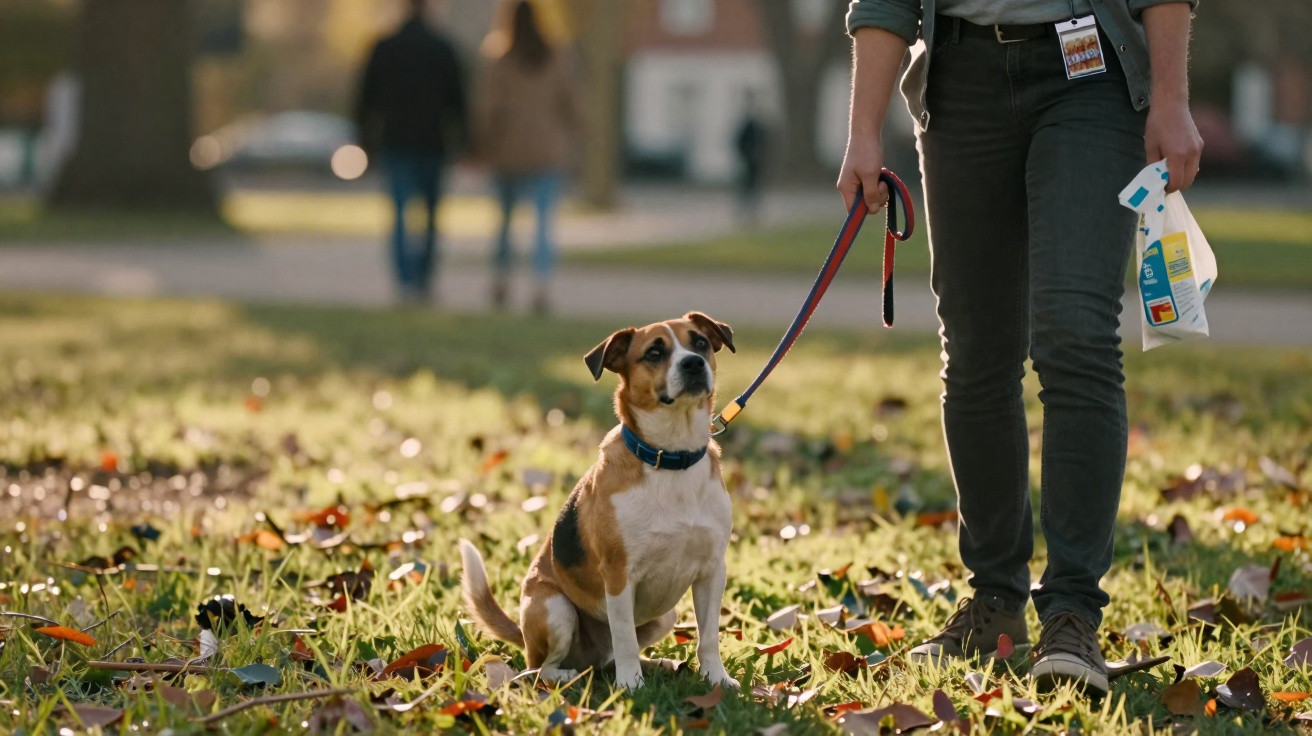
If you live with a dog, you will know the scene: they squat to relieve themselves, then look straight into your face. Some people find it embarrassing, while others simply find it odd. Yet this brief moment can reveal a great deal about a dog's trust, fears, learning history and even biology.
A trusted partnership: why dogs make eye contact when pooing
Dog behaviour advisers repeatedly stress that this stare is neither accidental nor merely a "strange habit". In many cases, the dog is unconsciously asking: "Is this all right here?"
Your dog's look while relieving itself is often a combination of reassurance-seeking, trust and learned behaviour.
Dogs living in built-up areas, in particular, quickly learn that not every spot on the pavement is considered acceptable. Their person's reactions can become deeply ingrained. A single stern telling-off at the wrong time may be enough for a dog to seek reassurance with its eyes in future.
Typical triggers for this checking look include:
- Being reprimanded previously for an "accident" in the wrong place
- Feeling unsure in unfamiliar surroundings, such as on holiday, after moving house or in a new park
- Their owner seeming tense or stressed
- A generally sensitive dog that relies heavily on its person for guidance
Speaking calmly to your dog or offering quiet praise at this point can provide reassurance. By contrast, a hurried "No!" or stern commands are likely to increase their uncertainty.
Positive anticipation: hoping for praise and treats
Not every dog looks up because it is worried; many do so in cheerful expectation. This is especially common in dogs that were deliberately toilet-trained as puppies and learned to associate relieving themselves in the right place with a reward.
The usual sequence is as follows:
- The puppy relieves itself outdoors.
- The owner gives enthusiastic praise and offers a treat.
- The brain learns: "Doing it here = good, = reward."
Even after food rewards are no longer offered, the internal question can remain: "Will something still happen?" The dog looks upwards, checks the response and may wait for the familiar "Good job!" or a brief stroke.
People who rewarded their dog for relieving itself outdoors in the past often continue to see that questioning look years later – an echo from puppyhood.
Many owners underestimate just how long these learned associations can last. Usually, a kind word or a quick scratch after the dog has finished is enough to maintain this positive cycle.
Biological reasons: a vulnerable posture and ancient instincts
A dog is exposed when it squats or crouches with a rounded back. It cannot flee quickly, has limited awareness of its surroundings and needs a moment before it can act again. This sense of vulnerability is deeply rooted in evolution.
Wolves depend on their pack in such circumstances. While one animal relieves itself, the others watch the surroundings. A modern family dog often assigns this role to its person. In effect, the look means: "You are keeping watch for me, aren't you?"
There is also a hormonal element. Studies show that eye contact between dogs and people encourages the release of oxytocin, a hormone that strengthens attachment and trust. It is the same hormone that also plays an important part in the bond between parents and babies.
Calmly supporting your dog at this moment strengthens not only their sense of security but also your emotional bond.
Some specialists point to another consideration: not every dog actually wants to be watched. A fixed stare may sometimes be interpreted as: "Please go away, this makes me uncomfortable." In these cases, it is worth paying close attention to the rest of the dog's body language.
How to recognise your dog's mood
The eyes alone do not tell the full story. What the dog is feeling only becomes clear when their gaze is considered alongside posture, tail position and facial expression.
| Behaviour | Possible meaning |
|---|---|
| Relaxed tail, loose muscles, soft gaze | Trust, reassurance-seeking, positive expectation |
| Tail tucked under, tense legs, fixed stare | Uncertainty, fear, concern about being told off |
| Brief glance followed by quickly looking away, slight panting | Nervousness, an unfamiliar situation, too many stimuli |
| No eye contact, with the dog turning slightly away | A wish for calm or "privacy" |
Anyone who knows their dog well will soon notice whether the look is asking for a reward, protection or space.
How owners can respond appropriately
Many people are unsure how to act in this slightly quirky situation. Should they turn away, ignore the dog or speak to it?
A few straightforward principles can help:
- If the dog appears uncertain, use a calm voice and quietly say, "It's all right."
- When the look is expectant, friendly praise is perfectly appropriate – treats are not essential.
- If the dog shows signs of stress, such as a tucked tail or trembling legs, check the surroundings for traffic noise, unfamiliar dogs or busy people.
- If the dog seems to prefer being left alone, stay nearby but avoid staring directly at it.
Basic rule: stay calm, be present, but do not make a big fuss about your dog's toilet break.
Reacting loudly every time, scolding or becoming anxious can turn a natural process into a source of stress. This may then lead to constipation, urinary retention or "accidents" in the house – a vicious cycle that many owners unintentionally set in motion.
When the look becomes a warning sign
In some circumstances, staring while relieving itself can also indicate a health problem. Take care if the dog tucks its hindquarters in, yelps, repeatedly tries without success to relieve itself, or appears generally panicked.
Possible causes include:
- Constipation or diarrhoea
- Pain in the back or hips
- Inflamed anal glands
- Stress reactions caused by bad experiences, such as harsh punishment while relieving itself
In these situations, the dog will often seek eye contact particularly intensely because it expects help or simply cannot understand why the experience is so uncomfortable. A visit to the vet can clarify the cause and help prevent pain from becoming chronic.
Practical tips for relaxed walking routines
A calm, clear routine from puppyhood onwards can prevent many later problems with relieving themselves.
- Choose quiet places: Young or nervous dogs can struggle to settle beside a noisy road.
- Use consistent cues: Always using the same phrase, such as "do your wee" or "go on then", helps the dog understand what is expected.
- Use praise in moderation: Treats are useful at first, but warm verbal praise is often enough later on.
- Avoid pressure after mishaps: If an accident happens indoors, clean it up without comment rather than punishing the dog afterwards.
These routines make the daily walk feel safe and predictable. The dog knows what is expected and willingly takes guidance from its person, without fearing that it has done something "wrong".
Why this small moment reveals so much about your bond
When your dog fixes its gaze on you while passing poo, the moment may initially seem ordinary and slightly amusing. Look more closely, though, and it contains almost the whole relationship between person and animal: trust, learned rules, past experiences and ancient instincts.
Learning to read these signals helps you understand your own dog better. It also shows that, to the animal, its person is not simply the provider of food, but also protection, guidance and an emotional anchor, even in the most unremarkable moments by the roadside.




Comments
No comments yet. Be the first to comment!
Leave a Comment