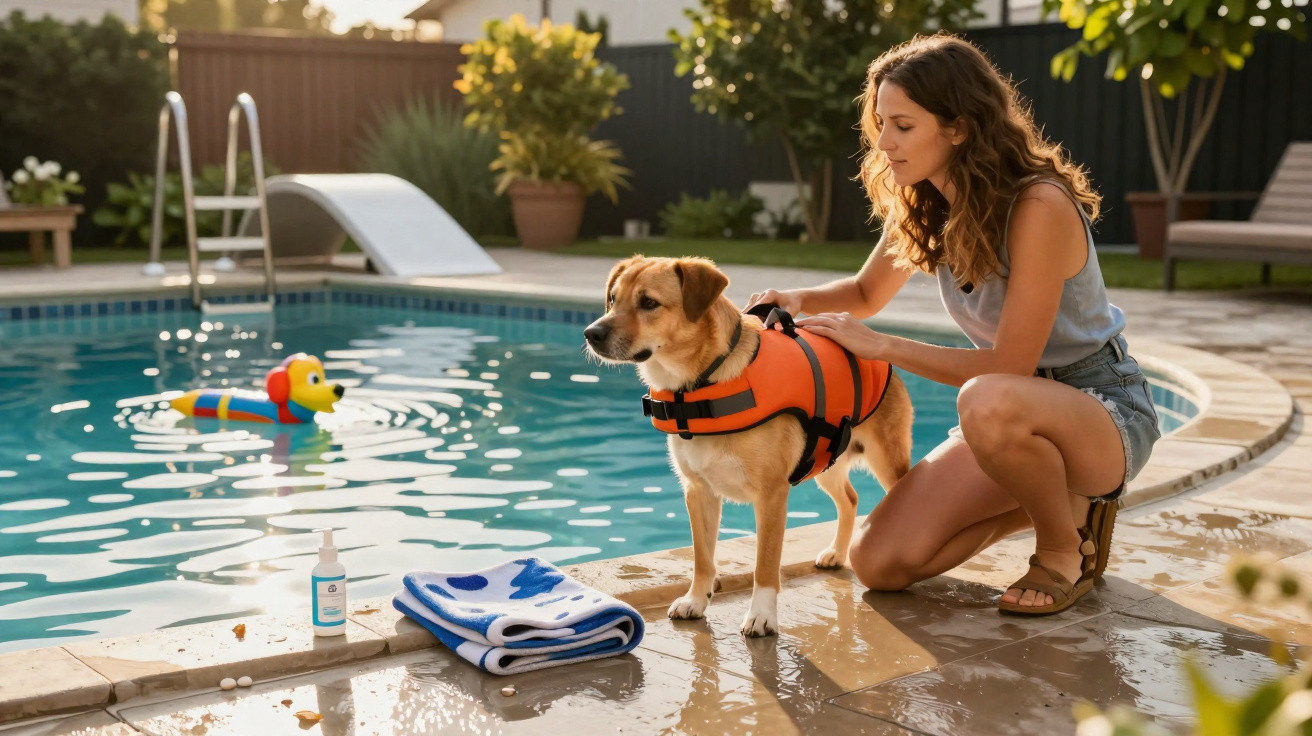
Many owners face the same dilemma in summer: should they simply allow their dog into the swimming pool, or ban it completely? On social media, dogs swimming often looks harmless and amusing. In practice, however, the dog’s health, temperament and the water quality all matter greatly. Acting without thinking can lead to skin complaints, gastrointestinal upset and, in the worst case, a near-drowning incident.
Why swimming in a pool appeals to dogs
When temperatures rise, many dogs instinctively seek out water. A private pool can seem ideal: cool water, exercise and close contact with their owner. Active breeds such as Retrievers and Spaniels, as well as many crossbreeds with a hunting or sporting background, often genuinely enjoy swimming.
“Swimming in a pool can provide dogs with gentle fitness training and effective protection from the heat – provided the conditions and their health are suitable.”
Water supports body weight, reducing strain on joints and tendons while enabling gentle exercise for older or slightly overweight dogs. For dogs that already enjoy splashing about, a pool can also offer mental stimulation through unfamiliar sensations, shared play and a change from their usual walks.
Benefits: when a pool can be really good for a dog
With proper supervision and the right conditions, getting into the water offers several advantages:
- Cooling down on hot days: The body can release excess heat more quickly, particularly in dogs with thick or dark coats.
- Low-impact exercise: Swimming develops muscles and supports cardiovascular fitness without placing substantial stress on the joints – making it suitable for mild arthritis.
- Mental stimulation: Water-based exercises, retrieving games or simply splashing around can often help to reduce stress.
- Getting used to water: In a shallow area, nervous but curious dogs can be introduced to water in a controlled way.
For dogs whose activity needs to be limited after an operation or because of joint issues, swimming may form part of a sensible rehabilitation plan following veterinary advice. Many physiotherapy practices provide structured sessions on underwater treadmills; a home pool should only ever supplement, rather than replace, professionally supervised treatment.
Risks: when a pool becomes dangerous for dogs
Although the benefits sound appealing, the potential drawbacks are often overlooked. A number of factors can quickly turn swimming into a problem.
Chemicals in the water: chlorine, salt and more
Pools require disinfectants to remain hygienic. For dogs, this can mean:
- Irritated skin and eyes: Chlorine and other treatments can dry the skin, encourage itching and cause red eyes.
- Stressed ears: Dogs with floppy ears or narrow ear canals face a significantly higher risk of ear infections.
- Problems from drinking pool water: Many dogs automatically swallow water while paddling or swimming, while others deliberately drink it.
Even small quantities may trigger digestive problems, including diarrhoea, vomiting, wind and excessive salivation. If a dog drinks a great deal or spends too long in the water, there is a risk of so-called water intoxication – a dangerous imbalance of minerals in the blood that requires veterinary treatment.
The risk of exhaustion and drowning
Not every dog is naturally a confident swimmer. Flat-faced breeds in particular, such as Pugs, French Bulldogs and English Bulldogs, are at an anatomical disadvantage: they have short muzzles, restricted airways and often compromised breathing. They are more likely to panic in water, swallow more of it and become exhausted faster.
Very small, heavy-set or exceptionally muscular dogs may also struggle to stay afloat for extended periods. Owners who overestimate their dog’s ability, or repeatedly send it to retrieve a ball without breaks, expose it to an unnecessary risk.
When a dog should not go in the pool
There are clear circumstances in which swimming should be off limits, however hot the weather may be.
- Open wounds or skin conditions: Chlorine and salt can irritate damaged skin and make inflammation worse.
- Heart or respiratory conditions: Cold water, excitement and physical activity can place strain on the circulatory system.
- Severe overweight, advanced age or puppyhood: The body reaches its limits more quickly and the risks increase.
- Fear of water: A dog that reacts with panic should not be forced into the water “for its own good”.
- A pool with difficult access: Steep sides without a ramp or broad steps make getting out difficult.
- Overly strong or unknown chemicals: Strong-smelling water, stinging eyes or skin irritation in people are clear warning signs.
“If the dog shows stress, holds its body tensely or desperately searches for the edge, the swimming session is over – safety comes first.”
Conditions for safe pool swimming with dogs
Anyone wishing to let their dog into the pool safely should follow several basic rules. The following can be used as a practical checklist:
| Condition | What owners should check |
|---|---|
| Health status | No open wounds, no recent operation, stable heart and respiratory function, and ideally veterinary advice where pre-existing conditions are present. |
| Dog’s temperament | The dog appears curious, stays calm near the pool and shows no panic responses or attempts to flee. |
| Pool equipment | Shallow steps or a ramp, a non-slip entry point, and at least one place where the dog can get out safely without help. |
| Water quality | Moderate chlorination, a pH level within the normal range, no strong odours and no visible contamination. |
| Supervision | The dog is never left alone in the water; the owner stays within reach and stops the session in good time. |
| Aftercare | Rinse the dog with clean water, dry its coat and carefully dry the ears in particular. |
At what age can dogs go in the pool?
Puppies should only enter deeper water once their bones and joints have developed a basic level of stability. Around four to five months is a useful guideline. At this age, many young dogs can begin learning to swim, but only in short sessions, wearing a buoyancy aid and with direct support.
For much younger or uncertain dogs, shallow plastic paddling pools in the garden are more suitable. The water should reach no higher than the dog’s belly, allowing it to get out at any time while still cooling down. These paddling pools are also a safer alternative to a large swimming pool for brachycephalic breeds.
Can dogs swim in the same pool as people?
In principle, there is nothing to prevent dogs and people from swimming in the same pool, as long as hygiene and safety remain a priority. Those who clean the pool regularly, check its filter and water values, and limit swimming time can combine cooling off for people with enjoyment for the dog.
Even so, it is worth honestly considering the following points:
- Does the dog tolerate contact with pool water, or does it develop persistent itching afterwards?
- Are any family members sensitive to dog hair or possible germs in the water?
- Is there enough space to ensure that children and the dog do not crowd one another?
- Is the dog sociable and calm when people jump in, dive and make noise?
As soon as the dog becomes tense, growls, frantically chases swimming children or tries to put everything in its mouth, clear rules are needed – or, if necessary, separate swimming times.
Practical tips for safe pool swimming with a dog
A few straightforward measures can reduce the risk considerably:
- Introduce the water gradually: start with paws only, then belly depth, and only later allow proper swimming.
- Use a buoyancy aid, especially for nervous, heavy-set or flat-faced dogs.
- Limit swimming to a few minutes at a time, followed by a shaded break with fresh drinking water.
- Show the dog a clear exit point and repeatedly leave the pool together there, so it can orientate itself.
- Keep ball games in the water under control – sustained high-energy activity can easily lead to overexertion.
Owners with several dogs should avoid letting them all into a small pool at once. Competition over toys or closeness to their owner can otherwise lead to scuffles more quickly, which is especially risky in water.
What many owners underestimate: ears, coat and hidden consequences
After every swim, a quick health check is worthwhile. Dogs’ ears should be dried thoroughly, particularly where they have long floppy ears or dense hair in the ear canal. Dampness encourages bacterial growth and can result in painful infections that usually require medication.
The coat should not remain wet for hours either. Moisture can build up beneath a dense undercoat, causing the skin to soften and creating ideal conditions for hot spots – intensely itchy, weeping inflammations. Getting the dog accustomed to a hairdryer or an absorbent towel can help prevent this.
Because pool swimming can look so harmless in photographs and clips, it is important to pay close attention to the risks and to the individual dog’s signals. A dog that enjoys swimming, does so safely, has healthy skin and is supervised properly can genuinely enjoy the summer in a pool. For dogs with sensitive skin, breathing difficulties or clear uncertainty, shaded areas, a shallow tub of tap water, and cool early-morning or evening walks are the far better option.










Comments
No comments yet. Be the first to comment!
Leave a Comment