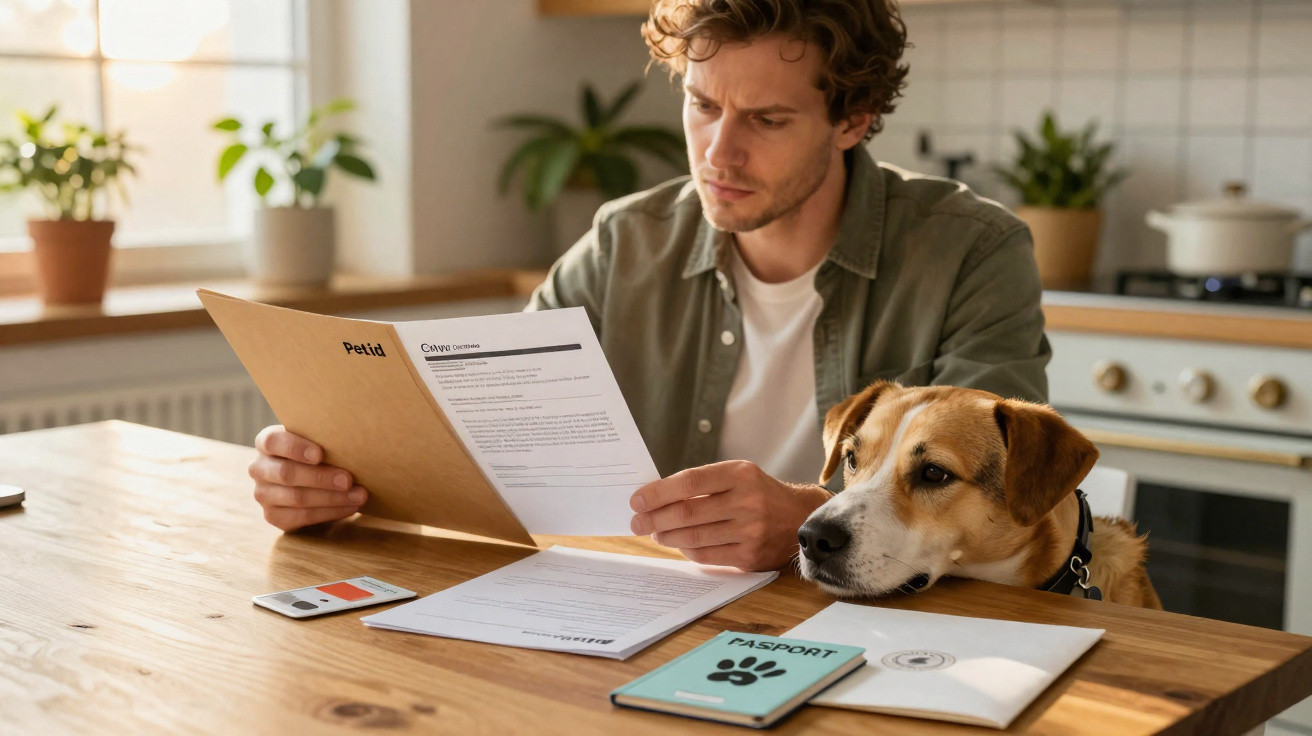
Losing your pet’s vaccination record, microchip paperwork or previous veterinary reports often only becomes apparent when the pressure is on: during an emergency visit to the veterinary hospital, at the border before a holiday, or when your pet goes missing. At that point, a great deal depends on whether your four-legged companion’s history can be documented in full.
Why your pet’s documents matter so much
Every pet has something like a paper life history. This small collection contains its entire background: illnesses, vaccinations, behavioural concerns and origin. If any part of it disappears, vital pieces of the puzzle can suddenly be missing.
- Vaccination and preventive care record: records more than vaccinations; it can also include worming treatments, parasite control, unusual reactions to medicines and often weight changes.
- Findings and reports from specialist practices: show how an illness has progressed, which diagnostic tests have already been carried out and what the results were.
- Purchase or adoption agreement: confirms age, origin, any guaranteed health characteristics and who is the legal keeper.
- Microchip and registration documents: essential if the pet runs away or ownership is disputed.
- Dietary or behavioural plans: help to prevent management mistakes, for example for pets with allergies, chronic illnesses or severe anxiety.
If these documents cannot be provided, vets often have to work blind in an emergency – creating greater risks, higher costs and unnecessary repeat procedures.
When records are unavailable in a critical situation, the vet may have to make assumptions or start the entire assessment again. That costs money, time and emotional energy – and in serious cases, it can affect the animal’s health.
What can happen when a dog or cat has no paperwork
At first, missing documents may seem like a frustrating administrative issue. In reality, however, the consequences can be tangible for the pet, its keeper and sometimes even official bodies.
Health risks and less precise treatment
Without a complete medical history, even an experienced vet may struggle to judge what is genuinely safe for the animal. Typical unanswered questions include:
- Which medicines has the pet already received? Without a record, there is a greater risk of duplicate medication, interactions or doses that do not suit its medical history.
- How has an illness progressed? With long-term conditions such as heart failure, kidney disease, diabetes or epilepsy, the overall thread of the case is lost.
- How does the pet react to anaesthetics, pain relief or vaccines? Earlier complications may be overlooked if nobody can substantiate them.
The loss of paperwork can make behavioural issues even more difficult. If previous assessments, training plans or records of biting incidents are unavailable, a new vet or behaviour therapist must begin from scratch. While testing and observation are repeated, anxiety and aggression can even increase.
Stress when travelling, relocating and booking accommodation
For travel within the EU, a four-legged pet requires a valid passport showing its microchip number and documented rabies vaccination. If this document has been lost and the status is uncertain, possible consequences include:
- refusal of entry or quarantine requirements
- expensive repeat vaccinations and waiting periods before they are recognised
- cancelled holidays or difficulties with a holiday cottage or hotel
When moving abroad, applying for certain rented properties or living in local authority areas with particular rules for specific dog breeds, authorities and landlords often request complete paperwork. In the worst case, missing documents can mean no tenancy agreement, no move with the pet, or stricter conditions.
Ownership disputes and a missing pet
If a pet gets lost and is found, registration on a pet database and its microchip are crucial. Without the relevant documents, matters become more complicated:
- Identifying the keeper is delayed if the register’s details are out of date or supporting evidence is unavailable.
- In a dispute over who keeps the pet, for instance after a separation, the deciding factor is who can prove that the animal legally belongs to them.
- If damage occurs, such as after a biting incident, a clear documentary record helps demonstrate how the keeper responded.
Without evidence, it can become one person’s word against another’s. A case may then drag on for a long time, not only emotionally but also legally.
How to organise your pet’s documents and avoid losing them again
The good news is that a few simple routines can prevent considerable stress. Anyone who treats their pet’s paperwork with the same care as a family member’s documents will be in a far more secure position in exceptional circumstances.
Folder or file: a separate dossier for every pet
The simplest option is a traditional ring binder or sturdy folder used for one pet only. A clear system brings order to a pile of paperwork.
- At the front: vaccination and preventive care record, microchip number and registration confirmation.
- In the next section: laboratory results, X-ray reports, ultrasound records and operation reports, arranged by date.
- In a separate section: purchase agreement or adoption paperwork, along with details of the breeder or animal rescue organisation.
- In its own section: feeding plans, diets, food intolerances and foods that have been tried.
- For problem cases: behavioural reports, training plans and assessments from specialists.
If you wish, attach a simple table to the inside cover of the folder to retain an overview:
| Date | Reason | Practice / hospital | Important finding |
|---|---|---|---|
| 15.03.2024 | Vaccination + check-up | Sample small animal practice | Heart unremarkable, slightly overweight |
| 02.09.2024 | Blood test | City veterinary hospital | Kidney values borderline elevated |
Digital back-up for emergencies
Paper can get wet, be misplaced or disappear into a box during a house move. Backing up records creates a second layer of protection.
- Photograph or scan every document using your mobile phone.
- Give files clear names, such as
2024-03-15_Vaccination_Dog_Max.pdf. - Store the data in cloud storage or a password-protected folder.
- Summarise key information, including the microchip number, vaccination status and current medication, on one A4 sheet.
In an emergency, a mobile phone photograph of the vaccination record is often enough to allow treatment or entry – provided the details are clearly legible.
Many veterinary practices already keep digital patient records. It is worth asking whether, as the keeper, you can receive copies of the most important entries by email or on a USB stick.
What to do if the documents have already gone missing
Anyone who notices that records are missing should not wait until the next emergency. It is better to take action and restore the most important information step by step.
Reconstructing the vaccination record and medical file
The first point of contact is the veterinary practice that has previously treated the pet. Vaccinations, treatment details and findings are generally stored there. The usual process is:
- Call the regular practice and report the loss.
- Ask for a new record of vaccinations and diagnoses.
- Have a new vaccination record issued and the data transferred from the system.
- If the pet has attended several practices in the past, ask specifically about particular treatments, such as operations or long-term therapies.
For older pets or those that have changed practices several times, it may never be possible to recreate every detail completely. Even so, this approach restores a reliable foundation.
Checking the microchip, registration and proof of ownership
If the microchip documents are missing, there is a straightforward solution: a vet can read the number at any time using a scanner. It is then worth checking the pet database:
- Confirm that the pet is registered with current contact details.
- Add missing information or arrange for outdated telephone numbers to be changed.
- Save and print the registration confirmation.
Where the issue is who is legally regarded as the keeper, bank records showing the purchase price, old emails from the breeder, insurance policies or veterinary invoices can help prove the connection to the pet. These documents should then also be added to the folder.
Why well-organised pet documents are valuable in everyday life
Even without an emergency, clear records make it easier to care for a pet. New vets can familiarise themselves with the case more quickly if you move home or relocate. Insurers can also process reimbursements faster when all invoices are filed in order.
For allergies, intolerances or behavioural difficulties in particular, it is useful to look back through the file: When did symptoms first appear, which food worked well, and which medicines did the pet react to sensitively? Such details are easily forgotten in daily life, but remain accessible when recorded on paper.
Anyone who feels unsure about technical terms in veterinary reports can make targeted notes at the next appointment or request an explanation in plain language. Terms such as “chronic renal insufficiency”, “mild heart valve disease” or “idiopathic epilepsy” can initially feel daunting. A short explanation in the folder turns them into information that can be used, for example when choosing food, insurance or holiday care.
Ultimately, a carefully maintained document folder brings not only greater security in exceptional situations, but also more peace of mind day to day: you know what your pet has already experienced in its life and can better help ensure that the next chapters of its story are as healthy as possible.












Comments
No comments yet. Be the first to comment!
Leave a Comment