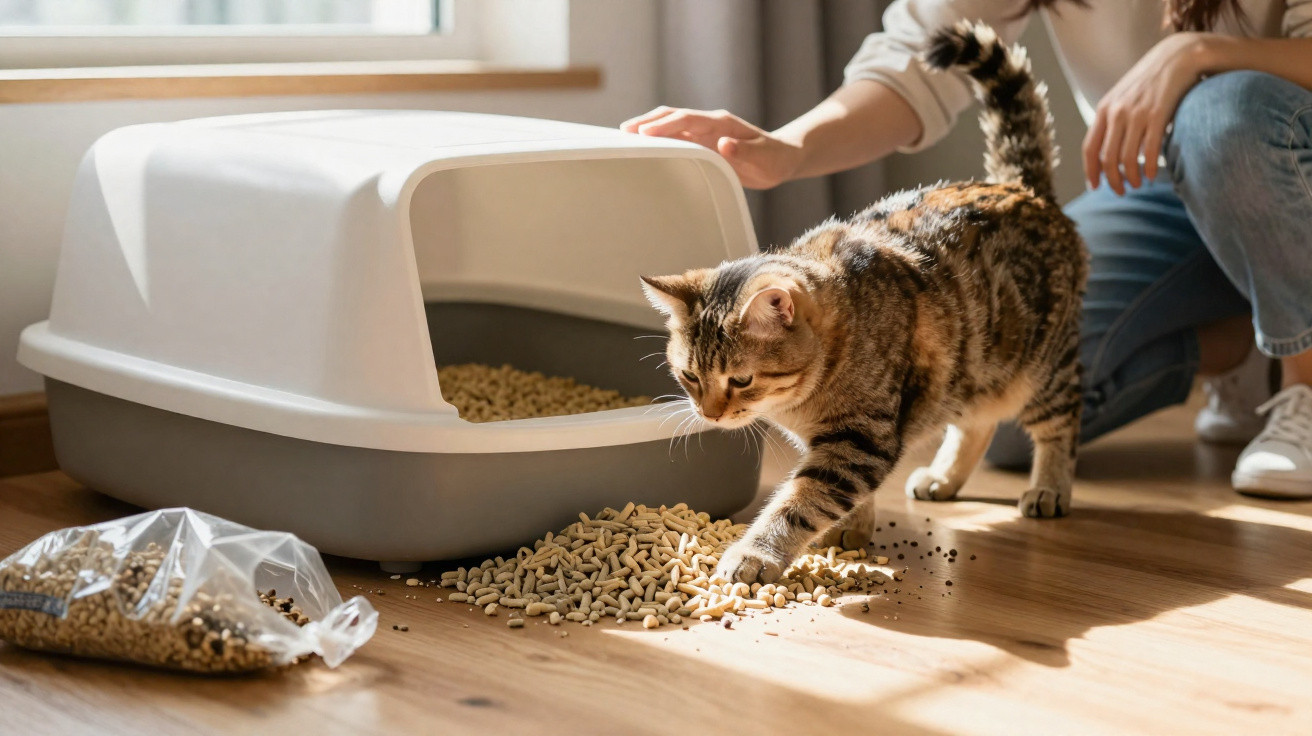
Living with a cat soon makes one thing clear: choosing cat litter is far from a minor detail. It determines whether your four-legged companion is happy to use the tray, how much the home smells and how much time is spent cleaning each day. It can even affect how much waste ends up in the general rubbish bin. So it is worth taking a closer look at what your pet genuinely prefers – and which litter types are emerging as the quiet favourite in 2026.
Why the right litter is so important for your cat
Sensitive paws need a soft surface
Cats are exceptionally sensitive when it comes to their paws. Their pads contain countless nerve endings that register every uneven surface. What may look to us like simply “grains in a tray” can feel to a cat like sand, gravel or even tiny pieces of glass.
If a cat hesitates in front of the tray, jumps in only briefly or even urinates beside it, this is often not “protest” behaviour. It may simply dislike walking over sharp or overly hard granules. Particularly coarse, pointed or crystal-like litter can feel like walking barefoot along a gravel path in winter.
Cats are more likely to accept their tray when the surface resembles soft earth or fine sand and does not hurt when they dig.
Good litter gives slightly under the paws, is easy to scratch through and still creates a loose yet stable surface. This sensation triggers the instinct to bury faeces and urine thoroughly – helping the cat to use the litter tray reliably.
Fine dust in the tray: an overlooked respiratory risk
Many conventional litters create considerable dust. A fine cloud rises as soon as the litter is poured in, irritating the nose. While this is unpleasant for people, cats encounter it much more often in daily life: they put their noses deep into the litter, dig vigorously and breathe it in directly.
Fine dust can:
- irritate the mucous membranes;
- cause sneezing, coughing or watery eyes;
- contribute to respiratory problems over time in sensitive animals.
Anyone with a pet affected by allergies, asthma or recurring cold-like symptoms should take particular care to choose litter with as little dust as possible. A cat’s airways are much smaller and more sensitive than ours – and cats spend proportionally longer directly beside the litter.
Why compressed wood is considered an insider tip in 2026
Strong absorption rather than soggy clumps
One trend is becoming increasingly established: plant-based litter, especially litter made from compressed wood. The pellets or fine wood granules have impressive absorbency. When urine reaches them, they break down specifically in the affected areas and lock moisture inside the fibres.
In everyday use, this means:
- No heavy, sticky mass of clumps on the base of the tray;
- Easier cleaning because wet sections can be removed precisely;
- Less litter used, as most of the surface stays dry.
Wood litter draws liquid deep into its fibres and stops the entire tray becoming a heavy mass that is difficult to scoop.
Many owners report that daily cleaning is noticeably quicker with wood litter and that the litter tray remains fresh for longer. The improved absorbency is especially apparent in homes with several cats.
Odour control: how wood neutralises ammonia
Few smells are as persistent as cat urine. The sharp ammonia odour develops when bacteria break down components of urine in a damp environment. Conventional litters generally mask it with perfume, producing a “flower meadow” and litter-tray combination that hardly anyone finds tolerable.
Compressed wood takes a different approach. Its natural fibres:
- absorb urine quickly and keep liquid away from the surface;
- slow bacterial growth because the surroundings remain less damp;
- have a subtle natural wood scent rather than an artificial fragrance.
This produces less ammonia, keeping the usual litter-tray smell remarkably mild. Many people describe the air as gently woody, similar to a workshop or dry timber store – considerably more pleasant than clouds of chemical fragrance.
Comfort for the animal, less waste in the bin
Natural raw materials instead of tonnes of mineral dust
Mineral litter is often made from bentonite or other clays extracted through open-cast mining. This has a major impact on the landscape, uses substantial energy for drying and firing, and ultimately ends up as general waste for incineration.
Wood litter starts from a different point: many products use by-products from timber processing, such as sawdust or wood shavings. These leftovers would otherwise often go unused or be burned for low-value purposes.
A waste product becomes an everyday helper that fits back into the material cycle far more effectively after use.
Depending on local authority rules, small amounts of used wood litter may sometimes be disposed of with garden waste or composted – provided the council permits it and the material is genuinely untreated and free from additives. For many owners, this can noticeably reduce general waste.
Fewer traces around the home
Wood pellets also have another advantage: in experience, they spread less around the home. Their compact form and slightly higher density mean they are more likely to stay in the tray instead of clinging to fur or paws.
That means:
- fewer grains of litter in the carpet;
- hardly any crumbs in bed or on the sofa;
- less frequent vacuuming around the litter tray.
The difference is particularly noticeable for those living in a small flat or welcoming visitors into the living room. An unobtrusive litter tray eases the burden not only on the nose, but also on the cleaning routine.
How to find the right litter for your cat
What to look for when buying cat litter
The choice in shops can seem vast, but focusing on a few key points makes the decision easier:
| Criterion | What to look for |
|---|---|
| Texture | As soft as possible, without sharp-edged grains and easy to dig through |
| Dust production | Ideally labelled “low dust” or “dust-free” |
| Odour control | Works without heavy perfume, relying instead on the material’s properties |
| Weight | Not too heavy to carry, but stable enough to reduce tracking |
| Environmental considerations | Renewable raw materials, preferably made from by-products and easy to dispose of |
After trying a few options, many owners settle on plant-based varieties and stick with them. The combination of animal comfort, odour control and a better environmental profile often proves more convincing over the long term than the apparent bargain price of some mineral litters.
Changing litter without drama: helping your pet adjust
Cats generally do not welcome changes to their litter tray. Anyone switching to wood litter should therefore proceed gradually:
- First, replace around one third of the existing litter in the tray with wood litter.
- Watch for a few days to see whether the cat continues using the tray normally.
- Then increase the proportion of the new litter step by step.
- Only switch completely to the new type once the animal remains relaxed.
It also helps to leave the tray in the same place and avoid starting other changes at the same time. This lets the cat become accustomed to the new texture and smell calmly, without feeling completely unsettled.
Background: why cats are so selective
The instinct of desert animals in the living room
Domestic cats originally descended from animals living in dry regions. There, fine sand or very loose soil provided the ideal surface for quickly burying faeces. Animals that failed to conceal their traces could attract predators.
This predisposition remains today. Litter that feels like dry, slightly yielding sand appeals to this instinct far more strongly than coarse, prickly stones. This is why many cats accept finer, softer materials much more readily.
Sense of smell: what a cat’s nose detects
Cats have a much stronger sense of smell than people. Where we notice only a faint hint, a cat experiences a complete burst of scents. Heavily perfumed litter that smells “fresh” to us can feel overwhelming to a cat.
Subtle, natural scents such as wood or neutral plant fibres are received far better. Combined with effective odour control, they create a litter tray that meets both a cat’s sensitive sense of smell and the human expectation of hygiene.
Anyone who stops viewing litter as a basic consumable and instead sees it as an important part of health, wellbeing and comfort at home will usually make different choices. In 2026, compressed wood demonstrates that care for animals, a clean home and mindful use of resources can work well together – a small change with a noticeable everyday effect.









Comments
No comments yet. Be the first to comment!
Leave a Comment