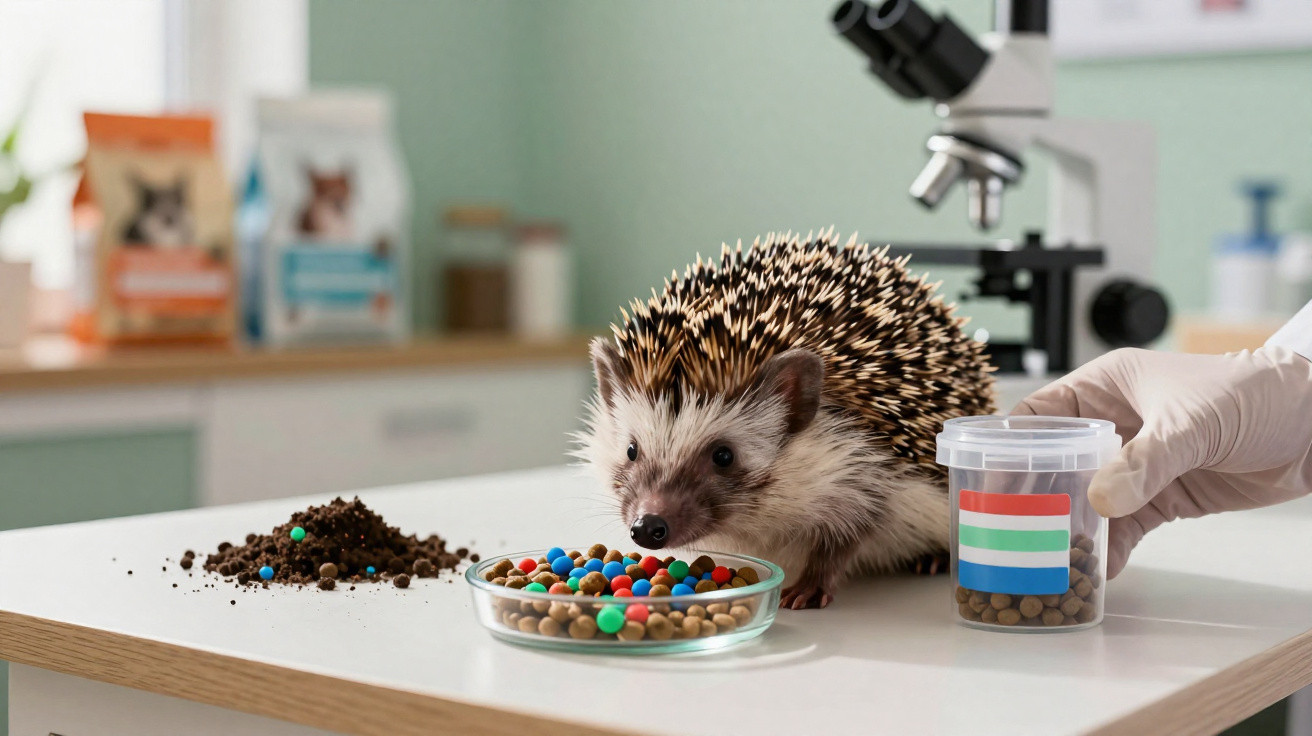
When my colleagues and I discovered microplastics in hedgehog droppings, we wanted to find out where the particles had come from.
One possible source was unexpectedly familiar: pet food.
Tracing microplastics in hedgehogs
Our investigation began in 2021, when we gathered 189 hedgehog faeces samples from residential gardens and rehabilitation centres throughout the UK. Plastic was present in 19% of the samples.
Although hedgehogs are among Britain's best-loved wild animals and are now officially classed as “near threatened”, nobody previously knew they were eating microplastics.
We decided to examine their diet to find out where the particles might originate.
European hedgehogs naturally feed on invertebrates, including beetles, snails, slugs, earthworms, caterpillars and woodlice, so these were our starting point. My colleagues and I examined thousands of invertebrate and soil samples collected from 51 sites in Sussex, UK.
We found plastics across a wide range of species and land types.
Testing pet food for microplastics
We then set out to establish whether the pet food given to European hedgehogs in rehabilitation centres and residential gardens also contained microplastics. In the UK, many rehabilitation centres care for large numbers of sick or injured mammals each year.
Research indicates that food put out by people is the biggest single reason European hedgehogs visit residential gardens. Many have even come to depend on this food, particularly in autumn and winter.
That food is often commercially available cat, dog or hedgehog food. To assess plastic contamination in pet food, my colleagues and I chose 38 brands for testing, covering different price categories, wet and dry food, and products intended for cats, dogs and wild hedgehogs.
We bought six retail units of each product and took a random 1 g sample from every tin, sachet, tray or bag. Our study was recently published in the journal Environmental Toxicology and Chemistry.
Microplastics were present in 29 of the 38 pet food products tested. For 18 products, contamination was found in more than one retail unit. Plastic appeared across the products we tested, but those in the “value” price category produced more positive samples.
Dry food contained more plastic per gram, although animals generally consume much larger portions of wet food. Wet food could therefore result in a greater total intake of microplastics.
For instance, the average levels found in our wet dog food samples suggest that a large dog, such as a Labrador, could consume around 313 microplastic particles a day.
When we compared our findings with studies of human food, pet food had higher microplastic levels. This is likely to be linked to ingredient quality. For example, 19 of the 21 products containing animal derivatives had at least one sample that tested positive for plastic, while 13 had at least two.
What does this mean for pets and wildlife?
Taken together, these findings suggest pet foods could be an important source of microplastics for pets, wild hedgehogs and other mammals.
The health effects of microplastics on pets and wildlife remain poorly understood, and our research did not test those effects. Nevertheless, a growing body of laboratory evidence links microplastics to problems with fertility, organ function and overall health.
Given this uncertainty and the frequency with which we found these particles in pet food, reducing contamination during manufacturing would be a sensible precaution.
The government should therefore require processed food manufacturers to test for microplastics, subjecting them to the same strict regulatory safety checks applied to other chemical contaminants.
As consumers, we should be able to buy affordable food that benefits our pets and wild mammals without harming the environment.
Emily Thrift, PhD Candidate and Doctoral Tutor in Ecology, University of Sussex
This article is republished from The Conversation under a Creative Commons licence. Read the original article.













Comments
No comments yet. Be the first to comment!
Leave a Comment